





IT Consulting for Omnichannel Business Models
 May 19, 2026
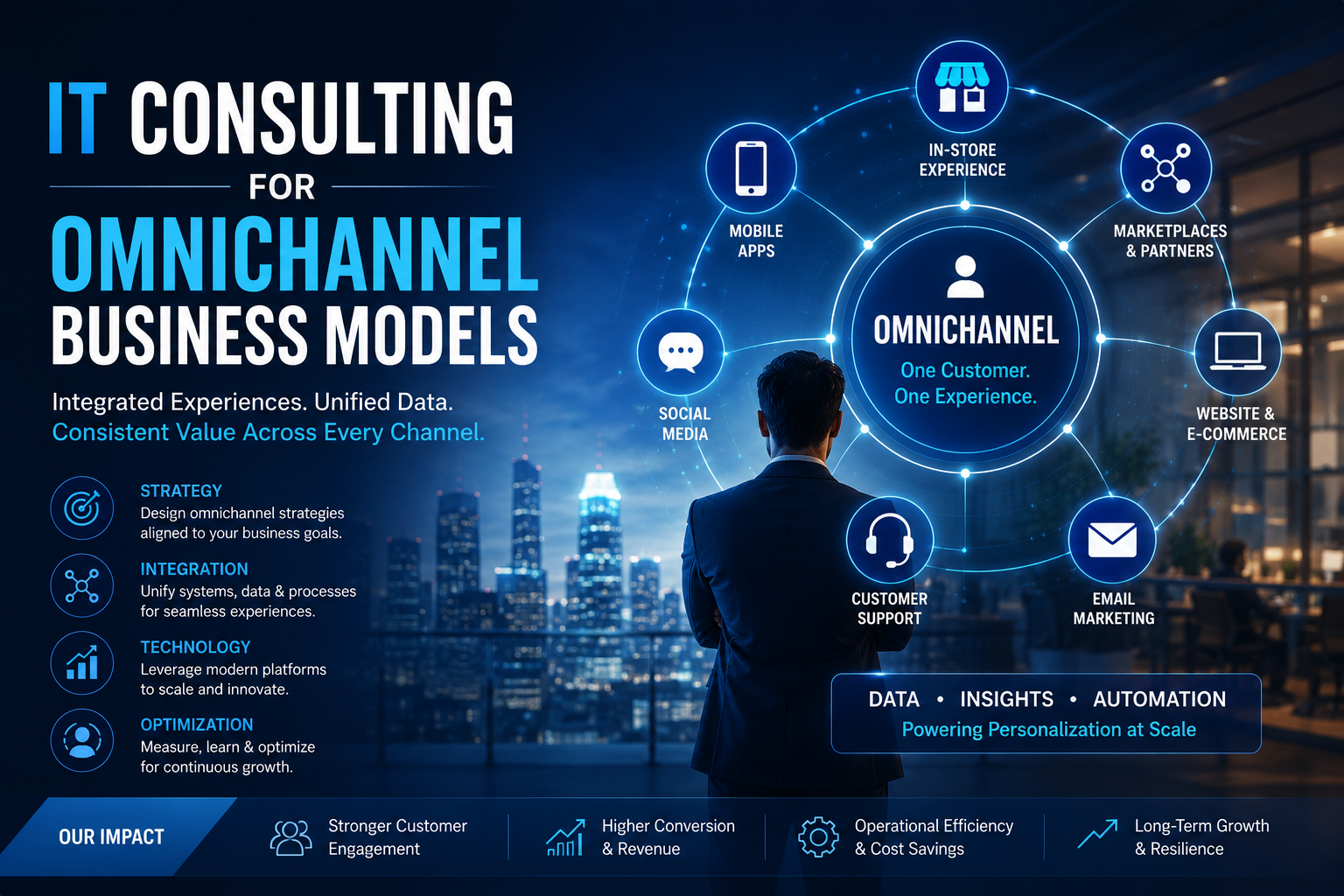
Modern customers expect seamless experiences across every interaction point. Whether they engage through websites, mobile apps, social platforms, physical stores, customer support channels, or marketplaces, they expect consistency and convenience at every step. Businesses can no longer operate separate channels independently. They must create integrated experiences that connect all touchpoints into a unified customer journey. This business approach is known as an omnichannel model, and implementing it successfully requires strong technology foundations and strategic planning. At CVDragon IT Consulting, we help organizations build and optimize omnichannel business models through technology consulting, integration strategies, and scalable digital solutions.
An omnichannel business model refers to a strategy where all customer interaction channels work together as one connected experience. Instead of treating online and offline channels separately, businesses integrate systems, customer data, operations, and communication platforms to create continuity across every interaction.
For example, a customer may browse products on a website, continue shopping through a mobile application, receive personalized recommendations through email, and later complete a purchase in a physical store. The experience should feel connected and consistent throughout the journey. IT consulting plays a critical role in making this level of integration possible.
One of the first steps in omnichannel transformation is understanding customer journeys and business objectives. Different industries and organizations have different interaction models. IT consultants analyze customer behavior, existing technology infrastructure, and operational workflows to identify integration requirements and create an omnichannel strategy aligned with business goals.
Data integration forms the foundation of omnichannel experiences. Customer interactions occur across multiple platforms, generating information from various sources. Without connected systems, businesses struggle with fragmented customer profiles and inconsistent experiences. IT consultants create centralized data architectures that unify information from websites, mobile apps, CRM systems, support channels, and physical locations.
Cloud technologies play a major role in omnichannel environments because they support scalability and real-time accessibility. Platforms such as Amazon Web Services, Microsoft Azure, and Google Cloud Platform enable businesses to build flexible infrastructures capable of handling high customer activity and data synchronization across channels.
Application and platform integration are essential components of omnichannel strategies. Businesses often rely on e-commerce systems, inventory platforms, customer support software, payment systems, and marketing tools. IT consultants implement APIs and integration frameworks that enable these systems to communicate seamlessly.
Real-time data synchronization is another critical requirement. Inventory updates, customer preferences, purchase histories, and support interactions should remain consistent across all platforms. IT consultants design systems that support instant data updates and prevent inconsistencies between channels.
Personalization significantly improves omnichannel experiences. Customers increasingly expect recommendations and interactions tailored to their preferences. IT consultants help businesses implement analytics platforms and customer data systems that enable personalized communication and experiences.
Scalability is equally important. Customer activity can increase rapidly during campaigns, product launches, or seasonal events. IT consultants design infrastructures capable of scaling dynamically to support changing demand while maintaining performance and reliability.
Security becomes increasingly important as customer data moves across multiple platforms and systems. IT consultants implement encryption, identity management, secure APIs, and monitoring systems to protect sensitive information and maintain customer trust.
Automation enhances omnichannel efficiency. Businesses managing multiple interaction channels manually often face delays and inconsistencies. IT consultants implement workflow automation, customer engagement tools, and process orchestration systems that improve responsiveness and operational efficiency.
Customer support integration is another major area of focus. Omnichannel businesses require support teams to access complete customer histories regardless of communication channels. IT consultants integrate support systems and CRM platforms to create unified service experiences.
Analytics and performance monitoring help organizations understand how customers interact across channels. IT consultants deploy tools that track customer journeys, engagement patterns, and channel performance, enabling businesses to optimize experiences continuously.
Another important aspect is mobile and emerging channel readiness. As customer preferences evolve, businesses need systems capable of supporting new platforms and technologies. IT consultants design flexible architectures that can accommodate future communication channels and innovations.
At CVDragon IT Consulting, our omnichannel consulting approach includes:
- Customer journey and infrastructure assessment
- Data integration and centralized architecture planning
- Cloud strategy and infrastructure optimization
- API and system integration design
- Security and governance implementation
- Automation and workflow enhancement
- Analytics and performance monitoring setup
- Scalability and future-readiness planning
Real-world examples demonstrate the value of omnichannel strategies. A retail business can integrate online stores, mobile applications, inventory systems, and physical locations to create a consistent shopping experience. A financial institution can connect digital banking, customer support, and branch services into one seamless customer journey.
Another major advantage is stronger customer engagement and retention. Customers are more likely to remain loyal when interactions are convenient, personalized, and consistent across every channel.
Omnichannel strategies also improve operational efficiency by reducing silos, eliminating duplicated efforts, and enabling better collaboration between departments.
In conclusion, omnichannel business models are transforming how organizations interact with customers in the digital era. Delivering connected experiences requires integrated systems, scalable infrastructure, and a strategic technology approach. At CVDragon IT Consulting, we help businesses build omnichannel ecosystems that improve customer experiences, strengthen operations, and support sustainable growth.
Partner with CVDragon IT Consulting to create an omnichannel strategy that connects every customer touchpoint and delivers seamless digital experiences.