





AI Shadow IT: Identifying and Securing Unsanctioned AI Tool Usage
 January 20, 2026
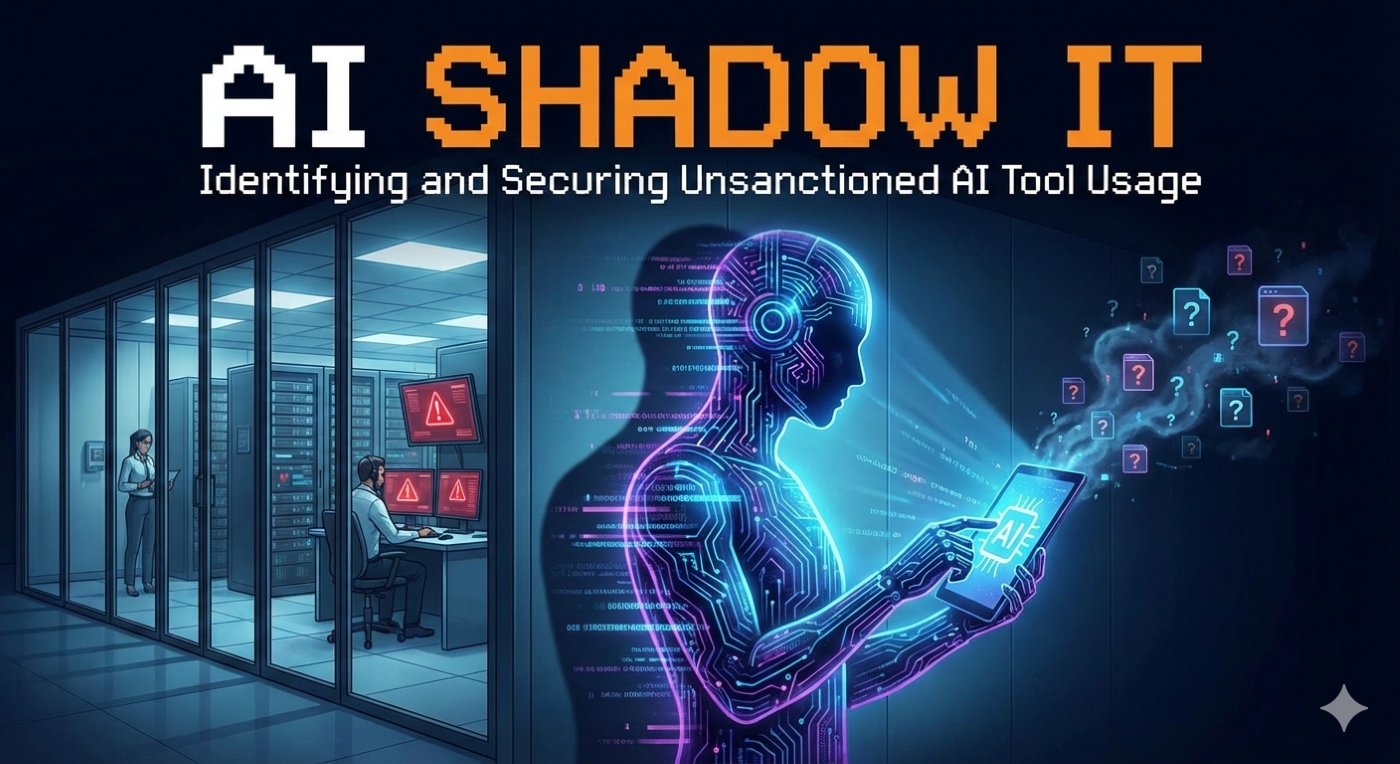
Artificial intelligence has rapidly moved from experimental technology to an everyday productivity tool. From writing assistance and data analysis to design, coding, and customer support, AI tools are now embedded in how employees work. While this acceleration has delivered clear efficiency gains, it has also created a new and growing risk for organizations: AI Shadow IT.
AI Shadow IT refers to the use of AI tools and platforms by employees without formal approval, oversight, or security controls from the IT or governance teams. Often adopted with good intentions—to work faster or solve problems—these tools can quietly introduce serious risks related to data privacy, security, compliance, and intellectual property.
At cvDragon IT Consulting, we help organizations identify, manage, and secure AI Shadow IT while preserving the innovation and productivity benefits that AI enables. This article explores the rise of AI Shadow IT, why it matters, and how organizations can address it through thoughtful IT consulting and governance.
Understanding AI Shadow IT
Shadow IT is not a new phenomenon. Employees have long adopted unauthorized software, cloud storage, or collaboration tools to bypass slow or restrictive systems. However, AI Shadow IT is fundamentally different in both scale and impact.
AI tools often require access to sensitive data—documents, code, customer information, or proprietary insights—to function effectively. When used without oversight, they can:
- Expose confidential data to third-party AI vendors
- Store or reuse data for model training
- Create compliance and regulatory violations
- Undermine data governance and security controls
Because many AI tools are easy to access and difficult to monitor, AI Shadow IT can spread quickly and invisibly across an organization.
Why AI Shadow IT Is Rapidly Growing
Several factors are driving the rise of unsanctioned AI usage in the workplace:
1. Easy Accessibility
AI tools are widely available, often requiring only a browser and an email address to get started.
2. Pressure to Improve Productivity
Employees are under constant pressure to work faster and deliver more, making AI tools highly attractive.
3. Slow Governance Processes
Formal IT approval and procurement processes often lag behind the pace of innovation.
4. Lack of Clear AI Policies
Many organizations have not yet defined what AI tools are allowed or how they should be used.
The result is a gap between employee behavior and organizational controls.
The Hidden Risks of AI Shadow IT
While AI Shadow IT may appear harmless at first, it can introduce significant and long-term risks.
1. Data Privacy and Confidentiality Risks
Employees may unknowingly upload sensitive information—such as customer data, financial records, or intellectual property—into public or third-party AI tools. This data may be stored, processed, or reused beyond the organization’s control.
2. Regulatory and Compliance Exposure
Industries governed by regulations such as data protection, financial oversight, or healthcare compliance face serious consequences if data is mishandled. AI Shadow IT can lead to unintentional violations and penalties.
3. Intellectual Property Leakage
Using AI tools for coding, design, or content creation can blur ownership boundaries. Organizations may lose control over proprietary knowledge or trade secrets.
4. Inconsistent and Unreliable Outputs
Without standardized tools or validation processes, AI-generated outputs may be inaccurate, biased, or inconsistent—leading to poor business decisions.
5. Security Vulnerabilities
Unsanctioned AI tools may lack enterprise-grade security controls, increasing the risk of data breaches or malicious exploitation.
Why Blocking AI Is Not the Answer
Some organizations respond to AI Shadow IT by attempting to block or ban AI tools altogether. In practice, this approach rarely succeeds.
- Employees find workarounds
- Innovation slows
- Morale and trust suffer
- The organization falls behind competitors
The goal should not be to eliminate AI usage, but to bring it into a governed, secure, and transparent framework.
The Role of IT Consulting in Managing AI Shadow IT
Addressing AI Shadow IT requires more than technical controls—it demands strategy, governance, and cultural change. This is where IT consulting plays a critical role.
At cvDragon IT Consulting, we help organizations manage AI adoption responsibly while enabling innovation.
1. Discovering and Assessing AI Shadow IT
The first step is visibility. Consulting helps identify where and how AI tools are being used across the organization through:
- Network and application monitoring
- Employee surveys and interviews
- Data flow analysis
- Risk assessments
This creates a clear picture of exposure and opportunity.
2. Classifying Risk and Business Value
Not all AI Shadow IT poses equal risk. Some tools may deliver real value with minimal exposure, while others create serious threats.
IT consulting helps classify:
- Data sensitivity involved
- Regulatory implications
- Security posture of AI vendors
- Alignment with business objectives
This enables informed decision-making rather than blanket restrictions.
3. Defining an AI Governance Framework
A strong governance framework provides clarity without stifling innovation. Key elements include:
- Approved and prohibited AI use cases
- Data handling and privacy guidelines
- Vendor evaluation criteria
- Human oversight requirements
- Ethical and responsible AI principles
Governance turns AI from a risk into a managed asset.
4. Enabling Secure, Sanctioned AI Alternatives
One of the most effective ways to reduce AI Shadow IT is to provide approved tools that meet employee needs.
Consulting supports:
- Selection of enterprise-grade AI platforms
- Secure integration with existing systems
- Custom AI solutions aligned with internal data policies
- Centralized access and identity management
When employees have safe alternatives, unsanctioned usage naturally declines.
5. Embedding Security and Data Protection
Security must be built into AI usage from the start. IT consulting ensures:
- Data classification and access controls
- Encryption and secure data transfer
- Audit logging and monitoring
- Alignment with regulatory requirements
This protects both the organization and its stakeholders.
The Human Side of AI Shadow IT
Technology alone cannot solve AI Shadow IT. Employee awareness and culture are equally important.
6. Educating Employees on Responsible AI Use
Many employees are unaware of the risks associated with unsanctioned AI tools. Consulting helps design training programs that explain:
- What AI Shadow IT is
- Why it matters
- How to use AI responsibly
- Where to access approved tools
Education builds trust and shared accountability.
7. Encouraging Open Dialogue and Innovation
Organizations should encourage employees to suggest AI tools and use cases rather than hiding them. Consulting supports feedback mechanisms that promote transparency and collaboration.
Monitoring and Continuous Improvement
AI technology evolves rapidly. Governance and controls must evolve as well.
IT consulting helps establish:
- Ongoing monitoring of AI usage
- Regular risk and compliance reviews
- Updates to policies and approved tools
- Metrics to track adoption and value
This ensures long-term resilience.
Industry-Specific Implications
AI Shadow IT impacts industries differently:
- Financial services: Regulatory and data privacy risks
- Healthcare: Patient data protection and ethical concerns
- Technology: Intellectual property and code security
- Manufacturing: Supply chain and design confidentiality
Consulting tailors AI governance strategies to industry-specific needs.
The Future of AI Governance
As AI becomes more embedded in daily work, organizations will need more sophisticated governance models, including:
- AI usage analytics
- Policy-driven automation
- Explainability and auditability
- Integration with broader cybersecurity strategies
AI Shadow IT management will become a core component of enterprise risk management.
Conclusion: Turning AI Shadow IT into a Strategic Advantage
AI Shadow IT is a sign of something positive: employees want to innovate, work smarter, and embrace new technology. The challenge is ensuring this innovation happens safely and responsibly.
At cvDragon IT Consulting, we believe the answer lies in balance. By identifying unsanctioned AI usage, securing data, and providing governed alternatives, organizations can transform AI Shadow IT from a hidden risk into a strategic advantage.
Responsible AI adoption is not about control—it’s about trust, enablement, and long-term value. With the right consulting approach, organizations can harness the power of AI while protecting what matters most.