




Smart City Infrastructure: Consulting for Public Sector Digital Transformation
 January 19, 2026
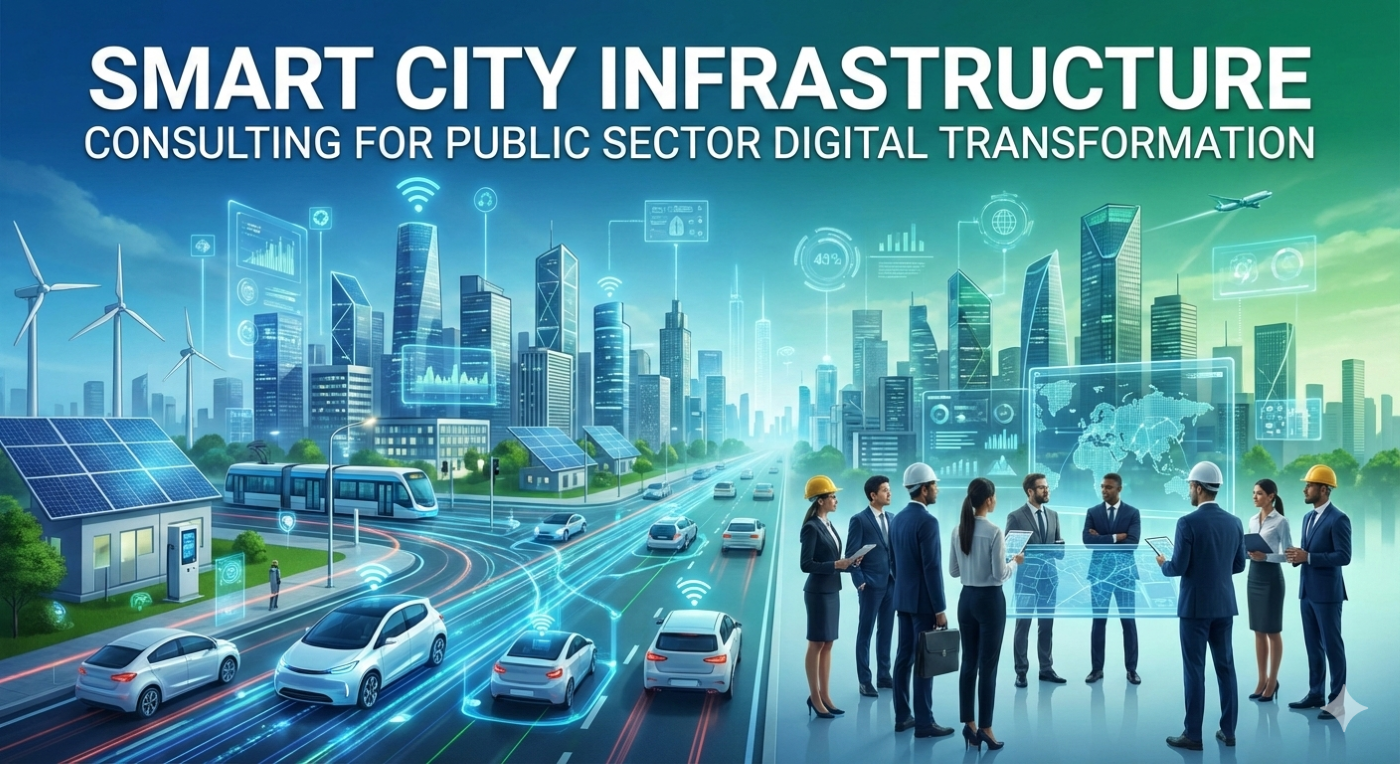
Cities are living, breathing systems. They grow, evolve, and respond to the needs of millions of people every day. Yet many urban centers still rely on aging infrastructure, disconnected systems, and manual processes that struggle to keep up with rapid population growth, climate pressures, and rising citizen expectations. In this context, the idea of a “smart city” has moved from visionary concept to practical necessity.
Smart city infrastructure leverages digital technologies, data, and connected systems to improve urban services, sustainability, and quality of life. However, building a smart city is not simply about deploying sensors or launching mobile apps. It requires thoughtful strategy, strong governance, and deep technological expertise. This is where IT consulting plays a critical role in public sector digital transformation.
At cvDragon IT Consulting, we work closely with public sector organizations to design and implement smart city initiatives that are citizen-centric, scalable, and future-ready. This article explores the role of smart city infrastructure and how consulting enables successful digital transformation in the public sector.
Understanding Smart City Infrastructure
Smart city infrastructure refers to the integrated digital and physical systems that enable cities to operate more efficiently and responsively. These systems use data, connectivity, and automation to enhance public services and decision-making.
Key elements of smart city infrastructure include:
- Intelligent transportation and traffic management systems
- Smart energy grids and utilities
- Digital governance platforms
- Public safety and surveillance systems
- Environmental monitoring and waste management
- Connected healthcare and emergency services
When these systems work together, cities become more adaptive, resilient, and inclusive.
Why Public Sector Digital Transformation Is Urgent
Urban challenges are intensifying. Cities face increasing pressure to deliver better services with limited budgets while addressing complex issues such as climate change, congestion, and social inequality.
Public sector digital transformation is driven by several factors:
1. Rising Citizen Expectations
Citizens expect digital services that are as seamless and accessible as those offered by private companies.
2. Aging Infrastructure
Many cities rely on legacy systems that are costly to maintain and difficult to integrate.
3. Data Silos
Disparate departments often operate independently, limiting data sharing and collaboration.
4. Sustainability and Climate Goals
Cities must reduce emissions, manage resources efficiently, and build climate resilience.
Smart city infrastructure addresses these challenges by enabling data-driven governance and connected services.
The Role of IT Consulting in Smart City Initiatives
Implementing smart city solutions is complex and multi-dimensional. IT consulting provides the expertise needed to bridge policy objectives, technology, and operational realities.
At cvDragon IT Consulting, we view smart city consulting as a partnership with public institutions, not just a technology deployment.
1. Defining a Clear Smart City Vision
A successful smart city initiative starts with a clear, shared vision aligned with public priorities. Consulting helps governments define goals such as:
- Improving mobility and reducing congestion
- Enhancing public safety
- Increasing operational efficiency
- Promoting sustainability and inclusivity
This vision guides technology decisions and investment planning.
2. Assessing Existing Infrastructure and Readiness
Many public sector organizations operate on a mix of legacy and modern systems. IT consulting evaluates:
- Current IT and operational technology environments
- Data maturity and governance structures
- Organizational readiness and skills
- Regulatory and compliance constraints
This assessment ensures transformation efforts are realistic and phased appropriately.
3. Designing Integrated and Scalable Architectures
Smart cities depend on interoperability. Consulting ensures that systems can communicate across departments and scale over time.
Key architectural considerations include:
- Cloud and edge computing strategies
- IoT platforms and device management
- Data integration and analytics layers
- Cybersecurity and privacy frameworks
Well-designed architectures prevent vendor lock-in and future fragmentation.
Data as the Backbone of Smart Cities
Data is the foundation of smart city infrastructure. Sensors, cameras, mobile devices, and systems generate massive volumes of data that must be managed and analyzed effectively.
4. Enabling Data-Driven Decision Making
IT consulting helps public sector leaders turn raw data into actionable insights through:
- Real-time dashboards and analytics
- Predictive modeling for urban planning
- Performance monitoring of public services
- Open data platforms for transparency
Data-driven governance allows cities to respond proactively rather than reactively.
5. Ensuring Security, Privacy, and Trust
Public trust is essential for smart city success. Citizens must feel confident that their data is protected and used responsibly.
Consulting supports:
- Cybersecurity strategy and risk management
- Data privacy and compliance with regulations
- Identity and access management
- Ethical data use frameworks
Security is built into the foundation, not added as an afterthought.
Citizen-Centric Digital Services
Technology should serve people, not the other way around. Smart city consulting emphasizes citizen experience and accessibility.
6. Designing Inclusive Digital Platforms
Digital transformation enables governments to offer services such as:
- Online permits and licensing
- Digital grievance redressal systems
- Smart public transport apps
- E-governance portals
Consulting ensures these platforms are accessible, user-friendly, and inclusive for all demographics.
7. Enhancing Public Safety and Emergency Response
Smart infrastructure improves public safety through:
- Intelligent surveillance and analytics
- Connected emergency response systems
- Real-time situational awareness
- Predictive crime and risk analysis
IT consulting helps integrate these systems responsibly while respecting civil liberties.
Sustainability and Smart City Infrastructure
Sustainability is a core objective of smart city initiatives. Digital infrastructure enables efficient resource management and environmental monitoring.
Consulting supports:
- Smart energy and water management systems
- Waste optimization using sensor data
- Air and noise pollution monitoring
- Climate risk modeling and resilience planning
These capabilities help cities meet sustainability goals while reducing operational costs.
Managing Change in the Public Sector
Technology alone cannot transform cities. Organizational change is equally important.
8. Capacity Building and Skill Development
Public sector teams need the skills to operate and maintain smart city systems. IT consulting supports training and knowledge transfer.
9. Governance and Program Management
Smart city initiatives often involve multiple stakeholders, vendors, and departments. Consulting provides program management, governance frameworks, and performance measurement.
Common Challenges in Smart City Projects
Despite their promise, smart city initiatives face challenges:
- Budget constraints and funding models
- Interdepartmental coordination
- Vendor dependency
- Public resistance or lack of awareness
An experienced consulting partner helps mitigate these risks through phased implementation and stakeholder engagement.
The Future of Smart Cities
As technologies evolve, smart cities will become more intelligent and adaptive. Emerging trends include:
- AI-driven urban planning and optimization
- Digital twins of cities
- Autonomous transportation systems
- Greater citizen participation through digital platforms
Public sector digital transformation will continue to be a journey, not a destination.
Conclusion: Building Smarter, More Resilient Cities
Smart city infrastructure represents a powerful opportunity to reimagine how cities operate and serve their citizens. However, success depends on more than technology—it requires strategy, governance, and collaboration.
At cvDragon IT Consulting, we help public sector organizations navigate the complexity of digital transformation with clarity and confidence. By aligning smart city initiatives with public values and long-term goals, we enable cities to become more efficient, sustainable, and inclusive.
Smart cities are not built overnight. They are built through thoughtful planning, trusted partnerships, and a shared commitment to improving urban life for everyone.