




Direct-to-Consumer (DTC) Tech Stacks: Optimizing IT for modern retail brands
 February 16, 2026
The retail landscape has undergone a dramatic transformation over the past decade. Traditional retail models that relied heavily on distributors, wholesalers, and physical storefronts are increasingly being replaced—or supplemented—by Direct-to-Consumer (DTC) strategies. In this model, brands sell directly to customers through digital channels, gaining greater control over customer relationships, brand experience, and revenue.
But while DTC creates enormous opportunities, it also introduces new technological complexity. Behind every successful DTC brand is a carefully designed technology stack that supports seamless customer experiences, efficient operations, and data-driven growth.
At cvDragon IT Consulting, we help modern retail brands design, integrate, and optimize DTC tech stacks that scale with growth, improve agility, and unlock competitive advantage. This article explores the key components of DTC technology stacks, the challenges brands face, and how consulting ensures long-term success.
What Is a Direct-to-Consumer (DTC) Tech Stack?
A DTC tech stack is the collection of digital platforms, tools, and systems that enable a brand to sell directly to customers without relying on intermediaries.
It supports every stage of the customer and operational journey, including:
- Online storefront
- Order management
- Payment processing
- Customer relationship management
- Marketing automation
- Inventory and fulfillment
- Analytics and reporting
When these systems work together effectively, brands can deliver fast, personalized, and seamless experiences.
Why DTC Tech Stacks Are Critical for Modern Retail
In traditional retail, much of the customer interaction happened outside the brand’s direct control. In the DTC model, the brand owns the entire experience.
This creates both opportunity and responsibility.
A strong tech stack enables brands to:
- Launch products faster
- Personalize customer interactions
- Scale operations efficiently
- Analyze customer behavior in real time
- Build long-term customer loyalty
Technology becomes the backbone of the business—not just a support function.
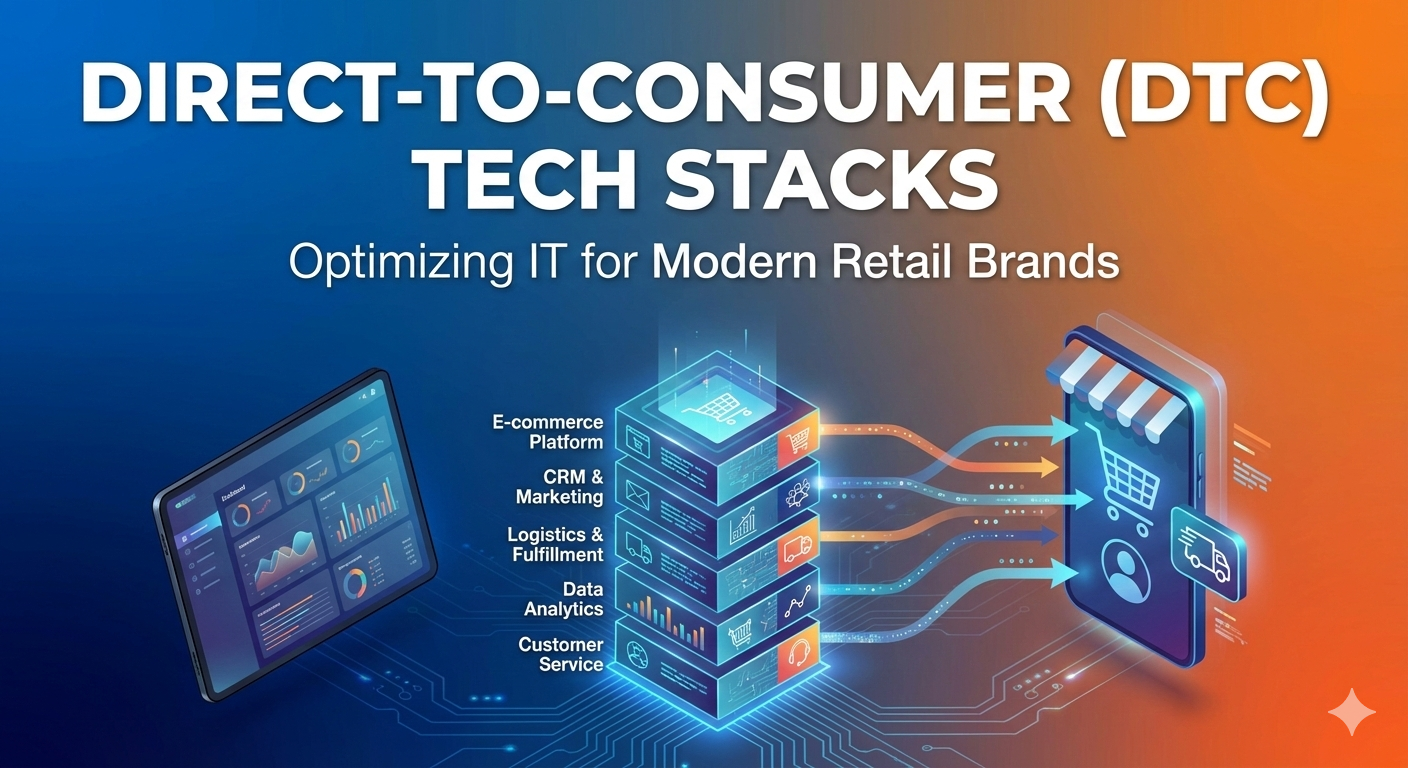
Core Components of a Modern DTC Tech Stack
While every brand’s stack is unique, most include several foundational layers.
1. E-Commerce Platform
The e-commerce platform serves as the digital storefront.
It handles:
- Product listings
- Shopping cart functionality
- Checkout processes
- Customer accounts
Performance, scalability, and flexibility are critical at this layer.
A slow or unreliable storefront directly impacts revenue.
2. Order Management System (OMS)
The OMS manages the lifecycle of customer orders from placement to delivery.
It coordinates:
- Order processing
- Status tracking
- Returns and exchanges
- Fulfillment routing
An optimized OMS ensures operational efficiency and customer satisfaction.
3. Payment and Checkout Systems
Payment infrastructure supports secure and frictionless transactions.
It enables:
- Multiple payment options
- Fraud detection
- Secure processing
- Global transactions
Checkout optimization directly impacts conversion rates.
4. Customer Relationship Management (CRM)
CRM systems store and manage customer information.
This allows brands to:
- Track customer interactions
- Segment audiences
- Personalize communication
- Improve retention
Customer data is one of the most valuable assets in the DTC model.
5. Marketing Automation Platforms
Marketing automation helps brands engage customers across channels.
This includes:
- Email campaigns
- SMS messaging
- Customer journey automation
- Campaign performance tracking
Automation improves both efficiency and personalization.
6. Inventory and Fulfillment Systems
Inventory visibility is essential for customer trust and operational accuracy.
These systems manage:
- Stock levels
- Warehouse coordination
- Shipping and delivery tracking
- Returns processing
Poor inventory management leads to delays and lost customers.
7. Analytics and Data Platforms
Analytics platforms help brands understand performance and customer behavior.
They provide insights into:
- Sales trends
- Customer acquisition costs
- Customer lifetime value
- Marketing effectiveness
Data-driven decision-making drives growth.
The Biggest Challenge: Integration
Many DTC brands adopt tools rapidly as they grow. Over time, this creates a fragmented technology ecosystem.
Common integration challenges include:
- Systems that do not communicate
- Manual data transfers
- Inconsistent reporting
- Duplicate data
- Operational inefficiencies
Integration—not individual tools—is what defines stack effectiveness.
Why Tech Stack Complexity Increases with Growth
Early-stage DTC brands often start with simple tools.
As they scale, complexity increases due to:
- Expanding product lines
- Global sales
- Multiple fulfillment locations
- Advanced marketing strategies
- Customer experience expectations
Without proper planning, the stack becomes difficult to manage.
The Role of IT Consulting in DTC Stack Optimization
At cvDragon IT Consulting, we help DTC brands move from fragmented tools to unified, scalable ecosystems.
Technology Assessment
We evaluate existing platforms, integrations, and performance to identify inefficiencies.
Architecture Design
We design modern, scalable architectures that support future growth.
This includes selecting interoperable platforms and defining integration strategies.
Integration and Automation
We help connect systems to ensure seamless data flow across platforms.
Automation reduces manual work and improves accuracy.
Scalability Planning
We ensure the stack can handle increased traffic, product expansion, and geographic growth.
The Importance of Customer Data Integration
DTC success depends heavily on understanding customers.
But customer data often exists in multiple systems.
Consulting helps create unified customer views, enabling:
- Personalized marketing
- Improved customer service
- Better retention strategies
This improves both experience and revenue.
Personalization as a Competitive Advantage
Modern customers expect personalized experiences.
Optimized tech stacks enable:
- Product recommendations
- Customized offers
- Personalized communication
Personalization increases engagement and loyalty.
Supporting Omnichannel Experiences
Even DTC brands often operate across multiple channels, including:
- Websites
- Mobile apps
- Marketplaces
- Physical stores
Technology integration ensures consistent experiences across all channels.
Cloud Technology and DTC Scalability
Cloud platforms provide flexibility and scalability for DTC brands.
They support:
- Traffic spikes during promotions
- Global expansion
- Fast deployment of new features
Consulting ensures cloud environments are optimized and cost-efficient.
Cybersecurity and Customer Trust
DTC brands handle sensitive customer information.
Security is critical for:
- Protecting payment data
- Preventing breaches
- Maintaining customer trust
Consulting helps implement secure architectures and best practices.
Avoiding Vendor Lock-In
Many brands unknowingly become dependent on specific platforms.
Consulting helps design flexible stacks that allow:
- Easier platform changes
- Reduced long-term risk
- Greater innovation freedom
Flexibility supports future growth.
Common Mistakes DTC Brands Make
Many brands face avoidable challenges such as:
- Choosing tools without integration planning
- Ignoring scalability requirements
- Overcomplicating the stack
- Failing to unify customer data
- Delaying technology upgrades
Strategic consulting helps avoid these costly mistakes.
Future Trends in DTC Technology
DTC tech stacks continue to evolve.
Emerging trends include:
- AI-driven personalization
- Headless commerce architectures
- Real-time analytics
- Automation of operations
- Advanced customer data platforms
Brands must continuously evolve their technology to remain competitive.
The Business Impact of an Optimized Tech Stack
When technology works seamlessly, brands experience:
- Faster growth
- Improved customer satisfaction
- Higher operational efficiency
- Better decision-making
- Greater competitive advantage
Technology becomes a growth engine.
How cvDragon IT Consulting Helps Modern Retail Brands
At cvDragon IT Consulting, we help DTC brands:
- Design scalable technology stacks
- Integrate fragmented systems
- Optimize performance
- Improve customer data management
- Prepare for future growth
Our goal is to ensure technology enables—not limits—business success.
Conclusion: Technology as the Foundation of DTC Success
Direct-to-Consumer retail is not just a business model—it is a technology-driven strategy.
Success depends on building a tech stack that is integrated, scalable, secure, and aligned with business goals.
Brands that invest in optimizing their technology gain greater control, agility, and customer insight.
At cvDragon IT Consulting, we help modern retail brands build the digital foundations needed to thrive in the competitive DTC landscape.
Because in the world of Direct-to-Consumer commerce, the strength of your technology defines the strength of your brand.