



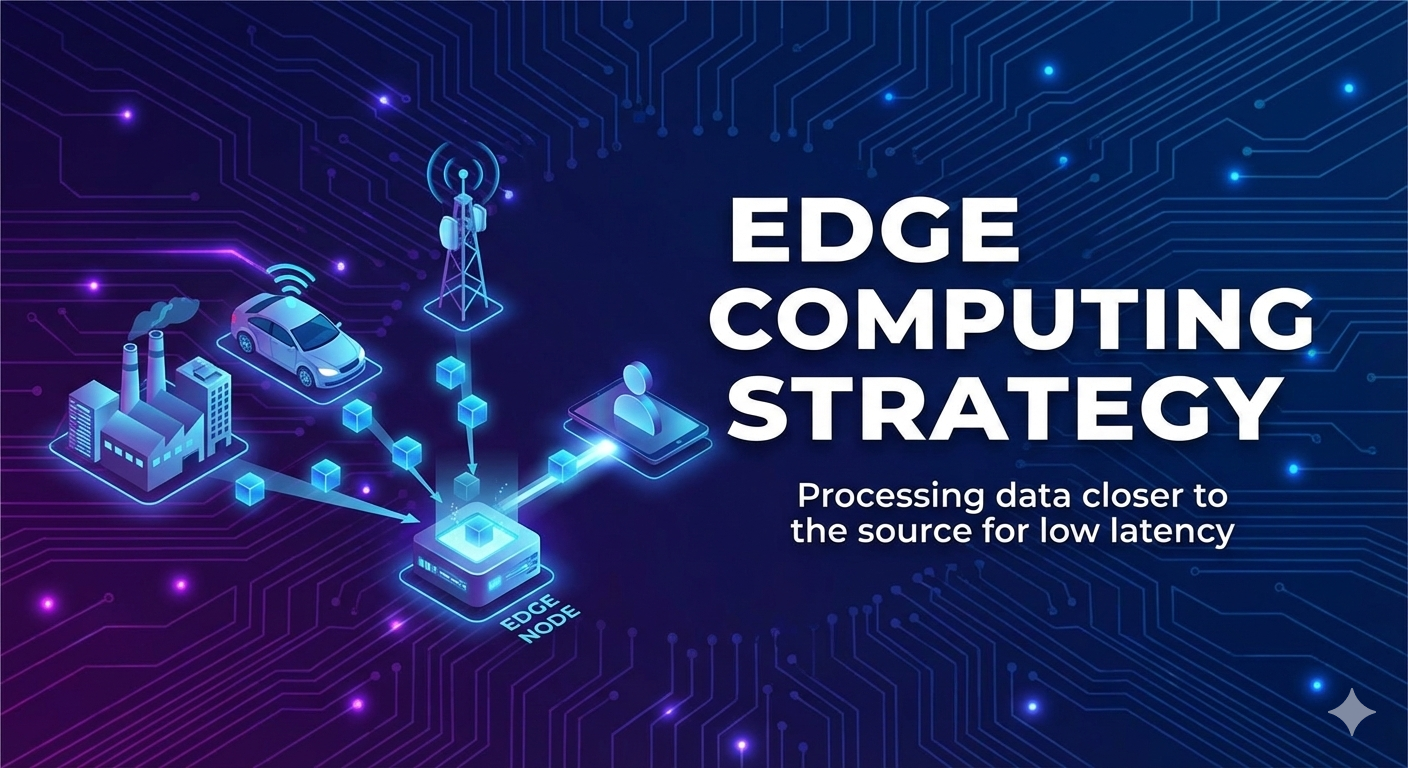
Edge Computing Strategy: Processing data closer to the source for low latency
 February 17, 2026
In today’s hyper-connected digital world, speed is everything. Whether it’s a smart factory detecting equipment failure, a retail store analyzing customer behavior in real time, or a healthcare device monitoring patient vitals, milliseconds can make the difference between efficiency and disruption. Traditional cloud computing has enabled massive scalability, but it often falls short when ultra-low latency and real-time processing are required.
This is where edge computing is transforming modern IT infrastructure. By processing data closer to where it is generated, businesses can reduce delays, improve performance, and unlock new capabilities.
At cvDragon IT Consulting, we help organizations design and implement effective edge computing strategies that enhance operational efficiency, enable innovation, and prepare businesses for the future of distributed computing.
This article explores what edge computing is, why it matters, its business benefits, challenges, and how IT consulting helps organizations adopt it successfully.
What Is Edge Computing?
Edge computing is a distributed IT architecture where data is processed near the “edge” of the network—closer to devices, sensors, or users—rather than relying solely on centralized cloud data centers.
Instead of sending all data to the cloud for processing, edge systems analyze and process data locally or at nearby edge nodes.
These edge nodes can include:
- IoT devices
- Smart sensors
- Local servers
- Network gateways
- On-site computing infrastructure
Only necessary or summarized data is sent to the cloud.
This approach significantly reduces latency and bandwidth usage.
Why Traditional Cloud Computing Isn’t Always Enough
Cloud computing remains essential, but it has limitations in certain scenarios.
Challenges include:
Latency Issues
Sending data to distant cloud servers takes time. For real-time applications, even small delays can be unacceptable.
Bandwidth Constraints
Large volumes of data, especially from IoT devices, can overwhelm networks.
Reliability Concerns
If connectivity is disrupted, cloud-dependent systems may stop functioning.
Cost Implications
Constantly transferring massive data volumes increases operational costs.
Edge computing addresses these limitations.
Why Edge Computing Is Becoming Critical
Modern businesses rely heavily on real-time data.
Examples include:
- Autonomous vehicles
- Smart manufacturing
- Healthcare monitoring systems
- Retail analytics
- Smart cities
These applications require instant decision-making.
Edge computing makes this possible.
Key Benefits of Edge Computing
1. Ultra-Low Latency
Processing data locally eliminates delays caused by cloud transmission.
This enables real-time responses.
For example:
A manufacturing system can detect equipment failure instantly and prevent downtime.
2. Improved Reliability
Edge systems can function even when internet connectivity is limited or unavailable.
This ensures operational continuity.
3. Reduced Bandwidth Usage
Instead of sending all raw data to the cloud, only important information is transmitted.
This reduces network load.
4. Enhanced Performance
Applications run faster when processing happens close to the source.
This improves user experience.
5. Better Data Privacy and Security
Sensitive data can be processed locally instead of transmitted externally.
This reduces exposure risks.
6. Cost Optimization
Reduced bandwidth usage and optimized processing lower operational costs.
Industries Benefiting Most from Edge Computing
Manufacturing
Edge computing enables:
- Predictive maintenance
- Real-time quality control
- Automated production optimization
This improves efficiency and reduces downtime.
Retail
Retailers use edge computing for:
- In-store analytics
- Smart checkout systems
- Personalized customer experiences
Healthcare
Healthcare applications include:
- Remote patient monitoring
- Medical device data processing
- Emergency response systems
Real-time analysis improves patient outcomes.
Transportation and Logistics
Edge computing supports:
- Fleet monitoring
- Route optimization
- Autonomous vehicle systems
Smart Cities
Cities use edge computing for:
- Traffic management
- Surveillance systems
- Energy optimization
Edge Computing and IoT: A Powerful Combination
The Internet of Things generates enormous volumes of data.
Sending all this data to the cloud is inefficient.
Edge computing allows IoT devices to process data locally.
This improves performance and efficiency.
Edge vs Cloud: Not a Replacement, but a Partnership
Edge computing does not replace cloud computing.
Instead, they work together.
Edge handles real-time processing.
Cloud handles:
- Long-term storage
- Advanced analytics
- Machine learning
- Centralized management
This hybrid approach provides maximum efficiency.
Key Components of an Edge Computing Strategy
Successful implementation requires careful planning.
Infrastructure Design
Organizations need appropriate hardware and edge nodes.
Data Management Strategy
Businesses must decide:
- What data is processed locally
- What data is sent to the cloud
Security Framework
Edge environments must be protected from cyber threats.
Integration with Existing Systems
Edge infrastructure must work with cloud platforms and enterprise systems.
Scalability Planning
Systems must support future growth.
Challenges in Edge Computing Adoption
Despite its benefits, edge computing introduces new challenges.
Infrastructure Complexity
Managing distributed systems can be difficult.
Security Risks
Multiple edge devices increase the attack surface.
Integration Issues
Connecting edge systems with cloud and enterprise platforms requires expertise.
Maintenance Challenges
Distributed systems require monitoring and management.
The Role of IT Consulting in Edge Computing
At cvDragon IT Consulting, we help organizations overcome these challenges and implement edge strategies successfully.
Assessment and Readiness Analysis
We evaluate business needs and identify where edge computing adds value.
Architecture Design
We design scalable and secure edge architectures.
Technology Selection
We help select the right hardware and platforms.
Integration Services
We ensure seamless connectivity between edge and cloud systems.
Security Implementation
We implement security frameworks to protect edge environments.
Performance Optimization
We ensure systems deliver maximum efficiency.
Use Case Example: Smart Manufacturing
A manufacturing company generates massive sensor data.
Traditional cloud processing causes delays.
Edge computing enables:
- Instant analysis
- Immediate alerts
- Reduced downtime
This improves productivity and profitability.
Future Trends in Edge Computing
Edge computing continues to evolve rapidly.
Key trends include:
AI at the Edge
Artificial intelligence will run directly on edge devices.
This enables faster decision-making.
5G Integration
5G networks improve edge connectivity and performance.
Autonomous Systems
Self-driving vehicles and automated systems rely on edge computing.
Edge-Cloud Hybrid Models
Businesses will increasingly adopt hybrid architectures.
Business Benefits of Edge Computing Strategy
Organizations implementing edge computing experience:
- Faster operations
- Improved efficiency
- Better customer experiences
- Reduced operational costs
- Increased innovation
Edge computing becomes a competitive advantage.
Why Choose cvDragon IT Consulting
At cvDragon IT Consulting, we help businesses design and implement modern edge computing solutions.
Our services include:
- Edge strategy consulting
- Architecture design
- Implementation support
- Integration services
- Security and optimization
We ensure your infrastructure is ready for the future.
Conclusion
Edge computing is transforming how businesses process and use data.
By bringing computing closer to the source, organizations achieve faster performance, improved reliability, and greater efficiency.
However, successful implementation requires careful planning, expertise, and the right strategy.
With the support of cvDragon IT Consulting, businesses can harness the full potential of edge computing and build future-ready IT infrastructure.
In a world driven by real-time data, edge computing is no longer optional—it is essential for innovation and competitive success.