






Digital Sovereignty: Ensuring a business owns its data, not the software vendor
 February 14, 2026
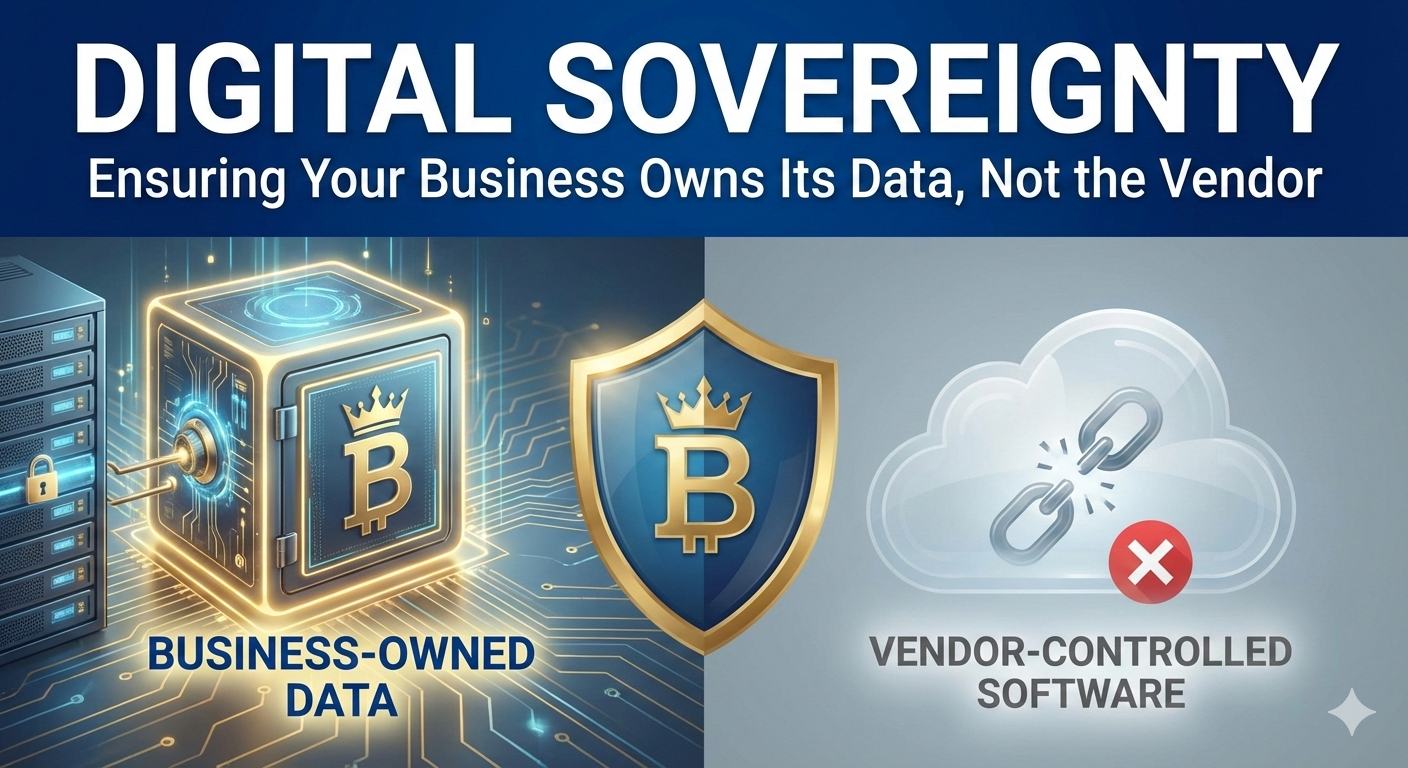
In the race toward digital transformation, businesses have rapidly adopted cloud platforms, SaaS applications, and third-party digital services to improve efficiency, scalability, and innovation. While these technologies have unlocked enormous value, they have also introduced a critical and often overlooked risk: loss of digital sovereignty.
Many organizations assume that just because their data is stored in a system they pay for, they fully control it. In reality, control over data can be limited by vendor contracts, platform dependencies, proprietary formats, and technical restrictions.
Digital sovereignty is about ensuring that your business—not your software vendor—retains true ownership, control, and freedom over its data.
At cvDragon IT Consulting, we help organizations design architectures, contracts, and governance frameworks that protect digital sovereignty while still leveraging modern cloud and SaaS innovation. This article explores what digital sovereignty means, why it matters, and how consulting helps businesses regain and protect control over their most valuable asset: their data.
What Is Digital Sovereignty?
Digital sovereignty refers to an organization’s ability to fully control:
- Its data
- How its data is stored
- Where its data resides
- Who can access it
- How easily it can move or retrieve it
It ensures that businesses are not technically, legally, or operationally dependent on a vendor to access their own information.
Digital sovereignty is not about avoiding vendors—it’s about avoiding vendor control over your business.
Why Digital Sovereignty Has Become a Critical Business Issue
Cloud and SaaS adoption has grown dramatically because of convenience and scalability. But this convenience often comes with hidden trade-offs.
Many organizations face situations where:
- Exporting data is difficult or expensive
- Data is locked into proprietary formats
- Switching vendors is complex and risky
- Contracts limit data portability
- Vendors control backup and recovery processes
In extreme cases, organizations may struggle to access their own operational data without vendor cooperation.
This creates strategic vulnerability.
Understanding Vendor Lock-In
Vendor lock-in is one of the biggest threats to digital sovereignty.
It happens when businesses become so dependent on a vendor’s platform that moving away becomes technically, financially, or operationally impractical.
Lock-in can occur through:
- Proprietary data formats
- Closed APIs
- Custom integrations tied to vendor systems
- Limited export capabilities
- Long-term restrictive contracts
Over time, this reduces business flexibility and negotiating power.
Why Your Data Is Your Most Valuable Asset
Modern businesses run on data. It drives:
- Customer insights
- Financial decisions
- Operational efficiency
- Product development
- Competitive strategy
If access to that data is restricted, delayed, or controlled by another party, the business loses agility and independence.
Digital sovereignty ensures that data remains a strategic advantage—not a dependency risk.
Cloud Adoption and the Sovereignty Paradox
Cloud platforms provide scalability and innovation—but they also centralize control.
This creates a paradox:
The more businesses rely on cloud platforms, the more important sovereignty becomes.
Without proper planning, organizations risk:
- Becoming dependent on a single cloud provider
- Losing visibility into data storage locations
- Facing high exit costs
- Struggling with compliance requirements
Cloud adoption must be balanced with control.
Legal and Regulatory Drivers of Digital Sovereignty
Digital sovereignty is also influenced by regulatory requirements.
Many regulations require organizations to:
- Know where their data is stored
- Protect customer privacy
- Maintain data access and control
- Support audit and reporting requirements
Failure to maintain sovereignty can lead to compliance violations, penalties, and legal exposure.
Consulting helps align technology decisions with regulatory expectations.
Key Risks of Losing Digital Sovereignty
Organizations that lack sovereignty may face serious consequences.
1. Limited Data Access
Businesses may not be able to retrieve data quickly—or in usable formats.
2. Vendor Dependency
Switching vendors becomes expensive and disruptive.
3. Reduced Negotiation Power
Vendors gain leverage when customers cannot easily leave.
4. Business Continuity Risks
Vendor outages or failures can disrupt operations.
5. Strategic Limitations
Organizations may be unable to innovate freely due to platform constraints.
Digital sovereignty protects long-term flexibility.
Digital Sovereignty Is Both a Technical and Contractual Issue
Many businesses focus only on technology—but sovereignty also depends heavily on contracts.
Key contractual considerations include:
- Data ownership clauses
- Data portability rights
- Exit and transition support
- Backup access rights
- Data deletion guarantees
Consulting ensures these protections are built into vendor agreements.
The Role of IT Consulting in Protecting Digital Sovereignty
At cvDragon IT Consulting, we help organizations protect sovereignty across architecture, governance, and vendor relationships.
1. Architecture Design for Independence
We design systems that avoid unnecessary dependency on any single vendor.
This includes:
- Open standards
- Interoperable platforms
- Portable data formats
- Modular architectures
This makes future transitions easier.
2. Vendor Risk and Lock-In Assessment
We evaluate:
- Vendor exit complexity
- Data extraction capabilities
- Platform flexibility
- Hidden lock-in risks
This helps businesses make informed decisions before committing.
3. Data Governance Frameworks
Governance ensures businesses maintain control over:
- Data access
- Data movement
- Data retention
- Data ownership policies
Governance protects sovereignty at scale.
4. Cloud and SaaS Exit Strategy Planning
Many organizations adopt cloud services without planning how to leave.
We help define:
- Data extraction processes
- Migration pathways
- Backup independence
- Transition readiness
If you can exit safely, you maintain sovereignty.
Open Standards and Interoperability: The Foundation of Sovereignty
Open standards reduce dependency on proprietary systems.
Benefits include:
- Easier data migration
- Greater vendor flexibility
- Improved integration
- Long-term sustainability
Open ecosystems support business freedom.
Backup and Recovery Independence
Many organizations rely entirely on vendors for backup.
This creates risk.
True sovereignty requires:
- Independent backup access
- Vendor-neutral recovery options
- Clear recovery ownership
Your backup should not depend solely on your vendor.
Multi-Cloud and Hybrid Strategies
One way to reduce vendor dependency is diversification.
Multi-cloud and hybrid models allow organizations to:
- Avoid single-provider lock-in
- Improve resilience
- Maintain flexibility
Consulting helps design balanced, manageable environments.
The Strategic Advantage of Digital Sovereignty
Organizations that maintain sovereignty gain major advantages.
They can:
- Switch vendors more easily
- Negotiate better contracts
- Adopt new technologies faster
- Reduce long-term risk
- Maintain operational independence
Sovereignty strengthens strategic control.
Digital Sovereignty Supports Innovation
Ironically, dependence limits innovation.
When businesses control their data, they can:
- Build custom analytics
- Adopt AI tools freely
- Integrate new platforms quickly
- Experiment safely
Freedom enables innovation.
Common Mistakes Organizations Make
Many businesses unintentionally surrender sovereignty by:
- Accepting default vendor contracts
- Ignoring exit planning
- Choosing convenience over flexibility
- Failing to understand technical dependencies
- Assuming vendors will always be available
Consulting helps prevent these costly mistakes.
Digital Sovereignty Is Not Anti-Cloud
Digital sovereignty does not mean avoiding cloud or SaaS.
It means using them wisely.
The goal is balance:
Leverage innovation without losing control.
Cloud should empower your business—not control it.
How cvDragon IT Consulting Helps Businesses Maintain Control
At cvDragon IT Consulting, we help organizations protect their digital independence through:
- Vendor lock-in risk assessments
- Sovereign cloud and SaaS strategy design
- Data governance and ownership frameworks
- Exit planning and migration readiness
- Contract and architecture advisory
We ensure your technology supports your business—not the other way around.
The Future: Sovereignty as a Business Requirement
As digital dependence grows, sovereignty will become a core business requirement—not just an IT concern.
Executives are increasingly asking:
- Do we fully control our data?
- Can we move it if needed?
- Are we dependent on one vendor?
Organizations that address these questions now will be stronger, safer, and more flexible.
Conclusion: Own Your Data, Own Your Future
Digital transformation should increase freedom—not reduce it.
Your data represents your customers, your operations, and your competitive advantage. Losing control over it means losing control over your future.
Digital sovereignty ensures that your business remains in charge.
At cvDragon IT Consulting, we help organizations build modern, cloud-enabled environments while protecting independence, flexibility, and ownership.
Because technology vendors should provide services.
They should never own your business’s destiny.