








Cloud Exit Strategies: Why (and How) to Plan for Moving Away from a Cloud Provider
 February 5, 2026
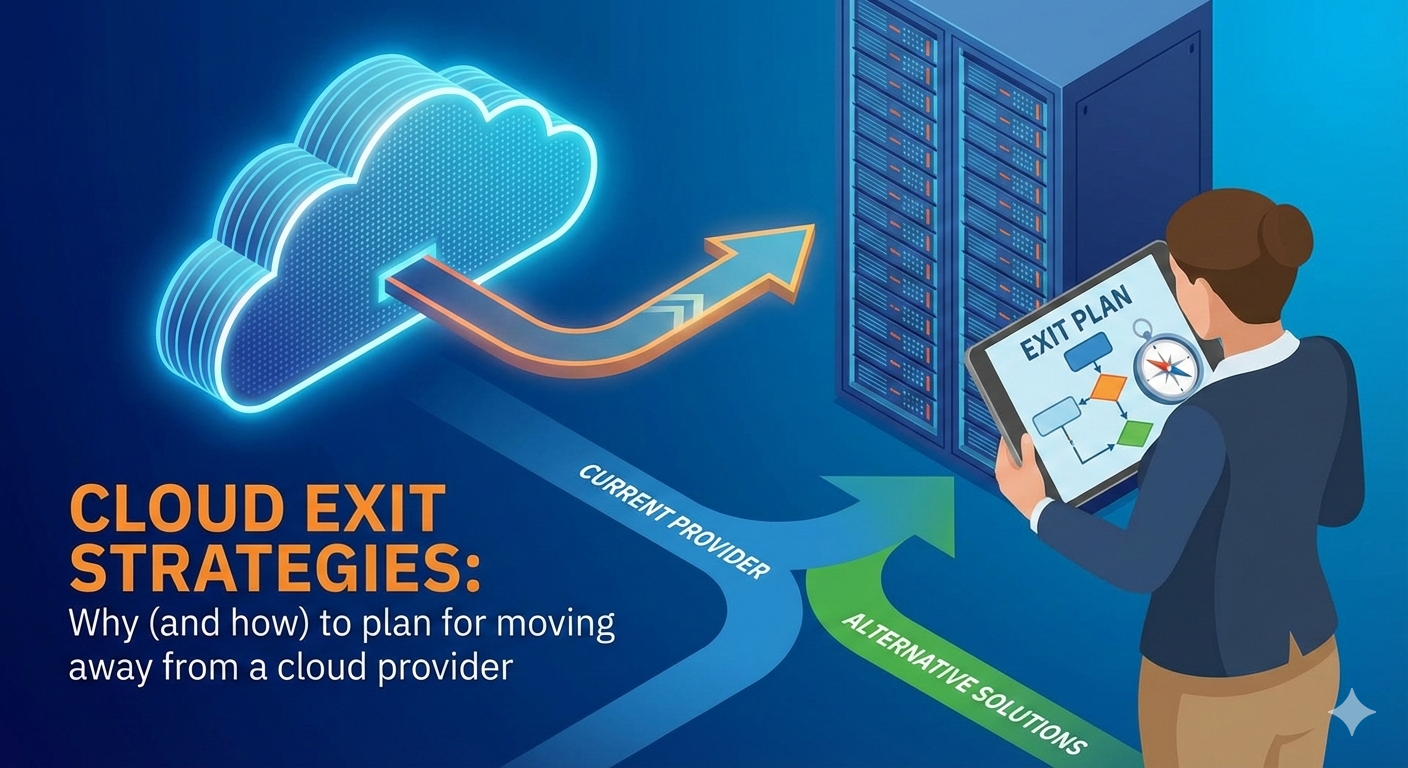
Cloud computing has transformed how organizations build, scale, and operate digital services. Speed, flexibility, and global reach have made cloud platforms a default choice for everything from startups to global enterprises. Yet as cloud adoption matures, many organizations are confronting a difficult reality: getting into the cloud is far easier than getting out of it.
Vendor lock-in, escalating costs, regulatory shifts, and changing business priorities are forcing leaders to ask an uncomfortable but necessary question: What if we need to leave our cloud provider?
This is where cloud exit strategies come into play. Far from being a pessimistic exercise, planning for a cloud exit is a sign of strategic maturity. At cvDragon IT Consulting, we help organizations design cloud architectures that preserve flexibility, resilience, and choice—without sacrificing the benefits of cloud innovation.
This article explores why cloud exit planning matters, the risks of ignoring it, and how enterprises can design practical, cost-effective exit strategies.
Why Cloud Exit Strategies Matter
In the early days of cloud adoption, the focus was simple: migrate quickly and realize immediate benefits. Exit planning was rarely discussed. Today, the landscape has changed.
Organizations now face:
- Rising and unpredictable cloud costs
- Increased reliance on proprietary services
- Evolving data residency and sovereignty laws
- Mergers, acquisitions, and divestitures
- Shifts toward hybrid or multi-cloud models
Without an exit strategy, enterprises can find themselves trapped—technically, financially, and strategically.
A cloud exit strategy does not mean you plan to leave tomorrow. It means you retain control over your future options.
Common Triggers for Leaving a Cloud Provider
Enterprises consider cloud exits for many reasons, often unexpectedly.
1. Cost Management and Financial Pressure
Cloud costs can grow quietly over time, driven by:
- Unoptimized resource usage
- Data egress fees
- Proprietary managed services
- Pay-as-you-go pricing surprises
When costs begin to outweigh value, organizations need the ability to renegotiate—or leave.
2. Vendor Lock-In Risks
Deep dependence on provider-specific services can make migration prohibitively complex.
Examples include:
- Proprietary databases
- Cloud-specific analytics or AI platforms
- Native orchestration and identity services
The deeper the lock-in, the harder and costlier the exit.
3. Regulatory and Compliance Changes
New regulations may require:
- Data to remain within national borders
- Greater auditability and control
- On-premises or sovereign cloud deployment
Without exit readiness, compliance becomes a major challenge.
4. Business Strategy Shifts
M&A activity, restructuring, or changes in digital strategy can demand rapid platform changes. Cloud exit planning provides agility in times of transformation.
The Hidden Costs of Not Planning an Exit
Ignoring cloud exit planning introduces long-term risk.
Consequences include:
- Limited negotiating power with vendors
- Forced renewals under unfavorable terms
- Expensive, rushed migrations
- Operational disruptions
- Increased technical debt
Cloud exits are always more painful when they are unplanned.
What Is a Cloud Exit Strategy?
A cloud exit strategy is a structured plan that enables an organization to migrate workloads, data, and services away from a cloud provider—with minimal disruption, cost, and risk.
It includes:
- Architectural decisions that reduce lock-in
- Data portability and ownership planning
- Contractual and commercial safeguards
- Operational and skills readiness
- Clear migration pathways
The goal is optionality, not abandonment.
Designing for Exit from Day One
The best time to plan a cloud exit is before you need one.
1. Favor Portable Architectures
Cloud-native does not have to mean cloud-exclusive.
Portable design principles include:
- Containerization using open standards
- Platform-agnostic orchestration tools
- Avoiding unnecessary proprietary dependencies
These choices preserve flexibility without sacrificing performance.
2. Separate Business Logic from Cloud Services
Tightly coupling business logic to provider-specific services increases exit complexity.
Decoupled architectures allow:
- Easier refactoring
- Faster migration
- Reduced rewrite effort
This separation is a cornerstone of exit readiness.
3. Standardize Data Formats and Access
Data is often the hardest part of any cloud exit.
Best practices include:
- Using open data formats
- Maintaining clear data ownership policies
- Regularly testing data exports
If you cannot easily extract your data, you do not truly control it.
Operational Readiness for Cloud Exit
Exit strategies are not purely technical—they are operational.
4. Maintain Skills Beyond a Single Platform
Over-specializing teams around one provider creates dependency.
Enterprises should:
- Cross-train teams
- Maintain platform-agnostic skills
- Document architectures and processes
Skills diversity is a form of risk management.
5. Document and Test Exit Scenarios
An untested exit plan is not a plan.
Organizations should periodically:
- Simulate migration scenarios
- Test workload portability
- Validate recovery timelines
This ensures readiness without triggering unnecessary change.
Contractual and Commercial Considerations
Exit planning must extend into procurement and legal domains.
6. Negotiate Exit-Friendly Contracts
Contracts should address:
- Data access and export rights
- Reasonable termination clauses
- Support during transition
- Transparency in exit-related costs
Commercial leverage is strongest before contracts are signed.
7. Understand Data Egress and Transition Costs
Unexpected fees can derail exit plans.
Clear visibility into:
- Data transfer costs
- License portability
- Tooling replacement expenses
helps organizations make informed decisions.
Common Cloud Exit Paths
A cloud exit does not always mean abandoning the cloud entirely.
Common scenarios include:
- Moving from one public cloud to another
- Transitioning to a hybrid model
- Repatriating specific workloads on-premises
- Adopting sovereign or regional cloud platforms
Each path requires tailored planning and execution.
The Role of IT Consulting in Cloud Exit Planning
Cloud exit strategies are complex because they touch technology, finance, governance, and operations.
At cvDragon IT Consulting, we help organizations:
- Assess cloud dependency and exit readiness
- Identify lock-in risks and cost drivers
- Design portable, future-proof architectures
- Develop phased exit and migration roadmaps
- Support contract negotiation and vendor management
- Execute controlled migrations when needed
Our approach ensures cloud flexibility without undermining current investments.
Balancing Innovation with Independence
A common fear is that exit planning limits innovation. In reality, the opposite is true.
Organizations that plan for exit:
- Negotiate better cloud terms
- Adopt new technologies more confidently
- Reduce long-term risk
- Avoid reactive, crisis-driven decisions
Strategic independence enables sustainable innovation.
Cloud Exit Strategies and the Future of IT
As cloud ecosystems mature, exit planning will become standard practice—much like disaster recovery or cybersecurity planning.
Future trends include:
- Exit-aware cloud architectures
- Increased regulatory focus on portability
- Multi-cloud governance platforms
- Greater emphasis on data sovereignty
Enterprises that embrace these trends early will remain agile in an unpredictable digital landscape.
Conclusion: Planning for Choice, Not Failure
A cloud exit strategy is not about distrust or pessimism. It is about responsible, forward-looking IT leadership.
By planning for the possibility of leaving a cloud provider, organizations protect themselves against uncertainty, preserve negotiating power, and maintain control over their digital future.
At cvDragon IT Consulting, we believe the most successful cloud strategies are those built on flexibility, transparency, and choice. When organizations plan for exit, they are not stepping backward—they are ensuring they can move forward on their own terms.
In a world of rapid change, the ability to choose your platform is one of the most powerful advantages an enterprise can have.