








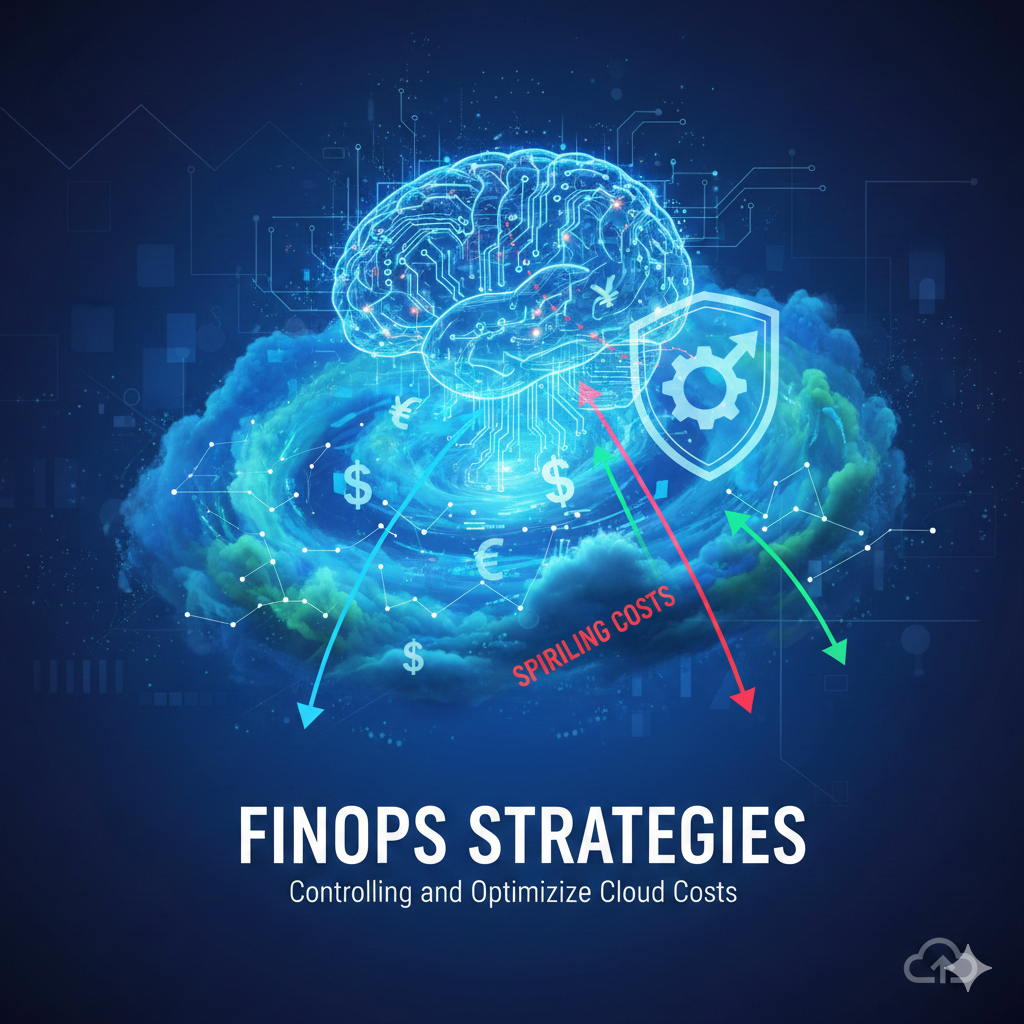
FinOps Strategies: Controlling and Optimizing Spiraling Cloud Costs
 February 21, 2026
Introduction: The Hidden Challenge of Cloud Success
Cloud computing has revolutionized how businesses operate. It offers scalability, flexibility, and speed that traditional IT infrastructure simply cannot match. Organizations can launch applications faster, scale globally, and innovate without heavy upfront investment.
However, this convenience comes with a new challenge: uncontrolled cloud spending.
Many businesses initially move to the cloud to reduce costs, only to find their cloud bills increasing month after month. What starts as a cost-saving initiative can quickly become a financial burden if not managed properly.
This is where FinOps comes in.
FinOps, or Cloud Financial Operations, is a strategic approach that helps organizations control, optimize, and maximize the value of their cloud investments.
What Is FinOps?
FinOps is a combination of financial management, operational processes, and technology practices designed to manage cloud costs effectively.
It brings together three key teams:
- Finance
- IT
- Business units
These teams collaborate to ensure that cloud spending aligns with business goals.
FinOps is not just about reducing costs. It is about spending smarter.
It helps organizations answer critical questions such as:
- Where is our cloud money going?
- Are we wasting resources?
- How can we optimize costs?
- Are we getting value from our cloud investment?
Why Cloud Costs Spiral Out of Control
Cloud platforms such as Amazon Web Services, Microsoft Azure, and Google Cloud offer flexible pricing models.
While flexibility is beneficial, it also makes it easy to overspend.
Here are the most common reasons cloud costs increase unexpectedly.
1. Lack of Visibility
Many organizations do not have clear visibility into their cloud usage.
They cannot see:
- Which teams are spending the most
- Which services are driving costs
- Where waste is occurring
Without visibility, cost control is impossible.
2. Overprovisioning Resources
Cloud resources are often provisioned based on peak demand.
However, they may run continuously—even when not needed.
Examples include:
- Oversized virtual machines
- Unused storage
- Idle databases
This leads to unnecessary costs.
3. Pay-As-You-Go Model Mismanagement
The cloud’s pay-as-you-go model makes it easy to launch services instantly.
But without monitoring, costs accumulate rapidly.
Small expenses add up.
4. Lack of Cost Accountability
In traditional IT, budgets are fixed.
In the cloud, teams can create resources independently.
Without accountability, spending increases.
5. Rapid Scaling Without Optimization
Cloud environments scale quickly.
But scaling without cost optimization leads to inefficiency.
Growth without control creates financial risk.
What Is FinOps and How It Solves These Problems
FinOps introduces structure and accountability.
It focuses on three core principles:
Visibility
Understanding cloud usage and costs.
Optimization
Reducing waste and improving efficiency.
Accountability
Ensuring teams take responsibility for their spending.
FinOps transforms cloud spending from uncontrolled to strategic.
Key Benefits of FinOps
1. Cost Control
FinOps helps identify and eliminate waste.
Organizations gain control over spending.
2. Improved Financial Planning
Businesses can predict cloud costs more accurately.
This improves budgeting.
3. Increased Efficiency
Resources are used more efficiently.
This improves overall performance.
4. Faster Decision Making
Real-time insights help leaders make informed decisions.
5. Better Return on Investment (ROI)
Organizations maximize the value of their cloud investments.
Core FinOps Strategies to Control Cloud Costs
Implementing FinOps requires a structured approach.
Here are the most effective strategies.
Strategy 1: Gain Complete Cost Visibility
You cannot optimize what you cannot see.
Organizations must monitor:
- Resource usage
- Cost trends
- Department-level spending
Cloud dashboards and cost management tools provide visibility.
This helps identify waste.
Strategy 2: Right-Size Resources
Many cloud resources are oversized.
FinOps helps organizations:
- Reduce instance sizes
- Remove unused resources
- Optimize storage
Right-sizing reduces unnecessary costs.
Strategy 3: Eliminate Idle Resources
Unused resources still generate costs.
Examples include:
- Idle virtual machines
- Unused storage
- Orphaned resources
Removing these saves money immediately.
Strategy 4: Use Reserved Instances and Savings Plans
Cloud providers offer discounts for long-term commitments.
These include:
- Reserved Instances
- Savings Plans
These options reduce costs significantly.
Organizations can save up to 70%.
Strategy 5: Automate Resource Management
Automation helps control costs.
Examples include:
- Automatically shutting down unused systems
- Scaling resources based on demand
Automation prevents waste.
Strategy 6: Implement Cost Allocation and Tagging
Tagging helps track cloud spending by:
- Department
- Project
- Application
This improves accountability.
Teams become responsible for their usage.
Strategy 7: Create Cloud Budgets and Alerts
Budgets help control spending.
Alerts notify teams when spending exceeds limits.
This prevents surprises.
Strategy 8: Adopt a Culture of Cost Awareness
FinOps is not just a technical process.
It is a cultural shift.
Teams must understand:
- Cloud costs money
- Efficiency matters
Cost awareness improves behavior.
The FinOps Lifecycle
FinOps operates in three phases.
Phase 1: Inform
Provide cost visibility.
Help teams understand spending.
Phase 2: Optimize
Identify savings opportunities.
Reduce waste.
Phase 3: Operate
Continuously monitor and improve.
FinOps is an ongoing process.
Real-World Example
Consider a software company using cloud infrastructure.
Before FinOps:
- Multiple unused servers running
- No cost monitoring
- Rising monthly bills
After FinOps implementation:
- Idle servers removed
- Resources right-sized
- Automated shutdown implemented
Result:
Cloud costs reduced by 35%.
Efficiency improved.
FinOps and Business Growth
FinOps supports business growth.
It enables organizations to:
- Scale efficiently
- Avoid unnecessary spending
- Invest in innovation
FinOps makes cloud growth sustainable.
Challenges in Implementing FinOps
Despite its benefits, FinOps implementation has challenges.
Lack of Expertise
FinOps requires specialized knowledge.
Many organizations lack experience.
Organizational Resistance
Teams may resist new cost controls.
Change management is required.
Complex Cloud Environments
Large organizations use multiple services.
Managing costs becomes complex.
Lack of Proper Tools
Without tools, FinOps is difficult.
Technology is essential.
Role of IT Consulting in FinOps Implementation
IT consulting firms help organizations implement FinOps successfully.
Their services include:
- Cloud cost assessment
- Cost optimization strategies
- Tool implementation
- Automation setup
- Monitoring and reporting
Expert guidance ensures success.
Future of FinOps
FinOps is becoming essential for all cloud-based organizations.
Future trends include:
AI-Driven Cost Optimization
AI will identify savings opportunities automatically.
Real-Time Cost Monitoring
Organizations will track costs instantly.
Increased Cloud Adoption
More businesses will move to the cloud.
FinOps will become mandatory.
Integration with Business Strategy
Cloud cost management will align with business goals.
FinOps will become strategic.
Best Practices for Successful FinOps
Organizations should follow these best practices:
- Monitor cloud costs regularly
- Remove unused resources
- Use automation
- Set budgets
- Train teams
- Work with experts
Consistency is key.
Why FinOps Is No Longer Optional
Cloud adoption is increasing rapidly.
Without FinOps:
- Costs spiral out of control
- Profit margins decrease
- Financial risks increase
FinOps ensures financial control.
Conclusion: Turning Cloud Spending into Business Value
Cloud computing offers tremendous opportunities—but without proper management, costs can quickly spiral out of control.
FinOps provides the framework, tools, and culture needed to control and optimize cloud spending.
It transforms cloud from a cost burden into a strategic advantage.
Organizations that adopt FinOps gain:
- Financial control
- Increased efficiency
- Better decision-making
- Improved ROI
At CVDragon IT Consulting, we help businesses implement effective FinOps strategies that provide full cost visibility, optimize cloud usage, and maximize business value.
The future of cloud is not just scalable—it is financially optimized.
FinOps is the key to achieving that future.