






Kubernetes and Containerization: Modernizing Application Deployment Workflows
 March 4, 2026
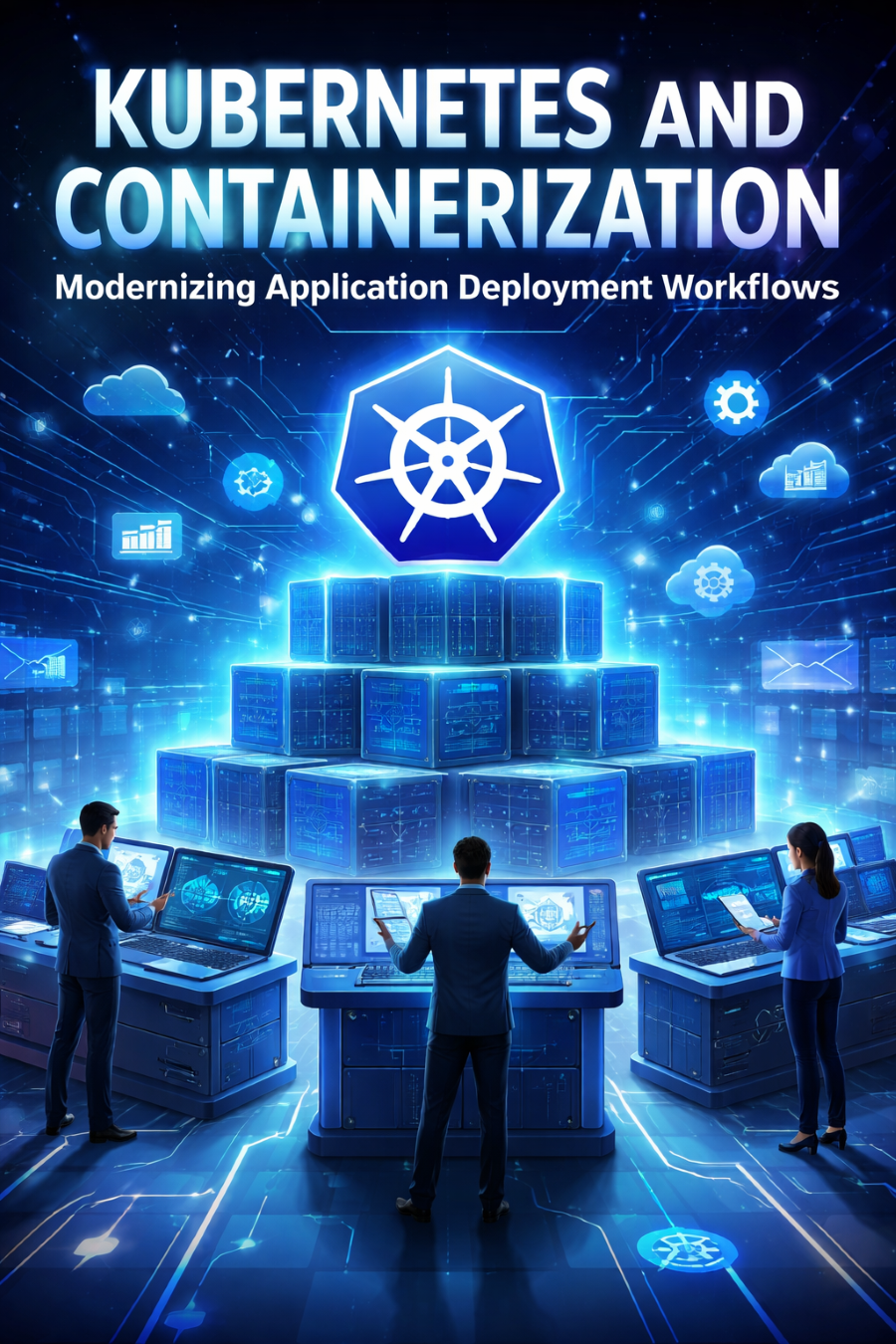
In the rapidly evolving digital economy, businesses must deliver software faster, scale applications seamlessly, and maintain reliable systems across diverse environments. Traditional deployment methods—where applications are tightly coupled with specific servers or infrastructure—often struggle to keep pace with modern development demands. These outdated workflows can lead to deployment delays, inconsistent environments, and operational inefficiencies.
To overcome these challenges, organizations are increasingly adopting containerization and container orchestration technologies such as Kubernetes. These technologies enable businesses to package applications efficiently, deploy them consistently across environments, and manage large-scale systems with greater flexibility and reliability.
At CVDragon IT Consulting, we help organizations modernize their application deployment strategies by implementing containerized architectures and Kubernetes orchestration. This article explores how these technologies transform development workflows and support scalable, resilient digital platforms.
Understanding Containerization
Containerization is a technology that packages an application along with all its dependencies—such as libraries, runtime environments, and configuration files—into a lightweight, portable unit called a container.
Unlike traditional virtual machines, containers share the host operating system while remaining isolated from each other. This makes them faster to start, more efficient in resource usage, and easier to deploy across multiple environments.
In simple terms, containerization allows developers to build once and run anywhere—whether on a developer’s laptop, a testing environment, or a cloud production system.
By encapsulating everything an application needs to function, containers eliminate many compatibility issues that occur during deployment.
The Rise of Kubernetes
While containers simplify application packaging, managing hundreds or thousands of containers across distributed systems introduces new operational challenges. This is where Kubernetes plays a critical role.
Kubernetes is an open-source container orchestration platform that automates the deployment, scaling, networking, and management of containerized applications.
Instead of manually managing containers across multiple servers, Kubernetes provides a centralized system that automatically handles tasks such as:
- Container scheduling
- Load balancing
- Resource allocation
- Health monitoring
- Automated scaling
- Self-healing capabilities
By orchestrating container environments intelligently, Kubernetes enables organizations to operate complex applications with minimal manual intervention.
Why Traditional Deployment Models Struggle
Before containerization became mainstream, organizations relied on traditional deployment methods such as installing applications directly on servers or using virtual machines.
These models often created several operational problems:
Environment Inconsistency
Applications behave differently across development, testing, and production systems due to configuration differences.
Resource Inefficiency
Virtual machines require full operating systems, consuming significant computing resources.
Slow Deployment Cycles
Manual configuration and infrastructure provisioning slow down software releases.
Limited Scalability
Scaling applications requires adding entire servers rather than adjusting smaller components.
Containerization and Kubernetes address these limitations by enabling flexible, efficient infrastructure management.
Key Benefits of Containerization
Portability
Containers can run consistently across on-premise servers, cloud platforms, and hybrid environments without modification.
Faster Development Cycles
Developers can test and deploy applications quickly using standardized container environments.
Resource Efficiency
Containers share operating system resources, reducing infrastructure overhead compared to virtual machines.
Simplified Dependency Management
All required libraries and runtime dependencies are packaged with the application.
Improved Collaboration
Development and operations teams work within identical environments, reducing integration conflicts.
How Kubernetes Enhances Container Management
While containers solve packaging challenges, Kubernetes provides the automation necessary to manage them at scale.
Automated Deployment
Kubernetes schedules containers across available computing resources automatically.
Self-Healing Systems
If a container fails, Kubernetes automatically restarts or replaces it.
Load Balancing
Traffic is distributed evenly across containers to maintain performance.
Horizontal Scaling
Applications can scale up or down automatically based on demand.
Rolling Updates
New application versions can be deployed gradually without downtime.
These capabilities allow organizations to maintain continuous service availability even during updates or failures.
Containerization and DevOps Transformation
Containerization and Kubernetes are closely aligned with modern DevOps practices.
DevOps emphasizes collaboration between development and operations teams, continuous integration, and rapid deployment cycles.
Containers support these goals by enabling:
- Continuous integration and continuous delivery (CI/CD) pipelines
- Automated testing environments
- Rapid rollback of application versions
- Microservices-based application architectures
With Kubernetes managing infrastructure automatically, teams can focus more on innovation and less on operational maintenance.
Microservices Architecture and Containers
Many organizations are moving away from monolithic applications toward microservices architectures. In this model, applications are divided into smaller, independent services that communicate through APIs.
Containers are ideal for microservices because each service can run within its own isolated environment.
Benefits include:
- Independent service scaling
- Faster feature deployment
- Improved fault isolation
- Simplified development cycles
Kubernetes orchestrates these microservices efficiently, ensuring they communicate reliably while maintaining performance.
Real-World Use Cases
Cloud-Native Application Development
Organizations building modern applications use containers and Kubernetes to maintain flexible cloud environments.
E-Commerce Platforms
Online retailers use Kubernetes to scale infrastructure dynamically during peak traffic periods such as sales events.
Financial Services Applications
Banks and fintech companies use containerization to deploy secure and highly available transaction systems.
Media Streaming Services
Streaming platforms rely on Kubernetes to distribute workloads across multiple geographic regions.
These examples demonstrate how container orchestration enables scalable digital services.
Security Considerations in Containerized Environments
While containers offer operational advantages, organizations must also address security challenges.
Key practices include:
- Container image scanning for vulnerabilities
- Secure access control for Kubernetes clusters
- Network segmentation between services
- Continuous monitoring for unusual activity
- Automated patch management
Proper security frameworks ensure containerized environments remain resilient against emerging cyber threats.
Challenges in Kubernetes Adoption
Despite its advantages, Kubernetes adoption introduces new complexities.
Learning Curve
Kubernetes architecture requires specialized knowledge for configuration and management.
Operational Complexity
Managing clusters, networking, and storage can become complicated without proper planning.
Monitoring and Observability
Containerized environments generate large volumes of operational data requiring advanced monitoring tools.
Cost Management
Improperly configured clusters can lead to unnecessary resource consumption.
These challenges highlight the importance of experienced implementation and governance strategies.
Best Practices for Successful Implementation
At CVDragon IT Consulting, we recommend several best practices when modernizing deployment workflows with Kubernetes.
- Start with pilot projects before scaling across the organization
- Design applications with containerization in mind
- Implement robust CI/CD pipelines
- Use centralized monitoring and logging systems
- Establish governance for cluster management
- Prioritize security at every stage of deployment
A structured approach ensures smooth adoption while minimizing operational disruption.
The Future of Containerized Infrastructure
Containerization and Kubernetes continue to evolve as foundational technologies for modern IT infrastructure.
Emerging trends include:
- Serverless container platforms
- AI-driven workload optimization
- Edge computing with container orchestration
- Multi-cloud container management
- GitOps-based deployment automation
Organizations that adopt container-native architectures today position themselves for greater agility and innovation in the future.
How CVDragon IT Consulting Supports Container Adoption
CVDragon IT Consulting helps businesses modernize application deployment through:
- Containerization strategy and architecture design
- Kubernetes cluster implementation and optimization
- DevOps pipeline integration
- Cloud-native application migration
- Security and compliance configuration
- Continuous monitoring and performance optimization
Our consulting approach ensures organizations achieve scalable, reliable, and efficient deployment workflows aligned with business objectives.
Conclusion
As digital services become more complex and user expectations continue to rise, traditional deployment models struggle to keep pace. Containerization and Kubernetes offer a powerful solution by transforming how applications are packaged, deployed, and managed.
By enabling consistent environments, automated scaling, and resilient infrastructure, these technologies empower organizations to innovate faster while maintaining operational stability.
For businesses seeking to modernize their application deployment workflows, adopting containerization and Kubernetes is no longer a competitive advantage—it is becoming a strategic necessity.
At CVDragon IT Consulting, we help organizations harness the full potential of containerized infrastructure, ensuring their applications are ready for the demands of modern digital ecosystems.