







Cyber Insurance Readiness: How consultants help firms qualify for lower premiums
 February 9, 2026
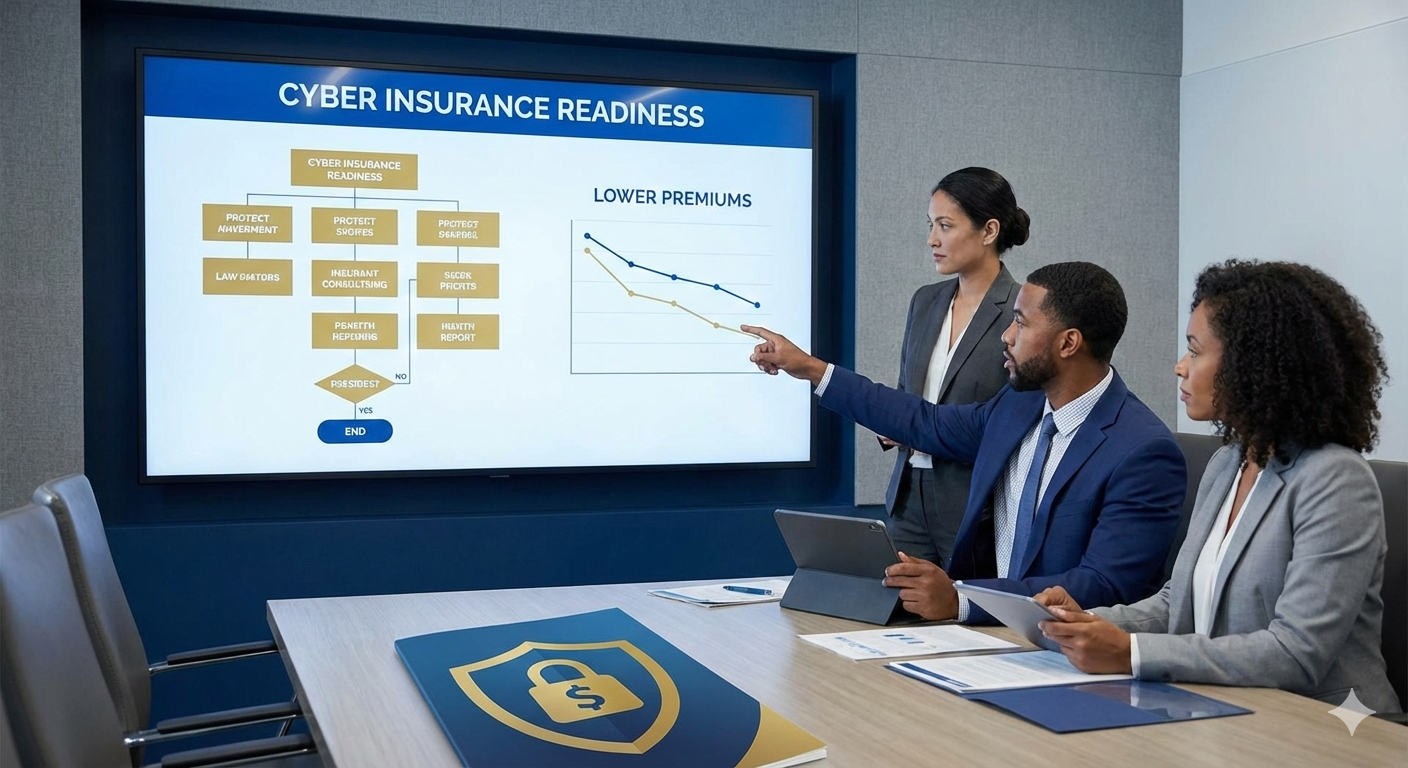
Cyber insurance has shifted from a “nice-to-have” safeguard to a business necessity. With ransomware attacks, data breaches, and supply chain compromises making headlines almost daily, insurers are tightening their underwriting standards—and raising premiums in the process. For many organizations, cyber insurance is no longer easy to obtain, affordable, or comprehensive.
What has changed?
Insurers are no longer willing to insure weak cybersecurity postures. They now expect proof—clear evidence that an organization actively manages cyber risk. This is where cyber insurance readiness consulting plays a critical role.
At cvDragon IT Consulting, we help organizations prepare not just to buy cyber insurance, but to qualify for better coverage at lower premiums by aligning security controls, governance, and documentation with insurer expectations. This article explains why cyber insurance readiness matters, what insurers look for today, and how consultants help firms turn cybersecurity maturity into financial advantage.
Why Cyber Insurance Is Getting Harder and More Expensive
Cyber insurance used to be relatively straightforward. A short questionnaire, basic security declarations, and a policy followed. Those days are gone.
Insurers now face:
- Rising ransomware payouts
- Increased frequency and sophistication of attacks
- Poor loss predictability
- Inconsistent cybersecurity practices among policyholders
As a result, insurers have responded by:
- Increasing premiums
- Reducing coverage limits
- Adding exclusions
- Requiring extensive security validation
- Declining high-risk applicants
Cyber insurance has effectively become a cybersecurity audit with financial consequences.
What Insurers Actually Assess Today
Modern cyber insurance underwriting focuses on measurable risk controls rather than promises.
Common assessment areas include:
- Identity and access management
- Multi-factor authentication (MFA) coverage
- Endpoint detection and response (EDR)
- Patch and vulnerability management
- Backup and recovery resilience
- Incident response preparedness
- Third-party and supply chain risk
- Employee security awareness training
Organizations that cannot demonstrate maturity in these areas are flagged as high risk—and priced accordingly.
Cyber Insurance Readiness: More Than a Checklist
Many firms assume cyber insurance readiness means filling out forms correctly. In reality, readiness is about operational security maturity.
True cyber insurance readiness answers three questions:
- Can you prevent common attacks?
- Can you detect and respond quickly?
- Can you recover without catastrophic loss?
Consultants help organizations move from theoretical compliance to provable capability.
The Role of Consultants in Cyber Insurance Readiness
Cyber insurance readiness sits at the intersection of cybersecurity, risk management, IT operations, and executive decision-making. This complexity is why consulting support is increasingly essential.
At cvDragon IT Consulting, our role is to translate insurer expectations into actionable, prioritized improvements.
1. Pre-Assessment and Risk Baseline
Consultants begin by assessing the organization’s current posture against insurer benchmarks.
This includes:
- Reviewing existing security controls
- Mapping gaps against underwriting requirements
- Identifying high-risk exposure areas
- Prioritizing remediation based on insurer impact
This baseline helps firms understand why premiums are high—or coverage is limited.
2. Security Control Alignment with Insurer Criteria
Insurers tend to favor specific, proven controls.
Consultants help organizations implement or strengthen:
- MFA for remote access, email, and privileged accounts
- Endpoint protection and centralized logging
- Secure backup strategies with offline or immutable copies
- Network segmentation to limit blast radius
- Vulnerability scanning and patch governance
These improvements directly influence underwriting outcomes.
Turning Cybersecurity Investments into Premium Reductions
One of the biggest mistakes organizations make is investing in security without linking it to insurance outcomes.
Consulting ensures that:
- Security improvements are documented correctly
- Controls align with insurer language and expectations
- Evidence is presented clearly during underwriting
Well-positioned firms often see:
- Lower premiums
- Higher coverage limits
- Fewer exclusions
- Faster underwriting approval
Cybersecurity maturity becomes a financial lever.
Incident Response Readiness as an Insurance Requirement
Insurers increasingly expect organizations to prove they can respond effectively to incidents.
Consultants help firms:
- Develop and test incident response plans
- Define escalation and communication workflows
- Conduct tabletop exercises
- Align response plans with insurer notification requirements
A tested incident response capability signals lower business interruption risk—something insurers value highly.
Backup and Recovery: A Key Premium Driver
Ransomware has reshaped insurance underwriting more than any other threat.
Insurers closely examine:
- Backup frequency and scope
- Backup isolation and immutability
- Recovery testing practices
- Time to restore critical systems
Consultants help design resilient recovery architectures that reduce potential payout size—often resulting in better premiums and coverage terms.
Third-Party and Supply Chain Risk Management
Insurers now recognize that many breaches originate from vendors.
Cyber insurance readiness increasingly includes:
- Vendor risk assessments
- Contractual security requirements
- Monitoring of critical third parties
Consultants help firms implement lightweight but effective third-party risk programs that demonstrate risk awareness without excessive overhead.
Documentation: The Silent Deal-Breaker
Many organizations have good security—but poor documentation.
Underwriters rely heavily on written evidence. Consultants ensure that:
- Policies are current and aligned with practice
- Security controls are clearly described
- Diagrams and inventories are accurate
- Evidence is easy for underwriters to verify
Clear documentation can mean the difference between approval and rejection.
Employee Awareness and Human Risk Reduction
Human error remains a major source of claims.
Insurers increasingly ask about:
- Security awareness training frequency
- Phishing simulations
- Incident reporting culture
Consultants help organizations build programs that are practical, measurable, and defensible during underwriting—reducing perceived human risk.
Bridging the Gap Between CISOs and CFOs
Cyber insurance readiness is not just a technical issue—it is a financial one.
Consultants help:
- Translate security investments into risk reduction metrics
- Connect cyber controls to insurance cost savings
- Support executive decision-making
This alignment helps leadership see cybersecurity as risk management—not just IT spend.
Common Mistakes That Increase Premiums
Organizations often unintentionally harm their insurance position by:
- Overstating security maturity
- Providing inconsistent answers across applications
- Lacking evidence for declared controls
- Ignoring insurer feedback year over year
- Treating insurance as a last-minute renewal task
Consulting introduces structure, consistency, and credibility.
Cyber Insurance Readiness as an Ongoing Program
Cyber insurance is no longer a once-a-year event.
Leading organizations treat readiness as a continuous process:
- Quarterly security reviews
- Ongoing control improvement
- Regular documentation updates
- Proactive insurer engagement
Consultants help establish sustainable readiness models that evolve alongside threat landscapes.
The Strategic Value Beyond Insurance
While lower premiums are a tangible benefit, cyber insurance readiness delivers broader value.
Organizations gain:
- Stronger cyber resilience
- Reduced operational risk
- Faster incident recovery
- Improved regulatory posture
- Greater stakeholder confidence
Insurance becomes a byproduct of maturity—not the sole objective.
How cvDragon IT Consulting Supports Cyber Insurance Readiness
At cvDragon IT Consulting, we provide end-to-end cyber insurance readiness services, including:
- Insurer-focused risk assessments
- Security control gap analysis
- Remediation roadmaps tied to premium impact
- Incident response and recovery planning
- Documentation and evidence preparation
- Renewal and underwriting support
Our approach ensures cybersecurity investments deliver both risk reduction and financial return.
Conclusion: Lower Premiums Start with Better Preparedness
Cyber insurers are no longer betting on promises—they are betting on proof.
Cyber insurance readiness is about demonstrating control, resilience, and accountability. With the right consulting guidance, organizations can turn cybersecurity maturity into a measurable advantage—qualifying for better coverage, lower premiums, and fewer surprises during underwriting.
At cvDragon IT Consulting, we believe the strongest insurance policy is a well-prepared organization. When security, governance, and readiness align, insurers respond with confidence—and so does the business.
Because in today’s threat landscape, preparedness doesn’t just reduce risk.
It reduces cost.