





Data Liquidity Strategy: Ensuring data flows freely between silos for better insights
 February 11, 2026
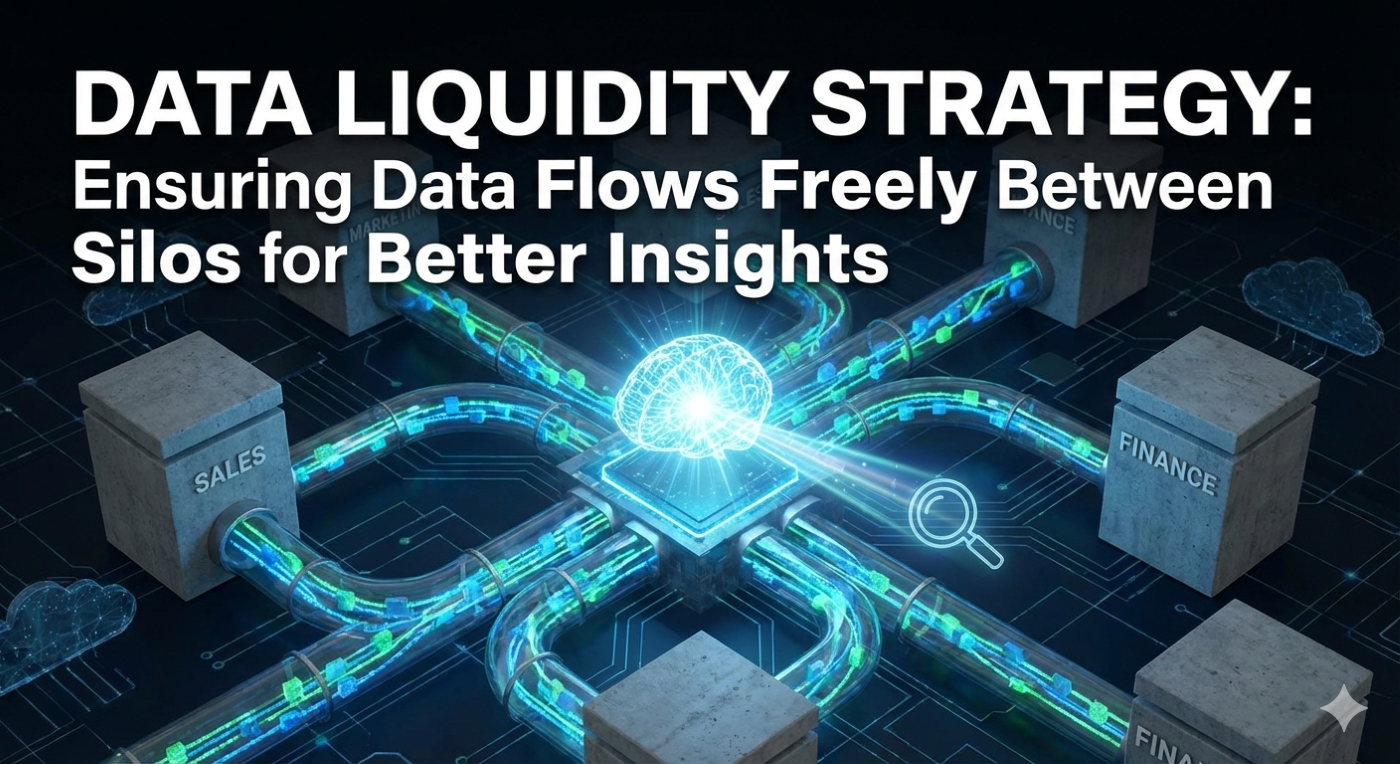
In today’s digital enterprise, data is often described as the new oil. But unlike oil, data does not automatically create value when stored. In fact, in many organizations, data remains trapped in silos—locked inside departments, platforms, and legacy systems that do not communicate effectively with one another.
The result? Slow decision-making, inconsistent reporting, duplicated efforts, and missed opportunities.
The organizations that truly succeed in becoming data-driven share one common trait: data liquidity. They ensure that data flows seamlessly, securely, and intelligently across systems, teams, and processes.
At cvDragon IT Consulting, we help enterprises design and implement Data Liquidity Strategies that break down silos, improve interoperability, and enable real-time insights. This article explores what data liquidity means, why it matters, and how consulting-led approaches help organizations unlock the full potential of their data ecosystems.
What Is Data Liquidity?
Data liquidity refers to the ability of data to move easily and securely across systems, departments, and platforms—while maintaining integrity, governance, and usability.
High data liquidity means:
- Systems are interconnected
- Data is accessible in real time or near real time
- Teams can collaborate using consistent information
- Insights are generated without manual consolidation
Low data liquidity, on the other hand, creates friction. Data must be manually exported, cleaned, reconciled, and re-entered into other systems—wasting time and increasing error risk.
The Hidden Cost of Data Silos
Data silos emerge naturally over time.
They are often caused by:
- Department-specific software purchases
- Legacy systems with limited integration capabilities
- Mergers and acquisitions
- Rapid cloud adoption without integration planning
- Poor data governance
While each system may function well individually, collectively they create fragmentation.
The consequences include:
- Conflicting reports and KPIs
- Incomplete customer or operational views
- Delayed analytics
- Redundant data storage
- Increased security risks
Without data liquidity, organizations struggle to move from reporting to predictive intelligence.
Why Data Liquidity Matters More Than Ever
The need for data liquidity has intensified due to three major trends:
1. Real-Time Decision Expectations
Executives and operational leaders increasingly expect real-time dashboards and predictive insights. Static, manually updated reports no longer meet business demands.
2. AI and Advanced Analytics Adoption
AI models require integrated, high-quality datasets. Siloed data limits model performance and accuracy.
3. Customer-Centric Business Models
Delivering seamless customer experiences requires unified views across marketing, sales, service, and operations. Fragmented data leads to inconsistent engagement.
Data liquidity is no longer an IT optimization—it is a strategic imperative.
Data Liquidity vs. Data Centralization
A common misconception is that achieving data liquidity means centralizing all data into one massive repository. While centralization can help, liquidity is more about connectivity and accessibility than physical location.
Modern data liquidity strategies may include:
- Data lakes or warehouses
- Data virtualization layers
- API-based integrations
- Event-driven architectures
- Cloud-native data platforms
The goal is not necessarily “one database,” but a coordinated data ecosystem.
Core Components of a Data Liquidity Strategy
At cvDragon IT Consulting, we design data liquidity strategies built on five foundational pillars.
1. Data Integration Architecture
The backbone of liquidity is integration.
This includes:
- APIs for system connectivity
- ETL/ELT pipelines
- Streaming and event-based data flows
- Middleware and integration platforms
A well-architected integration layer reduces dependency on manual processes.
2. Data Standardization and Modeling
Data cannot flow effectively if it speaks different “languages.”
Organizations must standardize:
- Naming conventions
- Data definitions
- Master data management (MDM) policies
- Taxonomies and classifications
Without standardization, integration only spreads inconsistency.
3. Governance and Security
Free-flowing data does not mean uncontrolled data.
Effective liquidity includes:
- Role-based access controls
- Encryption in transit and at rest
- Audit trails
- Compliance monitoring
Security must move with the data.
4. Metadata and Discoverability
Employees must be able to find and understand data.
This requires:
- Data catalogs
- Clear ownership definitions
- Lineage tracking
- Quality scoring
Liquidity includes not just movement, but visibility.
5. Cultural and Organizational Alignment
Technology alone cannot eliminate silos.
True data liquidity requires:
- Cross-functional collaboration
- Shared KPIs
- Executive sponsorship
- Clear data ownership accountability
Culture is as critical as architecture.
Common Barriers to Data Liquidity
Organizations attempting to improve data flow often encounter predictable challenges:
- Legacy systems that resist integration
- Data duplication and inconsistency
- Resistance from departments guarding “their” data
- Lack of data governance maturity
- Budget constraints and competing priorities
Consulting helps organizations navigate these obstacles with structured roadmaps and measurable milestones.
The Role of IT Consulting in Achieving Data Liquidity
Data liquidity initiatives often fail when treated as isolated IT projects. Success requires strategic coordination across the enterprise.
At cvDragon IT Consulting, we support clients through:
Data Landscape Assessment
We evaluate current systems, integrations, data flows, and bottlenecks to identify liquidity gaps.
Strategy and Roadmap Development
We define:
- Target architecture
- Phased implementation plans
- Integration priorities
- Risk mitigation strategies
Technology Selection and Implementation Support
We help choose platforms that align with scalability, security, and business needs.
Governance Framework Design
We ensure data flow improvements are sustainable and compliant.
Use Cases That Benefit from High Data Liquidity
Data liquidity creates measurable business impact across multiple domains.
Customer 360 Insights
Unified data from CRM, marketing, support, and transactions enables personalized engagement and retention strategies.
Supply Chain Optimization
Integrated data across procurement, logistics, and inventory improves forecasting and reduces disruption risk.
Financial Transparency
Cross-system integration enhances budgeting accuracy and performance analysis.
Operational Efficiency
Real-time data sharing between departments reduces delays and duplication.
Data Liquidity and AI Readiness
Organizations often pursue AI initiatives before achieving sufficient data liquidity. This leads to:
- Incomplete datasets
- Biased or inaccurate models
- Slow model training cycles
AI thrives in environments where data flows freely, consistently, and securely. A data liquidity strategy lays the groundwork for advanced analytics and automation.
Balancing Liquidity with Control
One risk of increasing data flow is overexposure.
Consulting ensures balance by:
- Implementing tiered access structures
- Monitoring data usage patterns
- Defining retention and archival policies
- Automating compliance checks
Liquidity should empower—not endanger—the organization.
Measuring the Success of a Data Liquidity Strategy
Improved data flow should translate into measurable outcomes.
Key indicators include:
- Reduced time to generate insights
- Fewer manual data reconciliation efforts
- Increased cross-functional collaboration
- Improved decision accuracy
- Higher adoption of analytics tools
Liquidity is successful when friction disappears.
From Data Silos to Data Ecosystems
Modern enterprises cannot afford fragmented data landscapes. As businesses expand digital channels, adopt hybrid cloud environments, and integrate AI capabilities, data complexity will only increase.
A well-designed Data Liquidity Strategy transforms isolated systems into a cohesive ecosystem—where information moves securely, intelligently, and purposefully.
At cvDragon IT Consulting, we believe that data should not be confined by organizational boundaries. When data flows freely, innovation accelerates, insights deepen, and decision-making becomes proactive rather than reactive.
The future of competitive advantage lies not in how much data you collect—but in how fluidly you can use it.