







DevSecOps Integration: Embedding Security into the Software Development Lifecycle
 February 12, 2026
Speed has become the currency of modern software development. Organizations race to deliver new features, deploy updates weekly (or daily), and respond quickly to evolving customer expectations. DevOps transformed how teams build and release software—but in many cases, security was left behind.
When security is treated as a final checkpoint instead of a continuous practice, vulnerabilities slip into production. The result? Expensive rework, compliance violations, reputational damage, and growing cyber risk.
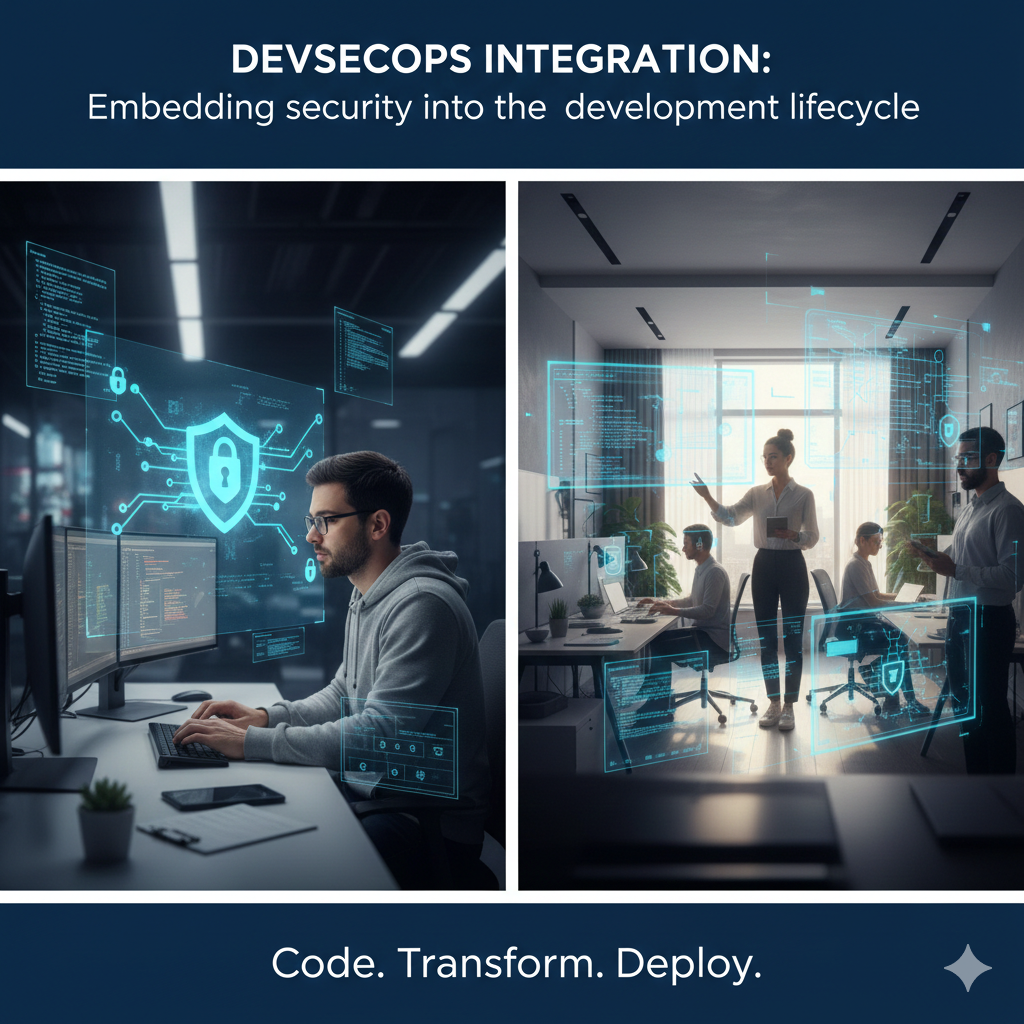
This is why forward-thinking organizations are embracing DevSecOps—a model that embeds security into every phase of the software development lifecycle (SDLC).
At cvDragon IT Consulting, we help enterprises transition from reactive security models to integrated DevSecOps frameworks that align speed, security, and scalability. In this article, we explore what DevSecOps truly means, why it matters, and how consulting-led integration ensures it delivers real value.
What Is DevSecOps?
DevSecOps stands for Development, Security, and Operations. It extends DevOps principles by making security a shared responsibility rather than a separate gatekeeping function.
Instead of asking, “Is this secure?” at the end of development, DevSecOps asks:
- How do we build this securely from the start?
- How do we detect vulnerabilities continuously?
- How do we automate security controls without slowing innovation?
DevSecOps is not just about tools—it is about culture, process, and accountability.
Why Traditional Security Models Fail in Agile Environments
Historically, security teams operated independently from development teams. Code would be written, tested for functionality, and then handed off to security for review.
This model creates problems:
- Late-stage vulnerability discovery
- Delayed releases
- Friction between teams
- Increased remediation costs
In agile and CI/CD environments, this sequential model simply cannot keep up.
Security must move at the speed of development.
The Business Case for DevSecOps
DevSecOps is not just a technical upgrade—it is a business strategy.
Organizations that successfully integrate DevSecOps experience:
- Reduced breach risk
- Faster time to market
- Lower remediation costs
- Improved compliance readiness
- Greater developer accountability
Security becomes an enabler of innovation rather than a bottleneck.
Core Principles of DevSecOps Integration
At cvDragon IT Consulting, we guide organizations through DevSecOps transformation using five core principles.
1. Shift Security Left
“Shifting left” means integrating security early in the SDLC.
This includes:
- Secure coding standards
- Threat modeling during design
- Developer security training
- Pre-commit code scanning
The earlier a vulnerability is found, the cheaper it is to fix.
2. Automate Security Testing
Manual security reviews cannot keep up with continuous deployment pipelines.
Automation includes:
- Static Application Security Testing (SAST)
- Dynamic Application Security Testing (DAST)
- Software Composition Analysis (SCA)
- Container image scanning
- Infrastructure-as-Code (IaC) scanning
Automated testing embeds security directly into CI/CD workflows.
3. Integrate Security into CI/CD Pipelines
DevSecOps requires security checkpoints within pipelines—not outside them.
Consulting ensures:
- Automated gating policies
- Real-time vulnerability alerts
- Secure artifact repositories
- Compliance validation before deployment
Security becomes part of the release process—not a separate review.
4. Continuous Monitoring in Production
Security does not stop at deployment.
Post-deployment security includes:
- Runtime application protection
- Log monitoring and anomaly detection
- Cloud security posture management
- Continuous compliance scanning
DevSecOps spans the entire lifecycle—not just development.
5. Cultural Transformation
The most difficult part of DevSecOps is cultural.
Developers may fear that security slows them down. Security teams may fear loss of control.
Successful integration requires:
- Shared KPIs
- Cross-functional collaboration
- Clear accountability
- Executive sponsorship
Security becomes a team sport.
Common Challenges in DevSecOps Adoption
Despite its benefits, DevSecOps integration often stalls due to:
- Tool sprawl without integration
- Alert fatigue from excessive scanning
- Poor prioritization of vulnerabilities
- Lack of skilled security engineers
- Resistance from development teams
Consulting provides structured frameworks to overcome these challenges without overwhelming teams.
The Role of IT Consulting in DevSecOps Transformation
DevSecOps is not achieved by purchasing tools—it requires strategic alignment.
At cvDragon IT Consulting, we support organizations through:
Security Maturity Assessment
We evaluate current development workflows, security practices, and risk exposure to identify integration gaps.
DevSecOps Roadmap Development
We design phased implementation plans aligned with organizational goals and technical capabilities.
Toolchain Optimization
We help select and integrate security tools that align with CI/CD platforms and cloud environments.
Policy and Governance Frameworks
We establish automated security policies that scale with growth.
DevSecOps in Cloud-Native and Containerized Environments
Modern applications often rely on microservices, containers, and cloud-native architectures.
These environments introduce new security considerations:
- Misconfigured cloud resources
- Vulnerable container images
- Insecure APIs
- Secrets management challenges
DevSecOps ensures security controls evolve alongside architecture modernization.
Balancing Speed and Security
One common concern is that adding security slows development velocity.
In reality, poorly implemented security slows teams. Properly integrated DevSecOps accelerates them by:
- Reducing late-stage rework
- Automating repetitive checks
- Improving code quality
- Providing real-time feedback
Security done right supports agility.
Metrics That Matter in DevSecOps
Measuring DevSecOps success requires meaningful metrics.
Key indicators include:
- Time to remediate vulnerabilities
- Percentage of code scanned automatically
- Reduction in critical vulnerabilities over time
- Deployment frequency
- Mean time to detect (MTTD) and respond (MTTR)
Metrics align security performance with business outcomes.
Compliance and Regulatory Benefits
Many industries face regulatory requirements such as data protection, financial reporting, or healthcare privacy standards.
DevSecOps supports compliance by:
- Automating audit trails
- Enforcing policy as code
- Providing real-time reporting
- Standardizing security practices
Consulting ensures compliance becomes integrated—not reactive.
The Human Element: Upskilling Developers
Developers are central to DevSecOps success.
Training initiatives include:
- Secure coding workshops
- Threat modeling exercises
- Vulnerability remediation guidance
- Peer knowledge sharing
Empowered developers build secure applications naturally.
Avoiding Common DevSecOps Pitfalls
Organizations sometimes make avoidable mistakes:
- Treating DevSecOps as a rebranding exercise
- Overloading pipelines with redundant tools
- Ignoring usability for developers
- Failing to define ownership
Consulting ensures structured implementation rather than fragmented adoption.
DevSecOps as a Competitive Advantage
In today’s market, security is not just risk management—it is brand protection.
Customers increasingly evaluate vendors based on:
- Data protection practices
- Incident response readiness
- Secure development transparency
Organizations that embed security into their SDLC gain trust—and trust drives growth.
How cvDragon IT Consulting Enables Secure Innovation
At cvDragon IT Consulting, we help enterprises transform DevOps into true DevSecOps through:
- End-to-end lifecycle integration
- Automation-first security design
- Cloud-native security alignment
- Governance and compliance embedding
- Developer-focused security enablement
Our goal is to ensure security enhances speed rather than restricts it.
Conclusion: Security as Code, Not Afterthought
DevSecOps is more than a technical methodology—it is a strategic shift in how organizations think about software development.
Embedding security into the software development lifecycle ensures:
- Resilience in the face of evolving threats
- Reduced operational risk
- Faster, safer releases
- Sustainable innovation
At cvDragon IT Consulting, we believe that security should not be a final checkpoint—it should be woven into every line of code, every pipeline, and every deployment.
Because in the digital era, innovation without security is risk.
But innovation with embedded security is competitive strength.