








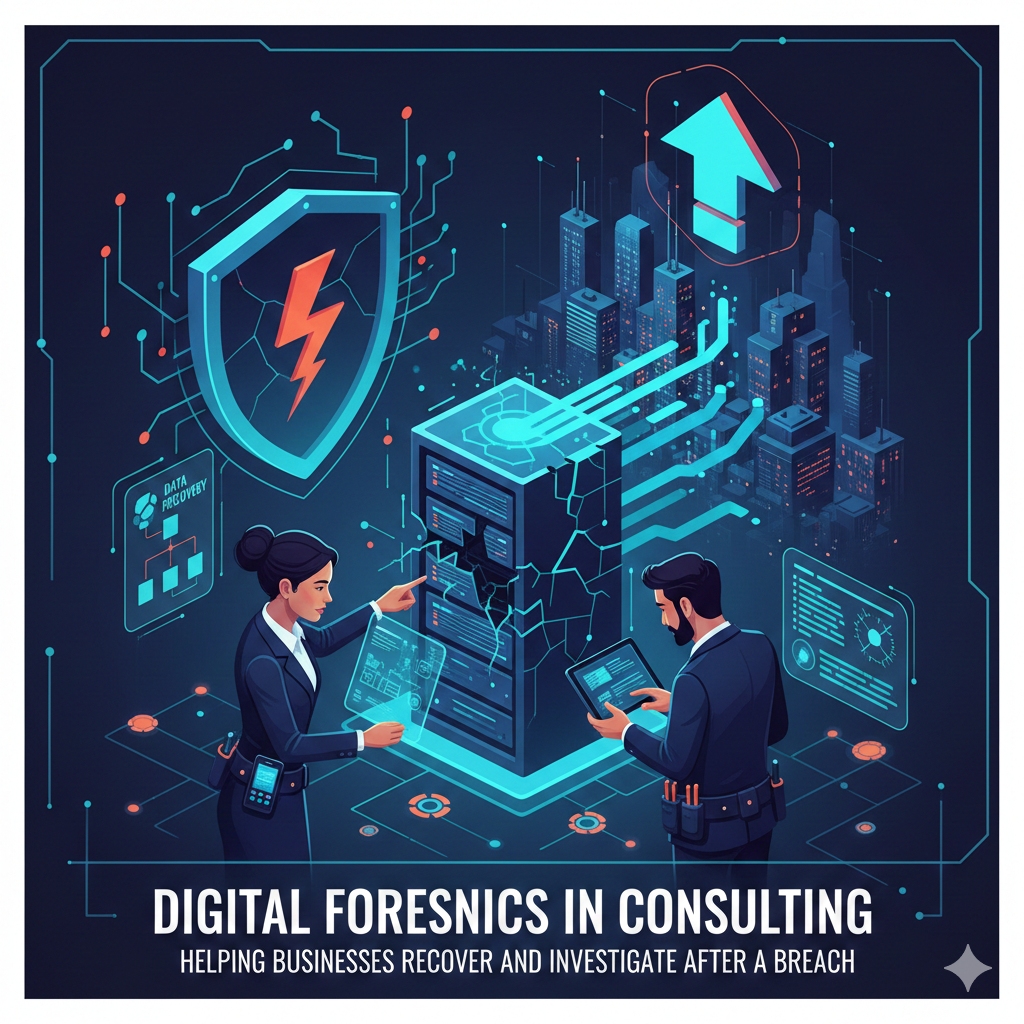
Digital Forensics in Consulting: Helping Businesses Recover and Investigate After a Breach
 February 13, 2026
No organization plans to experience a cyber breach. Yet in today’s threat landscape, incidents are no longer a matter of “if,” but “when.” Whether it’s ransomware encrypting critical systems, unauthorized access to sensitive customer data, insider misuse, or supply chain compromise, breaches can disrupt operations, damage reputations, and trigger regulatory scrutiny within hours.
When a cyber incident occurs, the first instinct is often to restore systems quickly and resume operations. While recovery is essential, acting without understanding what happened can create even bigger risks. This is where digital forensics consulting becomes critical.
At cvDragon IT Consulting, we support organizations in investigating cyber incidents, preserving evidence, identifying root causes, and strengthening defenses to prevent recurrence. Digital forensics is not just about finding attackers—it’s about restoring trust, meeting compliance obligations, and building resilience after a crisis.
This article explores the role of digital forensics in consulting, the structured process behind breach investigations, and how businesses can recover with clarity and confidence.
What Is Digital Forensics?
Digital forensics is the systematic identification, preservation, analysis, and reporting of digital evidence following a cybersecurity incident.
It answers essential questions:
- How did the breach occur?
- What systems were affected?
- What data was accessed or exfiltrated?
- How long was the attacker present?
- Is the threat fully contained?
Digital forensics transforms uncertainty into evidence-based understanding.
Why Businesses Need Forensic Expertise After a Breach
In the immediate aftermath of a breach, organizations face intense pressure:
- Customers demand transparency
- Regulators require notification
- Insurers request documentation
- Executives seek fast answers
- Operations teams push for rapid restoration
Without structured forensic investigation, organizations risk:
- Destroying evidence during recovery
- Missing hidden backdoors
- Underestimating data exposure
- Providing inaccurate regulatory disclosures
- Experiencing repeat attacks
Digital forensics provides clarity during chaos.
The Difference Between Incident Response and Digital Forensics
Although closely related, incident response and digital forensics serve different roles.
- Incident Response focuses on containment and remediation.
- Digital Forensics focuses on investigation and evidence preservation.
Effective breach management requires both. Consulting ensures these efforts work in coordination—not conflict.
The Digital Forensics Process
At cvDragon IT Consulting, our forensic methodology follows a structured and defensible approach.
1. Immediate Containment and Evidence Preservation
Before systems are altered or restored, it is critical to preserve digital evidence.
This includes:
- Capturing system images
- Collecting log files
- Securing memory dumps
- Isolating affected devices
Improper handling at this stage can permanently destroy valuable evidence.
2. Forensic Analysis and Timeline Reconstruction
Once evidence is secured, investigators analyze:
- Network traffic logs
- Authentication records
- File system changes
- Malware signatures
- Privilege escalation patterns
The goal is to reconstruct a detailed timeline of events—understanding how the attacker gained entry and moved within the environment.
3. Impact Assessment
A breach investigation must determine:
- What data was accessed
- Whether data was altered or exfiltrated
- Which users or customers were affected
- The operational impact
Accurate impact analysis is critical for regulatory reporting and insurance claims.
4. Root Cause Identification
Finding the entry point is essential for preventing recurrence.
Common root causes include:
- Phishing-based credential compromise
- Unpatched vulnerabilities
- Misconfigured cloud resources
- Weak access controls
- Insider threats
Consulting ensures remediation directly addresses the root—not just the symptoms.
5. Reporting and Legal Support
Forensic findings must often be documented for:
- Regulatory authorities
- Cyber insurance providers
- Law enforcement
- Internal leadership
- Board-level review
Clear, defensible reporting is as important as technical analysis.
Digital Forensics and Regulatory Compliance
Many industries face strict breach notification requirements. Delays or inaccuracies can lead to fines and reputational damage.
Digital forensics supports compliance by:
- Providing evidence-backed disclosures
- Identifying affected data categories
- Documenting remediation steps
- Supporting legal defensibility
Consultants help organizations navigate complex regulatory landscapes confidently.
The Role of Digital Forensics in Cyber Insurance Claims
Cyber insurance providers often require detailed forensic documentation before approving claims.
Consulting ensures:
- Proper evidence handling
- Accurate damage assessment
- Clear documentation of response efforts
- Compliance with policy terms
Strong forensic support can significantly impact claim approval and reimbursement.
Handling Ransomware Investigations
Ransomware incidents are among the most disruptive breaches organizations face.
Digital forensic efforts in ransomware cases focus on:
- Identifying initial access vector
- Determining lateral movement
- Confirming data exfiltration
- Assessing decryption feasibility
- Ensuring complete eradication of malicious artifacts
Paying ransom without investigation often leaves residual vulnerabilities behind.
Insider Threat Investigations
Not all breaches originate externally. Insider incidents—whether malicious or accidental—require sensitive handling.
Forensic investigations help determine:
- Scope of access
- Intent and activity logs
- Policy violations
- Data transfer evidence
Consulting ensures investigations remain objective and legally sound.
Maintaining Chain of Custody
Forensic evidence must be preserved in a way that ensures integrity and legal admissibility.
This includes:
- Secure storage protocols
- Detailed documentation of evidence handling
- Controlled access to forensic artifacts
Without proper chain of custody, evidence may be challenged or dismissed.
Common Mistakes Businesses Make After a Breach
Organizations often make avoidable errors during crisis moments:
- Immediately wiping systems
- Failing to isolate compromised devices
- Delaying investigation
- Relying solely on internal IT staff
- Underreporting or misreporting exposure
Consulting introduces discipline and objectivity during high-pressure situations.
Post-Incident Hardening and Lessons Learned
Digital forensics does not end with identifying the attacker.
After investigation, organizations must:
- Patch vulnerabilities
- Strengthen access controls
- Update security policies
- Improve monitoring systems
- Conduct employee awareness training
Consulting ensures lessons learned translate into measurable improvements.
Rebuilding Trust After a Breach
Beyond technical recovery, organizations must restore stakeholder confidence.
Digital forensics supports trust by:
- Demonstrating transparency
- Providing accurate communication
- Showing proactive remediation
- Strengthening governance
Clarity builds credibility.
Proactive Forensics Readiness
The best time to prepare for digital forensics is before a breach occurs.
Organizations can improve readiness by:
- Implementing centralized logging
- Retaining logs for sufficient durations
- Conducting tabletop exercises
- Establishing incident response plans
- Pre-identifying forensic partners
Preparation accelerates response when time matters most.
The Human Side of Breach Investigation
Cyber incidents create stress, fear, and uncertainty within organizations.
Consulting plays a stabilizing role by:
- Providing structured processes
- Communicating clearly with leadership
- Reducing speculation
- Ensuring data-driven decisions
Calm, professional investigation helps organizations move forward confidently.
How cvDragon IT Consulting Supports Businesses
At cvDragon IT Consulting, our digital forensics services include:
- Rapid incident assessment
- Evidence preservation and analysis
- Root cause identification
- Regulatory and legal reporting support
- Cyber insurance coordination
- Post-incident security strengthening
Our approach combines technical precision with strategic guidance—helping organizations not only recover, but emerge stronger.
Conclusion: From Crisis to Clarity
A cyber breach can feel overwhelming. Systems fail, customers worry, regulators demand answers, and executives seek immediate reassurance. In these moments, clarity is the most valuable asset.
Digital forensics transforms confusion into facts, speculation into evidence, and vulnerability into learning.
At cvDragon IT Consulting, we believe that while no organization welcomes a breach, every organization can respond with discipline, transparency, and resilience. With the right forensic support, businesses can recover operations, restore trust, and strengthen defenses against future threats.
Because recovery is not just about restoring systems.
It is about restoring confidence.