








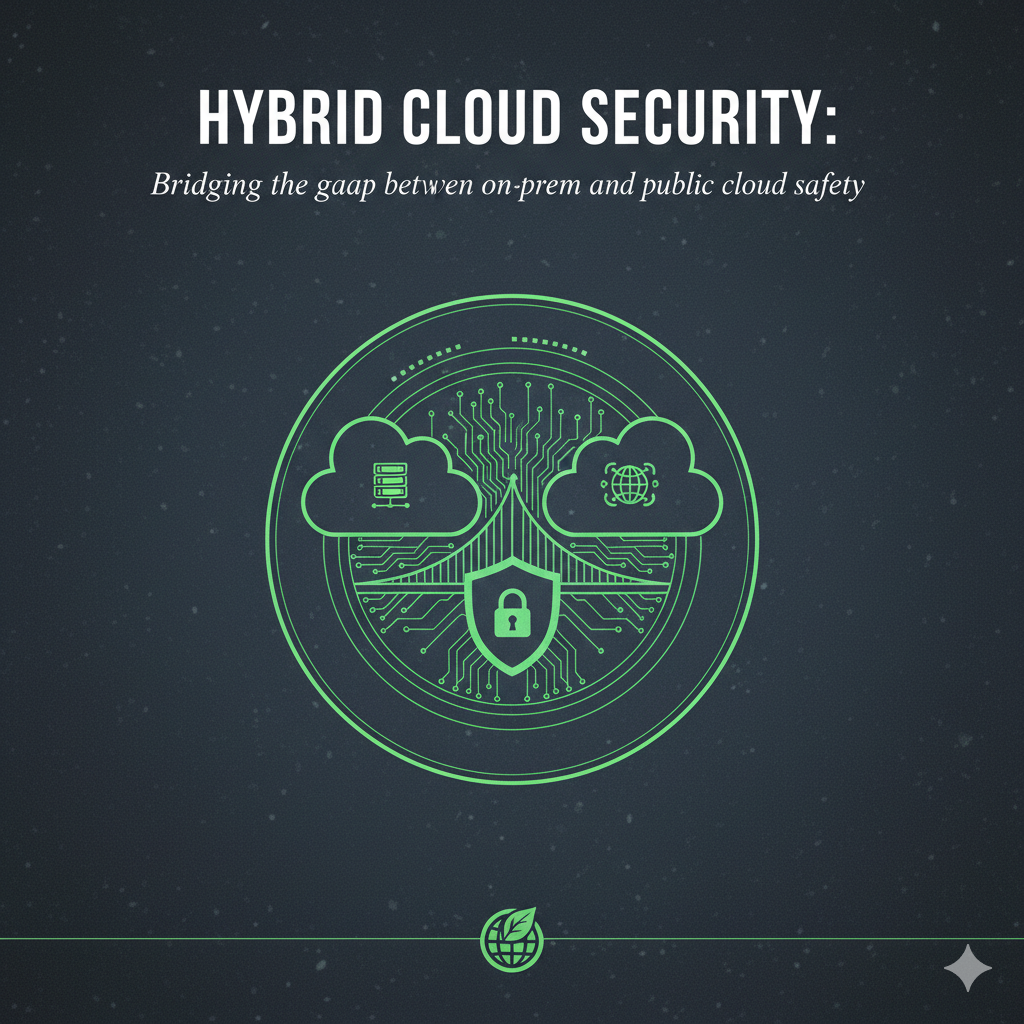
Hybrid Cloud Security: Bridging the gap between on-prem and public cloud safety
 February 26, 2026
Introduction: The New Reality of Hybrid Infrastructure
As organizations accelerate their digital transformation, many are adopting hybrid cloud environments—a combination of on-premises infrastructure and public cloud platforms. This approach offers flexibility, scalability, and control, allowing businesses to keep sensitive workloads on-premises while leveraging the power of the cloud for innovation and growth.
However, hybrid environments also introduce new security challenges. Managing security across multiple platforms, networks, and providers is far more complex than protecting a single environment.
Hybrid cloud security is no longer optional. It is essential for protecting data, ensuring compliance, and maintaining business continuity.
What Is Hybrid Cloud?
A hybrid cloud is a computing environment that combines:
- On-premises data centers
- Private cloud environments
- Public cloud platforms
Organizations commonly use public cloud providers like Amazon Web Services, Microsoft Azure, and Google Cloud while maintaining critical systems in their own data centers.
This approach allows businesses to balance security, performance, and cost.
For example:
- Sensitive financial data may remain on-premises
- Customer-facing applications may run in the cloud
Hybrid cloud provides the best of both worlds.
Why Businesses Are Adopting Hybrid Cloud
Hybrid cloud adoption is growing rapidly because it offers several advantages.
Flexibility
Organizations can choose where to run workloads based on security and performance needs.
Scalability
Public cloud provides on-demand scalability.
Cost Efficiency
Businesses avoid large infrastructure investments.
Compliance
Sensitive data can remain on-premises to meet regulatory requirements.
Business Continuity
Hybrid cloud improves disaster recovery and backup capabilities.
Despite these benefits, hybrid environments increase security complexity.
The Security Challenges of Hybrid Cloud
Hybrid cloud environments create unique risks.
1. Expanded Attack Surface
Multiple environments mean more entry points for attackers.
Each connection between cloud and on-premises is a potential vulnerability.
2. Inconsistent Security Policies
On-premises and cloud environments may use different security controls.
This creates gaps.
3. Identity and Access Management Complexity
Managing user access across multiple environments is challenging.
Improper access controls increase risk.
4. Data Visibility Issues
Organizations may struggle to track where data is stored and accessed.
Lack of visibility increases risk.
5. Shared Responsibility Model Confusion
Cloud providers secure the infrastructure.
Organizations must secure their data and applications.
Misunderstanding this model leads to vulnerabilities.
Understanding the Shared Responsibility Model
Public cloud providers follow a shared responsibility model.
Cloud providers secure:
- Physical data centers
- Hardware
- Core infrastructure
Organizations must secure:
- Applications
- Data
- User access
- Configurations
Security is a shared effort.
Understanding responsibilities is critical.
Core Components of Hybrid Cloud Security
Effective hybrid cloud security requires multiple layers.
1. Identity and Access Management (IAM)
IAM ensures only authorized users access systems.
Best practices include:
- Multi-factor authentication (MFA)
- Role-based access control
- Least privilege access
IAM prevents unauthorized access.
Solutions like Okta help manage identity securely.
2. Data Encryption
Encryption protects data.
Organizations should encrypt:
- Data at rest
- Data in transit
Encryption ensures data remains secure.
3. Network Security
Secure network connections are critical.
This includes:
- Firewalls
- VPNs
- Secure gateways
These prevent unauthorized access.
4. Endpoint Security
All devices accessing hybrid environments must be secure.
This includes:
- Laptops
- Servers
- Mobile devices
Endpoint protection prevents compromise.
5. Security Monitoring and Threat Detection
Continuous monitoring helps detect threats early.
Tools like Splunk provide real-time security insights.
Monitoring improves response speed.
6. Secure Configuration Management
Misconfigured systems are a major risk.
Organizations must:
- Follow security best practices
- Regularly review configurations
Proper configuration reduces vulnerabilities.
7. Backup and Disaster Recovery
Hybrid cloud improves disaster recovery.
Organizations must:
- Backup data regularly
- Test recovery plans
This ensures business continuity.
Best Practices for Hybrid Cloud Security
Organizations should follow proven strategies.
Implement Zero Trust Security
Zero Trust assumes no user or system is automatically trusted.
Every access request is verified.
This improves security.
Centralize Security Management
Unified security tools improve visibility.
This helps detect threats faster.
Use Strong Authentication
Multi-factor authentication prevents unauthorized access.
This is essential.
Monitor Continuously
Continuous monitoring detects threats early.
Early detection reduces damage.
Train Employees
Human error causes many security incidents.
Security awareness training helps reduce risk.
Regular Security Audits
Audits identify vulnerabilities.
Fixing vulnerabilities improves protection.
Real-World Example
Consider a financial services company using hybrid cloud.
Before proper security:
Multiple access points
No centralized monitoring
Security gaps
After implementing hybrid cloud security:
Centralized identity management
Encrypted data
Continuous monitoring
Improved protection
Reduced risk
Security improved significantly.
Hybrid Cloud Security and Compliance
Many industries must follow strict regulations.
These include:
Financial services
Healthcare
Government
Hybrid cloud security helps meet compliance requirements.
This protects organizations from legal risks.
Role of IT Consulting in Hybrid Cloud Security
Hybrid cloud security requires expertise.
IT consulting firms help organizations:
Assess security risks
Design secure architecture
Implement security solutions
Configure cloud environments securely
Monitor systems
Ensure compliance
Expert support ensures effective protection.
Benefits of Strong Hybrid Cloud Security
Organizations gain several advantages.
Improved Data Protection
Sensitive data remains secure.
Reduced Cyber Risk
Security controls prevent attacks.
Better Compliance
Organizations meet regulatory requirements.
Increased Business Confidence
Secure systems build trust.
Business Continuity
Security ensures operations continue.
Future of Hybrid Cloud Security
Hybrid cloud will continue growing.
Future trends include:
AI-driven threat detection
Zero Trust adoption
Automated security management
Integrated security platforms
Security will become more intelligent.
Organizations must prepare.
Why Hybrid Cloud Security Is a Business Priority
Hybrid cloud provides business advantages.
But without proper security, it creates risk.
Cyber threats are increasing.
Organizations must protect their hybrid environments.
Security is essential for digital success.
Conclusion: Securing the Bridge Between Cloud and On-Premises
Hybrid cloud combines the power of cloud computing with the control of on-premises infrastructure.
However, it also introduces new security challenges.
Organizations must implement strong hybrid cloud security strategies to protect their data, systems, and operations.
By securing identities, encrypting data, monitoring systems, and adopting best practices, businesses can safely leverage hybrid cloud environments.
At CVDragon IT Consulting, we help organizations design and implement secure hybrid cloud environments that protect critical assets while enabling innovation and growth.
Because the future of IT is hybrid—and security is the bridge that makes it possible.