






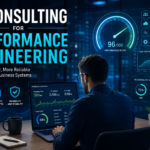

IT Consulting for Performance Engineering: Building Faster, More Reliable, and Scalable Business Systems
 July 29, 2026
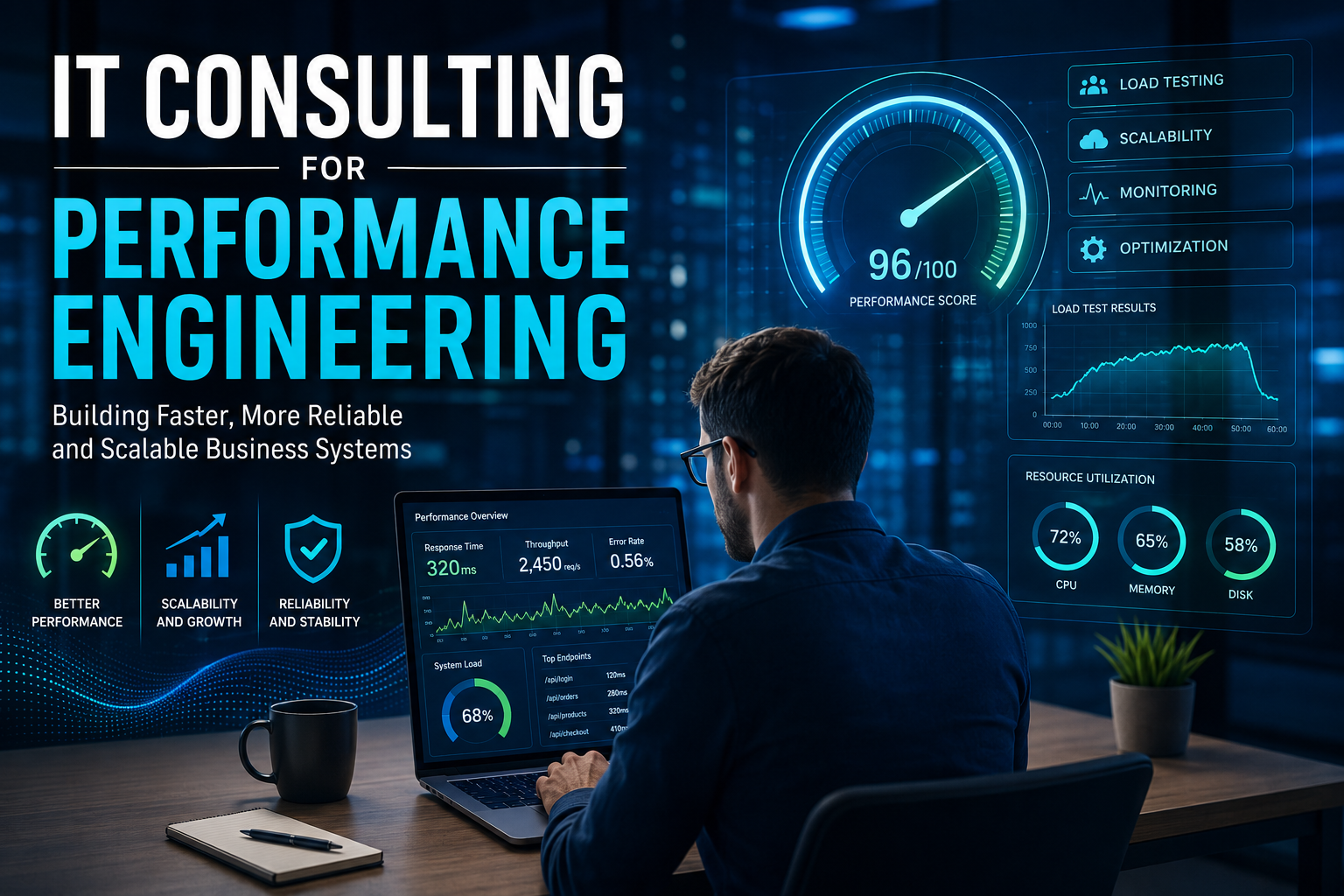
In today’s digital-first business environment, application performance can directly influence customer satisfaction, employee productivity, revenue, and brand reputation. Users expect websites, mobile applications, APIs, and enterprise platforms to respond quickly and remain reliable even when demand increases. A slow application, frequent downtime, or system that struggles under heavy workloads can lead to frustrated customers, lost business opportunities, and increased operational costs.
This is where IT consulting for performance engineering becomes valuable. Performance engineering is a proactive approach to ensuring that applications and IT systems are designed, developed, tested, deployed, and continuously optimized to deliver the required speed, stability, scalability, and reliability.
For businesses working with complex digital ecosystems, cvDragon IT Consulting can help organizations identify performance challenges, improve system efficiency, and establish strategies that support consistent digital experiences. Instead of waiting for performance issues to affect users, performance engineering focuses on preventing bottlenecks and preparing systems for future growth.
What Is Performance Engineering?
Performance engineering is a systematic discipline focused on optimizing the performance of software applications, infrastructure, databases, APIs, and digital services throughout their lifecycle.
Unlike traditional performance testing, which is often conducted near the end of development, performance engineering begins much earlier. It considers performance requirements during architecture, design, development, testing, deployment, and ongoing operations.
The objective is to ensure that a system can:
- Respond quickly to user requests
- Handle expected workloads efficiently
- Scale as demand increases
- Maintain stability during peak traffic
- Use infrastructure resources effectively
- Deliver consistent user experiences
- Recover effectively from performance degradation
Performance engineering brings together software development, infrastructure, cloud computing, database management, DevOps, monitoring, and business requirements.
Why Performance Engineering Matters for Businesses
Digital performance is no longer simply a technical concern. It is closely connected to business performance.
A customer visiting an e-commerce website may leave if pages take too long to load. An employee using a slow internal application may spend more time completing routine tasks. A financial platform experiencing delays may affect transactions and customer trust.
Performance problems can also become more complicated as organizations grow. A system that performs well with a few hundred users may struggle when thousands or millions of users access it simultaneously.
Performance engineering helps businesses prepare for these challenges by identifying potential weaknesses before they become major problems.
Better Customer Experience
Fast and responsive digital platforms create smoother customer journeys. Whether customers are booking a hotel room, purchasing products, accessing financial services, or using a mobile application, performance influences how they perceive the business.
Higher Employee Productivity
Internal systems are equally important. Slow enterprise applications can waste employee time and reduce productivity. Performance improvements can make everyday workflows faster and more efficient.
Improved Scalability
Businesses need systems that can support growth. Performance engineering helps organizations understand how applications will behave as traffic, transactions, data, and users increase.
Reduced Operational Costs
Poorly optimized systems may consume unnecessary computing resources. By identifying inefficient processes and optimizing workloads, organizations can potentially improve resource utilization and reduce infrastructure expenses.
Greater Reliability
Performance engineering helps identify bottlenecks and system weaknesses that could contribute to outages or service disruptions. This supports more reliable digital operations.
The Role of IT Consulting in Performance Engineering
Many organizations understand that their systems have performance issues but do not know where to begin. IT consultants can provide an independent assessment of the technology environment and create a structured performance improvement strategy.
An IT consulting partner can evaluate the complete technology ecosystem, including:
- Application architecture
- Cloud infrastructure
- Servers and computing resources
- Databases
- APIs and microservices
- Network performance
- Third-party integrations
- Caching systems
- Content delivery networks
- Monitoring and observability platforms
- CI/CD pipelines
This holistic approach is important because performance problems rarely exist in isolation. A slow application may actually be caused by inefficient database queries, network latency, poorly designed APIs, insufficient infrastructure, or an architectural limitation.
Performance Assessment and Baseline Analysis
Before optimizing a system, organizations need to understand its current performance.
IT consultants can establish performance baselines by analyzing metrics such as:
- Response time
- Throughput
- Error rates
- CPU utilization
- Memory usage
- Database response time
- Network latency
- Concurrent users
- Transaction volumes
These measurements provide a reference point for evaluating improvements.
For example, if an application currently takes five seconds to respond to a critical request, the organization can establish a performance target based on business requirements. Future improvements can then be measured against that baseline.
Application Performance Optimization
Applications can experience performance problems for many reasons. Inefficient code, excessive processing, unnecessary database calls, memory leaks, and poorly designed application logic can all affect performance.
Performance engineering consultants can help development teams identify inefficient components and optimize application behavior.
Common optimization areas include:
- Code execution
- Memory management
- API response handling
- Database interactions
- Resource utilization
- Application architecture
- Caching strategies
- Asynchronous processing
The objective is not simply to make an application faster under ideal conditions. It is to ensure consistent performance under realistic workloads.
Database Performance Engineering
Databases are often a critical source of application performance problems.
Slow queries, missing indexes, inefficient database designs, excessive connections, and large data volumes can create bottlenecks.
Performance engineering can involve:
- Query optimization
- Index analysis
- Database configuration
- Connection pool optimization
- Data partitioning
- Caching
- Replication strategies
- Database scaling
Consultants can analyze database performance and determine whether problems originate in application logic, database design, infrastructure, or workload patterns.
Cloud Performance Optimization
Cloud environments provide flexibility and scalability, but simply moving an application to the cloud does not automatically guarantee high performance.
Organizations need to carefully design cloud architectures based on workload requirements.
IT consultants can help optimize:
- Compute resources
- Cloud storage
- Network architecture
- Auto-scaling
- Load balancing
- Container environments
- Serverless workloads
- Cloud databases
- Content delivery networks
Cloud performance engineering also involves balancing performance with cost. Overprovisioning resources may improve performance but increase expenses, while underprovisioning can cause slowdowns during peak demand.
The goal is to find an efficient balance between performance, scalability, reliability, and operational cost.
Load Testing and Stress Testing
Testing is a major part of performance engineering.
Load testing evaluates how a system performs under expected user and transaction volumes. It helps organizations understand whether the application can handle normal business demand.
Stress testing pushes the system beyond expected capacity to identify its breaking point and observe how it behaves under extreme conditions.
Other performance testing approaches may include:
- Spike testing
- Endurance testing
- Volume testing
- Scalability testing
- Capacity testing
These tests can help organizations identify performance bottlenecks before they affect real users.
Performance Engineering for APIs and Microservices
Modern applications increasingly depend on APIs and distributed microservices. While these architectures provide flexibility, they can also introduce additional performance challenges.
A single user request may involve multiple services, databases, and third-party systems. Delays in one component can affect the entire transaction.
Performance engineering for APIs and microservices can focus on:
- API response times
- Service dependencies
- Network latency
- Request volumes
- Service communication
- Database interactions
- Resource consumption
- Failure handling
Consultants can help organizations identify inefficient service interactions and improve the overall architecture.
Observability and Continuous Performance Monitoring
Performance optimization should not end after deployment.
Systems change continuously. New software releases, increased traffic, infrastructure modifications, and third-party integrations can all affect performance.
Performance engineering therefore works closely with observability and monitoring.
Organizations can monitor:
- Application performance
- Infrastructure health
- User experience
- API latency
- Database performance
- Error rates
- Resource consumption
- Traffic patterns
Continuous monitoring helps technical teams detect performance degradation early and respond before users experience significant problems.
Performance Engineering in DevOps and CI/CD
Integrating performance engineering into DevOps practices can help organizations detect performance issues earlier in the software development lifecycle.
Instead of waiting until production, teams can include performance checks in development and deployment pipelines.
For example, organizations can establish automated performance tests that run during application releases. If a new version introduces a significant performance regression, the development team can identify the issue before deployment.
This approach supports a culture of continuous performance improvement.
How cvDragon IT Consulting Can Help
At cvDragon IT Consulting, performance engineering can be approached as a strategic technology initiative rather than a one-time testing exercise.
A consulting engagement may begin with an assessment of the organization’s current technology environment. Consultants can then identify performance bottlenecks, evaluate architecture, analyze workloads, and develop a roadmap for improvement.
Potential areas of support include:
- Performance assessment
- Application optimization
- Infrastructure evaluation
- Cloud performance consulting
- Database optimization
- Load and stress testing strategy
- API and microservices performance
- Monitoring and observability
- Capacity planning
- Performance automation
- DevOps integration
- Scalability planning
The specific approach should depend on the organization’s technology stack, business objectives, user expectations, and growth plans.
A Strategic Approach to Performance Engineering
A successful performance engineering initiative typically follows a structured process.
1. Identify Business Requirements
The first step is understanding what performance means for the business. A banking application, e-commerce platform, and internal HR system may have very different performance requirements.
2. Establish Performance Objectives
Organizations should define measurable targets for response time, availability, throughput, and scalability.
3. Assess the Existing Environment
Consultants evaluate architecture, applications, infrastructure, databases, and integrations to identify potential bottlenecks.
4. Test Under Realistic Conditions
Performance testing should simulate realistic workloads and user behavior rather than relying only on ideal scenarios.
5. Identify Root Causes
The focus should be on finding the underlying causes of performance issues rather than simply treating symptoms.
6. Implement Improvements
Teams can optimize applications, databases, infrastructure, and architecture based on identified priorities.
7. Monitor Continuously
Performance metrics should be monitored after improvements are implemented to ensure that results remain consistent.
8. Plan for Future Growth
Performance engineering should account for expected increases in users, transactions, data, and business complexity.
The Future of Performance Engineering
As businesses adopt cloud-native applications, artificial intelligence, real-time analytics, distributed systems, and increasingly complex digital platforms, performance engineering will become even more important.
AI-driven applications may introduce new performance requirements because of large models, high computational workloads, and real-time processing needs. Similarly, distributed architectures require organizations to understand performance across multiple interconnected services.
Future performance engineering strategies are likely to emphasize:
- Automation
- AI-assisted performance analysis
- Continuous testing
- Cloud-native optimization
- Real-time observability
- Predictive capacity planning
- Intelligent resource allocation
- Application resilience
Organizations that treat performance as a continuous engineering discipline will be better positioned to deliver reliable digital experiences as technology and customer expectations evolve.
Conclusion
IT consulting for performance engineering helps businesses build technology environments that are faster, more reliable, scalable, and efficient. Rather than waiting for customers or employees to report slow systems, organizations can proactively identify performance risks and address them throughout the technology lifecycle.
From application and database optimization to cloud performance, load testing, API engineering, observability, and capacity planning, performance engineering provides a comprehensive framework for improving digital systems.
For organizations looking to strengthen their technology performance and prepare their systems for future growth, cvDragon IT Consulting can support a structured approach that connects technical optimization with business objectives. In a competitive digital landscape, high performance is not simply a technical advantage—it is an important part of delivering better experiences, improving operational efficiency, and building long-term digital resilience.