




Business Continuity
 June 5, 2026
In an increasingly digital and interconnected world, organizations face a wide range of risks that can disrupt operations, impact customer service, and threaten long-term success. Cyberattacks, natural disasters, power outages, supply chain disruptions, system failures, and unexpected crises can occur at any time. Businesses that are unprepared for these challenges may experience significant financial losses, operational downtime, reputational damage, and customer dissatisfaction. This is why business continuity has become a critical priority for organizations of all sizes. At CVDragon IT Consulting, we help businesses build resilient continuity strategies that enable them to maintain operations, protect critical assets, and recover quickly from disruptions.
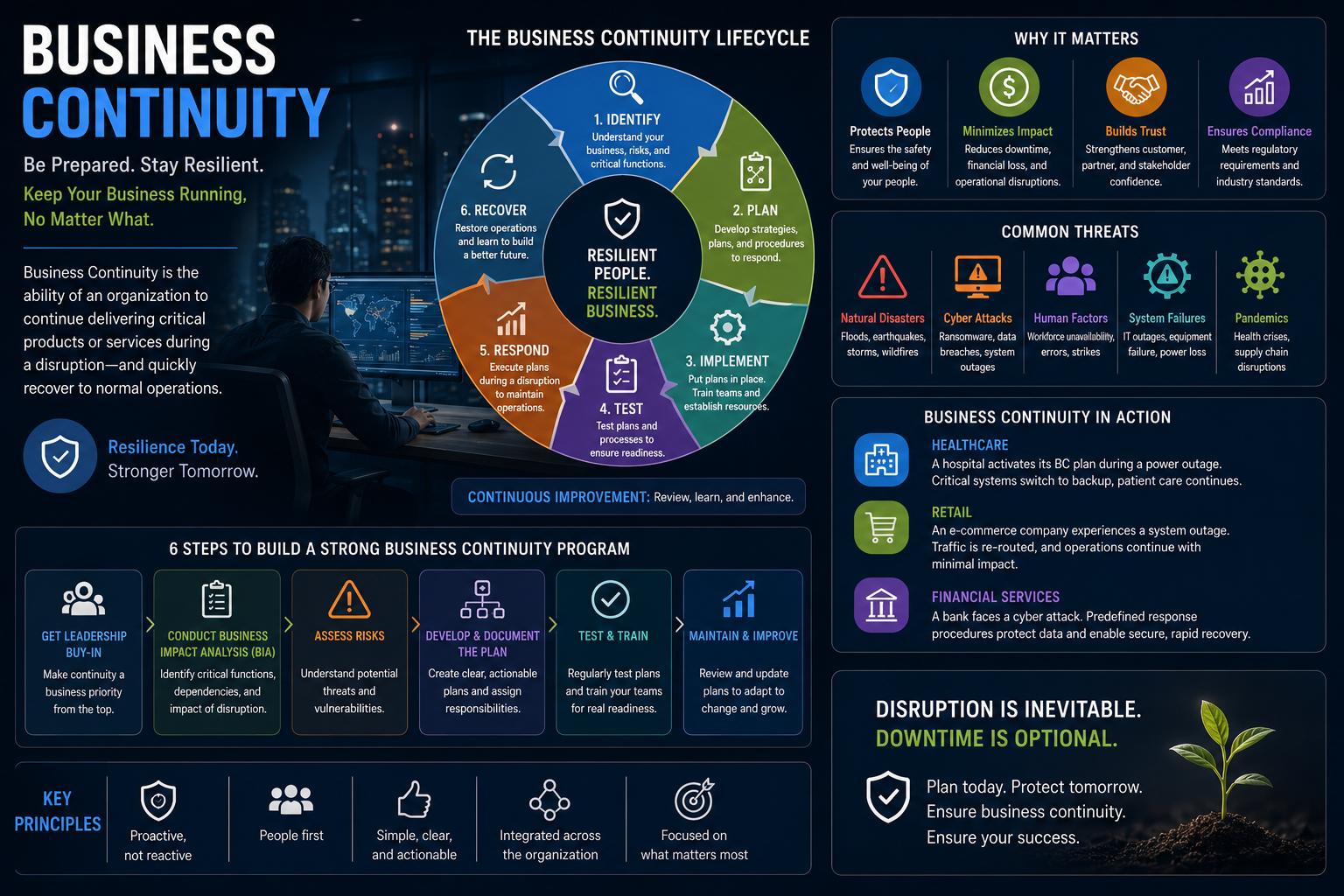
Business continuity refers to the ability of an organization to continue delivering products, services, and essential operations during and after a disruptive event. It involves planning, preparation, risk management, and recovery strategies designed to ensure that critical business functions remain operational even under adverse circumstances.
While many organizations focus on preventing disruptions, business continuity recognizes that not all incidents can be avoided. Instead, the goal is to minimize the impact of disruptions and ensure that the organization can continue functioning effectively when challenges arise.
The importance of business continuity has grown significantly as businesses become more dependent on technology. Digital systems, cloud services, online transactions, remote work environments, and global supply chains have increased both operational efficiency and potential vulnerability. A single disruption can affect multiple areas of the organization simultaneously.
One of the first steps in developing a business continuity strategy is conducting a Business Impact Analysis (BIA). This process identifies critical business functions, evaluates potential risks, and determines the consequences of operational interruptions. IT consultants work with organizations to identify which processes are most essential and prioritize continuity efforts accordingly.
Risk assessment is another fundamental component of business continuity planning. Organizations must understand the threats that could affect their operations. These risks may include cyberattacks, hardware failures, human error, natural disasters, utility outages, third-party service disruptions, and regulatory challenges. By identifying potential risks, businesses can implement preventive measures and prepare appropriate response strategies.
Technology plays a central role in modern business continuity planning. Most organizations rely heavily on digital infrastructure to support communication, operations, customer service, and decision-making. IT consultants help businesses evaluate technology dependencies and implement solutions that improve resilience.
Cloud computing has become a powerful tool for supporting business continuity. Platforms such as Amazon Web Services, Microsoft Azure, and Google Cloud Platform provide scalable and geographically distributed environments that help organizations maintain operations during disruptions. IT consultants assist businesses in designing cloud strategies that enhance availability and recovery capabilities.
Data protection is a critical aspect of business continuity. Organizations must ensure that important information remains accessible and secure during emergencies. IT consultants implement backup systems, data replication solutions, and secure storage strategies that protect critical information and support rapid recovery.
Disaster recovery is closely related to business continuity but focuses specifically on restoring IT systems, applications, and data after an incident. Business continuity takes a broader approach by addressing people, processes, facilities, communication, and operational workflows in addition to technology recovery.
Communication planning is a vital component of continuity management. During a disruption, employees, customers, suppliers, and stakeholders need timely and accurate information. IT consultants help organizations establish communication protocols and emergency notification systems that ensure clear and effective communication.
Remote work capabilities have become increasingly important in continuity planning. Events such as pandemics, natural disasters, or facility closures may prevent employees from accessing traditional workplaces. IT consultants design secure remote access solutions that allow employees to remain productive from alternative locations.
Supply chain resilience is another key factor. Many organizations depend on third-party vendors, technology providers, and logistics partners. Disruptions affecting external partners can impact business operations significantly. IT consultants help organizations assess supplier risks and develop contingency plans that reduce dependency on single points of failure.
Cybersecurity has become one of the most important components of business continuity. Cyberattacks such as ransomware, phishing campaigns, and data breaches can disrupt operations and compromise sensitive information. IT consultants integrate cybersecurity measures into continuity strategies to strengthen resilience against digital threats.
Testing and exercises are essential for ensuring the effectiveness of continuity plans. Many organizations create detailed plans but fail to validate them through practical testing. IT consultants conduct simulations, tabletop exercises, and recovery drills that help organizations identify weaknesses and improve preparedness.
Automation is increasingly improving business continuity capabilities. Automated monitoring systems, failover mechanisms, backup processes, and incident response workflows enable faster detection and recovery during disruptions. IT consultants help organizations leverage automation technologies to enhance operational resilience.
Employee awareness and training also play a significant role in business continuity. Staff members must understand their responsibilities during emergencies and know how to follow continuity procedures. IT consultants assist organizations in developing training programs that improve readiness across all levels of the business.
At CVDragon IT Consulting, our business continuity services include:
- Business Impact Analysis (BIA)
- Risk assessment and mitigation planning
- Business continuity strategy development
- Cloud resilience and infrastructure planning
- Data protection and backup solutions
- Disaster recovery integration
- Remote work and operational continuity planning
- Communication and crisis management frameworks
- Testing, simulations, and continuous improvement
Real-world examples demonstrate the value of business continuity planning. A retail company may need to maintain online sales operations during a physical store closure. A financial institution must ensure uninterrupted access to digital banking services during system disruptions. A healthcare organization needs continuous access to patient records and critical systems regardless of unexpected events.
One of the greatest benefits of business continuity is organizational resilience. Businesses that prepare for disruptions can respond more effectively, recover faster, and maintain customer confidence even during challenging circumstances.
Business continuity also supports regulatory compliance and risk management. Many industries require organizations to demonstrate their ability to maintain essential operations and protect critical information during emergencies.
As technology continues to evolve and global business environments become more complex, continuity planning will remain a strategic necessity. Organizations that proactively invest in resilience are better positioned to adapt to change and sustain long-term growth.
In conclusion, business continuity is essential for ensuring operational stability in an unpredictable world. By identifying risks, protecting critical functions, preparing for disruptions, and strengthening recovery capabilities, organizations can maintain service delivery and minimize business impact. At CVDragon IT Consulting, we help businesses develop comprehensive business continuity strategies that protect operations, support resilience, and enable sustainable success.
Partner with CVDragon IT Consulting to build a business continuity framework that keeps your organization prepared, resilient, and ready to thrive in the face of unexpected challenges.