
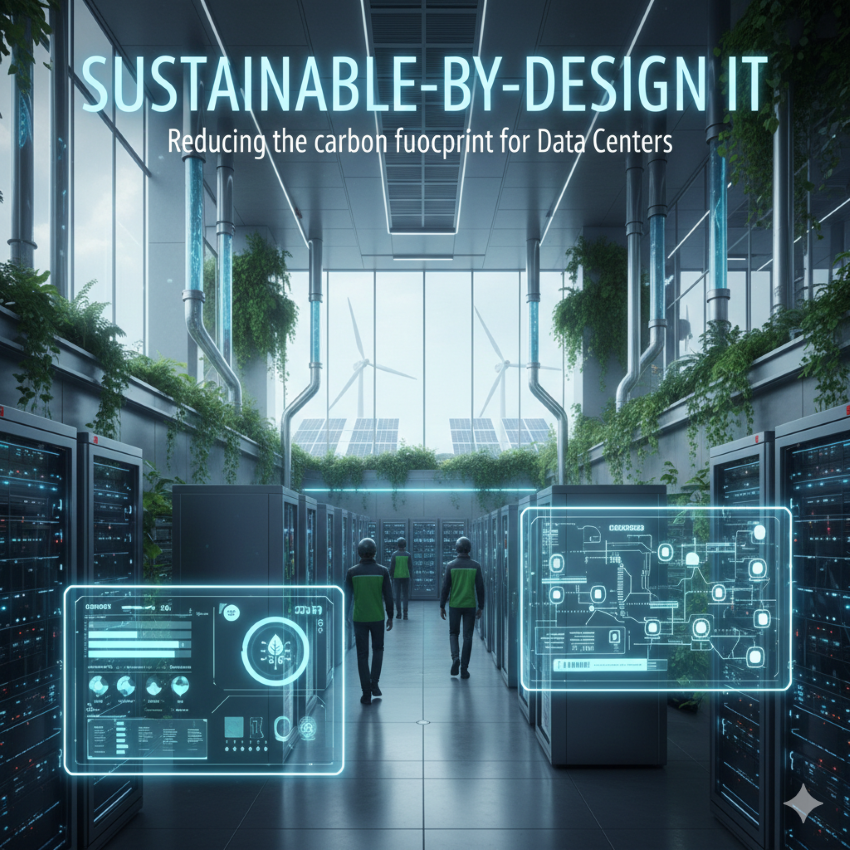
Sustainable-by-Design IT: Reducing the carbon footprint of data centers
 January 23, 2026
As the world becomes increasingly digital, data centers have quietly become one of the most critical—and energy-intensive—components of modern infrastructure. From cloud applications and streaming services to AI workloads and enterprise systems, nearly every digital interaction depends on data centers running continuously behind the scenes. While they power innovation, they also consume vast amounts of electricity, water, and physical resources.
This growing environmental impact has placed data centers under scrutiny from regulators, investors, customers, and employees alike. Sustainability is no longer a “nice-to-have” initiative—it is a strategic and operational imperative. Forward-thinking organizations are now embracing Sustainable-by-Design IT, an approach that embeds environmental responsibility into the very foundation of IT architecture and operations.
At cvDragon IT Consulting, we help organizations design and operate data center environments that balance performance, resilience, and sustainability. This article explores what Sustainable-by-Design IT means, why data center sustainability matters, and how organizations can meaningfully reduce their carbon footprint.
Why Data Center Sustainability Matters
Data centers are essential to digital transformation, but their environmental impact is significant.
Key challenges include:
- High electricity consumption for compute and cooling
- Carbon emissions from non-renewable energy sources
- Water usage for cooling systems
- Electronic waste from hardware refresh cycles
As workloads increase—particularly with AI, analytics, and real-time services—these challenges intensify. Governments are introducing stricter environmental regulations, and stakeholders are demanding transparency and accountability in sustainability efforts.
Reducing the carbon footprint of data centers is no longer just an IT concern—it is a business, environmental, and reputational issue.
What Is Sustainable-by-Design IT?
Sustainable-by-Design IT is a proactive approach that integrates sustainability into every stage of IT decision-making—from strategy and architecture to operations and lifecycle management.
Rather than retrofitting sustainability initiatives after systems are built, this approach focuses on:
- Designing energy-efficient architectures from the start
- Selecting technologies with lower environmental impact
- Optimizing resource utilization continuously
- Aligning IT operations with organizational sustainability goals
In the context of data centers, Sustainable-by-Design IT ensures that efficiency, scalability, and environmental responsibility coexist.
Understanding the Carbon Footprint of Data Centers
To reduce emissions, organizations must first understand where they come from.
Primary contributors include:
1. Power Consumption
Servers, storage, and networking equipment require constant power, even during low utilization.
2. Cooling Systems
Cooling can account for a significant portion of a data center’s energy use, especially in older facilities.
3. Infrastructure Inefficiencies
Overprovisioned hardware, idle resources, and legacy systems waste energy.
4. Hardware Manufacturing and Disposal
The environmental impact of producing and disposing of IT hardware is often overlooked.
Sustainable-by-Design IT addresses all these dimensions holistically.
Designing Energy-Efficient Data Centers
Energy efficiency is the cornerstone of sustainable data center design.
1. Optimizing Data Center Architecture
Modern data center design focuses on efficiency from the ground up, including:
- Hot aisle and cold aisle containment
- Modular and scalable layouts
- High-density computing where appropriate
- Efficient power distribution systems
These design principles reduce energy waste and improve cooling effectiveness.
2. Leveraging Virtualization and Consolidation
One of the most impactful sustainability measures is reducing the number of physical servers.
Virtualization and containerization enable:
- Higher utilization of existing hardware
- Reduced power and cooling demand
- Lower hardware procurement and disposal
By consolidating workloads, organizations can significantly cut energy consumption.
The Role of Cloud and Hybrid Models
Cloud computing has changed the sustainability conversation around data centers.
3. Moving to Energy-Efficient Cloud Platforms
Hyperscale cloud providers often operate more energy-efficient data centers than on-premises facilities, thanks to:
- Advanced cooling technologies
- Renewable energy investments
- AI-driven energy optimization
A well-planned migration to cloud or hybrid environments can reduce carbon impact—when done strategically.
4. Avoiding “Lift-and-Shift” Pitfalls
Simply moving workloads to the cloud without optimization can negate sustainability benefits. Sustainable-by-Design IT ensures workloads are right-sized, modernized, and monitored to avoid unnecessary energy use.
Cooling Innovations That Reduce Carbon Impact
Cooling is one of the largest contributors to data center emissions.
5. Adopting Advanced Cooling Technologies
Modern cooling strategies include:
- Liquid cooling for high-density workloads
- Free cooling using ambient air
- AI-driven cooling optimization
- Location-aware data center placement
These innovations can dramatically reduce energy and water usage.
6. Monitoring and Optimizing Continuously
Sustainability is not a one-time project. Continuous monitoring of Power Usage Effectiveness (PUE) and other metrics enables ongoing improvement.
IT consulting helps implement tools that provide real-time visibility into energy consumption and inefficiencies.
Hardware Lifecycle and Sustainable Procurement
Sustainability extends beyond operations to how hardware is selected and managed.
7. Choosing Energy-Efficient Hardware
Modern servers and storage systems are designed for better performance per watt. Sustainable-by-Design IT prioritizes energy efficiency during procurement decisions.
8. Extending Hardware Lifecycles
Extending the usable life of equipment through maintenance, upgrades, and reuse reduces electronic waste and embodied carbon.
9. Responsible Disposal and Recycling
When hardware reaches end-of-life, proper recycling and disposal practices are essential to minimize environmental harm.
The Role of IT Consulting in Sustainable Data Centers
Achieving meaningful sustainability outcomes requires expertise, planning, and cross-functional alignment.
At cvDragon IT Consulting, we support organizations throughout their sustainability journey.
1. Sustainability Assessments and Baselines
We help organizations measure their current data center carbon footprint, identifying key areas for improvement.
2. Strategy and Roadmap Development
Sustainability initiatives must align with business goals, budgets, and regulatory requirements. Consulting ensures a realistic, phased roadmap.
3. Technology and Architecture Guidance
From cloud strategy to cooling systems, IT consulting helps select solutions that balance performance, resilience, and sustainability.
4. Governance and Metrics
Clear governance, KPIs, and reporting structures ensure sustainability goals are tracked and achieved over time.
Aligning IT Sustainability with Business and ESG Goals
Sustainable-by-Design IT supports broader Environmental, Social, and Governance (ESG) objectives.
Benefits include:
- Improved regulatory compliance
- Enhanced brand reputation
- Greater investor confidence
- Long-term cost savings through efficiency
Data center sustainability is no longer just an IT cost—it is a strategic investment.
Challenges in Implementing Sustainable-by-Design IT
Organizations may face obstacles such as:
- Legacy infrastructure constraints
- Budget limitations
- Skills gaps
- Short-term performance pressures
IT consulting helps navigate these challenges by balancing immediate needs with long-term sustainability.
The Future of Sustainable Data Centers
As digital demand continues to grow, sustainable design will become the default, not the exception.
Emerging trends include:
- AI-driven energy optimization
- Carbon-aware workload scheduling
- Greater transparency in sustainability reporting
- Increased use of renewable energy and energy storage
Organizations that adopt Sustainable-by-Design IT early will be better positioned for regulatory, environmental, and competitive pressures.
Conclusion: Building a Greener Digital Foundation
Data centers are the backbone of the digital economy—but they do not have to come at the expense of the environment. By embracing Sustainable-by-Design IT, organizations can significantly reduce their carbon footprint while improving efficiency, resilience, and long-term value.
At cvDragon IT Consulting, we believe sustainability and performance go hand in hand. Through thoughtful design, modern technologies, and continuous optimization, we help organizations build data center environments that support innovation without compromising the planet.
Sustainable-by-Design IT is not just about reducing emissions—it’s about building a responsible digital future that benefits businesses, communities, and the world we share.