








Multi-Cloud Networking: Ensuring seamless connectivity across AWS, Azure, and Google
 March 7, 2026
As businesses continue their digital transformation journeys, cloud computing has become a cornerstone of modern IT infrastructure. Many organizations initially adopt a single cloud provider, but over time they discover the advantages of leveraging services from multiple cloud platforms. This approach, known as multi-cloud computing, allows businesses to use different cloud providers for various workloads, improving flexibility, resilience, and vendor independence.
However, managing applications and data across multiple cloud platforms introduces a new challenge: network connectivity and integration. Ensuring that systems deployed across different cloud environments communicate seamlessly requires a carefully designed multi-cloud networking strategy.
At CVDragon IT Consulting, we help organizations design secure, scalable networking architectures that connect cloud environments efficiently. This article explores the importance of multi-cloud networking and how businesses can ensure smooth connectivity across leading cloud platforms.
Understanding Multi-Cloud Environments
A multi-cloud environment refers to the use of services from more than one cloud provider within a single organization. Companies may distribute workloads across various cloud platforms for several reasons, including cost optimization, service specialization, regulatory requirements, or disaster recovery.
For example, a business might use one cloud provider for data analytics, another for machine learning services, and a third for application hosting.
While this approach provides flexibility, it also creates complexity in areas such as networking, data transfer, identity management, and security.
Without a proper networking strategy, multi-cloud environments can become fragmented and difficult to manage.
Why Organizations Adopt Multi-Cloud Strategies
Several factors drive the adoption of multi-cloud architectures.
Avoiding Vendor Lock-In
Relying on a single cloud provider can limit flexibility and increase dependency. Multi-cloud strategies allow organizations to switch or expand services more easily.
Optimizing Performance
Different cloud providers offer strengths in specific services such as AI, analytics, or database management. Organizations can select the best services for each workload.
Enhancing Reliability
Distributing workloads across multiple platforms improves resilience and reduces the risk of service outages.
Meeting Compliance Requirements
Some industries require data to be stored in specific geographic regions or environments, which may necessitate multiple cloud providers.
While these benefits are compelling, they also make networking architecture more complex.
The Role of Multi-Cloud Networking
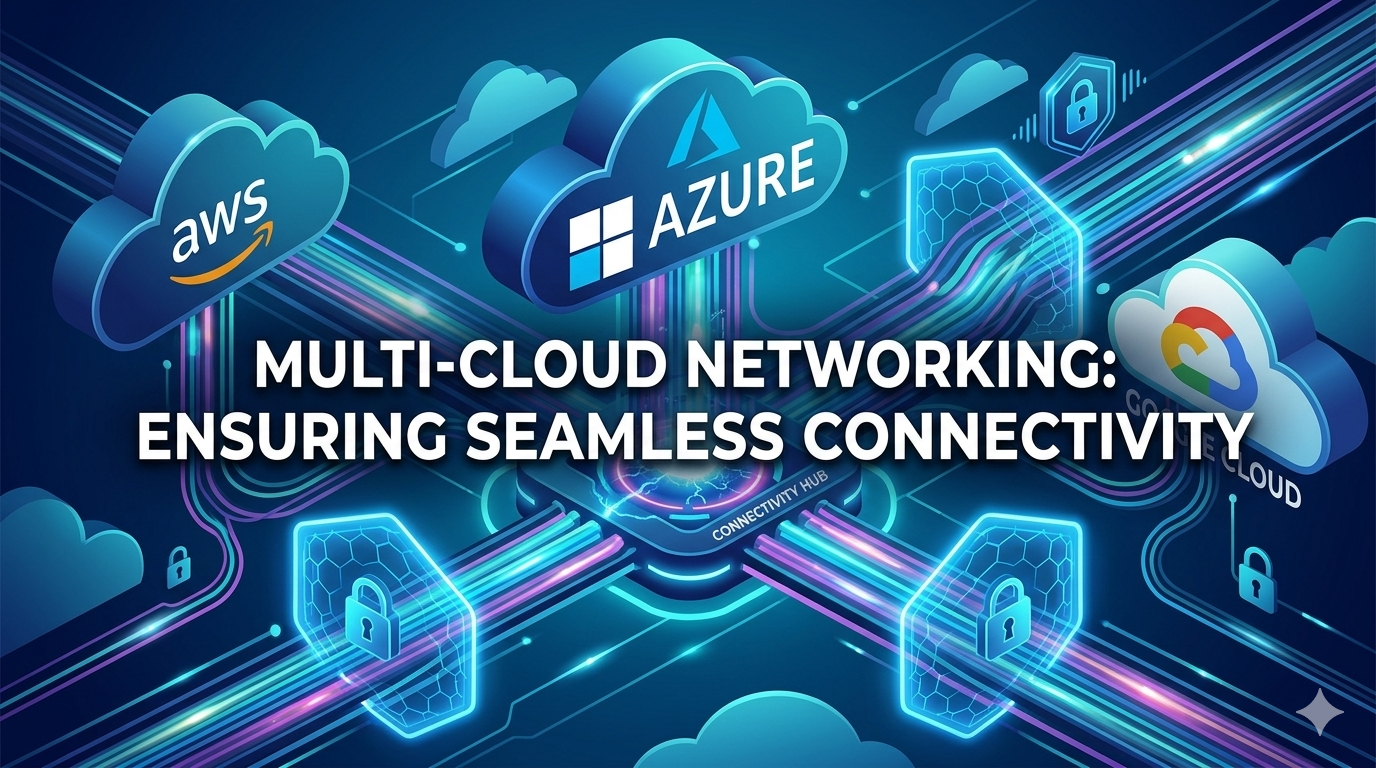
Multi-cloud networking ensures that applications, databases, and services running across different cloud platforms can communicate securely and efficiently.
It involves creating a unified network architecture that enables seamless connectivity between cloud environments, on-premise infrastructure, and remote users.
Key objectives of multi-cloud networking include:
- Reliable communication between cloud services
- Secure data transmission across platforms
- Consistent network policies and controls
- Scalable infrastructure for growing workloads
- Simplified network management
Without proper networking integration, applications deployed in different clouds may operate in isolated silos.
Key Challenges in Multi-Cloud Networking
Organizations adopting multi-cloud architectures often encounter several networking challenges.
Network Complexity
Each cloud provider has its own networking models, configuration tools, and terminology. Managing these differences can become complicated.
Latency and Performance
Data transfers between cloud environments may introduce delays if networks are not optimized properly.
Security and Compliance
Ensuring consistent security policies across multiple cloud platforms requires careful planning.
Visibility and Monitoring
Tracking network performance across multiple environments can be difficult without centralized monitoring tools.
Cost Management
Data transfer charges between cloud platforms can increase operational costs if not managed effectively.
Addressing these challenges requires strategic design and specialized expertise.
Core Components of Multi-Cloud Networking
Inter-Cloud Connectivity
Establishing secure communication channels between cloud platforms is the foundation of multi-cloud networking. This often involves private network connections or encrypted tunnels.
Hybrid Integration
Many organizations operate a hybrid infrastructure where on-premise systems interact with cloud services. Multi-cloud networking ensures seamless communication between these environments.
Unified Network Policies
Consistent security rules, access controls, and routing policies must be applied across all cloud platforms.
Traffic Optimization
Load balancing and traffic routing mechanisms ensure that applications perform efficiently regardless of the cloud platform hosting them.
Centralized Monitoring
Network monitoring tools provide visibility into traffic patterns, performance metrics, and potential security threats.
Security Considerations in Multi-Cloud Networks
Security becomes more complex when applications and data are distributed across multiple cloud environments.
Organizations must ensure:
- Encryption for data in transit
- Secure identity and access management
- Network segmentation to isolate workloads
- Continuous monitoring for unusual activity
- Compliance with industry regulations
A consistent security framework across cloud platforms reduces the risk of vulnerabilities and unauthorized access.
Multi-Cloud Networking and Application Performance
Applications deployed across multiple cloud providers often rely on distributed architectures such as microservices.
In these environments, network performance plays a critical role in user experience.
Key considerations include:
- Minimizing latency between services
- Optimizing routing paths
- Implementing intelligent load balancing
- Ensuring high availability during traffic spikes
Proper network design ensures that multi-cloud architectures deliver both performance and reliability.
Automation in Multi-Cloud Networking
Automation is essential for managing complex multi-cloud environments.
Infrastructure automation tools allow organizations to:
- Configure networks consistently across platforms
- Deploy new environments quickly
- Enforce security policies automatically
- Scale infrastructure based on demand
Automation reduces the risk of configuration errors and improves operational efficiency.
Best Practices for Multi-Cloud Networking
Organizations implementing multi-cloud networking should follow several best practices:
- Develop a clear cloud strategy aligned with business goals
- Standardize network architectures across cloud platforms
- Implement centralized identity and access management
- Use automation tools for network configuration
- Monitor network performance continuously
- Plan for scalability and disaster recovery
Following these practices helps organizations maintain control over complex cloud ecosystems.
The Role of Software-Defined Networking
Software-defined networking (SDN) is increasingly used to manage multi-cloud environments.
SDN separates network control from hardware, allowing administrators to configure and manage networks through centralized software platforms.
Benefits include:
- Simplified network management
- Faster deployment of network changes
- Improved scalability
- Enhanced visibility across environments
SDN helps organizations maintain consistent network policies across multiple cloud providers.
The Future of Multi-Cloud Connectivity
As cloud adoption continues to expand, multi-cloud networking will play an increasingly important role in enterprise IT strategies.
Emerging trends include:
- AI-driven network optimization
- Cloud-native networking platforms
- Zero Trust network architectures
- Edge computing integration
- Advanced cloud traffic analytics
These innovations will help organizations manage increasingly complex digital infrastructures while maintaining performance and security.
How CVDragon IT Consulting Supports Multi-Cloud Networking
CVDragon IT Consulting helps organizations design and implement reliable multi-cloud networking solutions tailored to their operational needs.
Our services include:
- Multi-cloud architecture design
- Secure network connectivity planning
- Hybrid and cloud integration strategies
- Network automation and orchestration
- Performance monitoring and optimization
- Cloud security and compliance consulting
By aligning networking strategies with business objectives, we help organizations build resilient and scalable digital infrastructures.
Conclusion
Multi-cloud strategies provide organizations with greater flexibility, performance optimization, and resilience. However, without effective networking integration, managing multiple cloud environments can become complex and inefficient.
Multi-cloud networking ensures that applications, data, and services communicate seamlessly across platforms while maintaining security and performance standards.
By adopting well-designed networking architectures and automation tools, organizations can unlock the full potential of multi-cloud environments and build scalable digital ecosystems for the future.
At CVDragon IT Consulting, we help businesses navigate the complexities of multi-cloud networking, ensuring their cloud infrastructure remains connected, secure, and ready to support evolving digital demands.