





IT Consulting for Knowledge Management Systems
 June 24, 2026
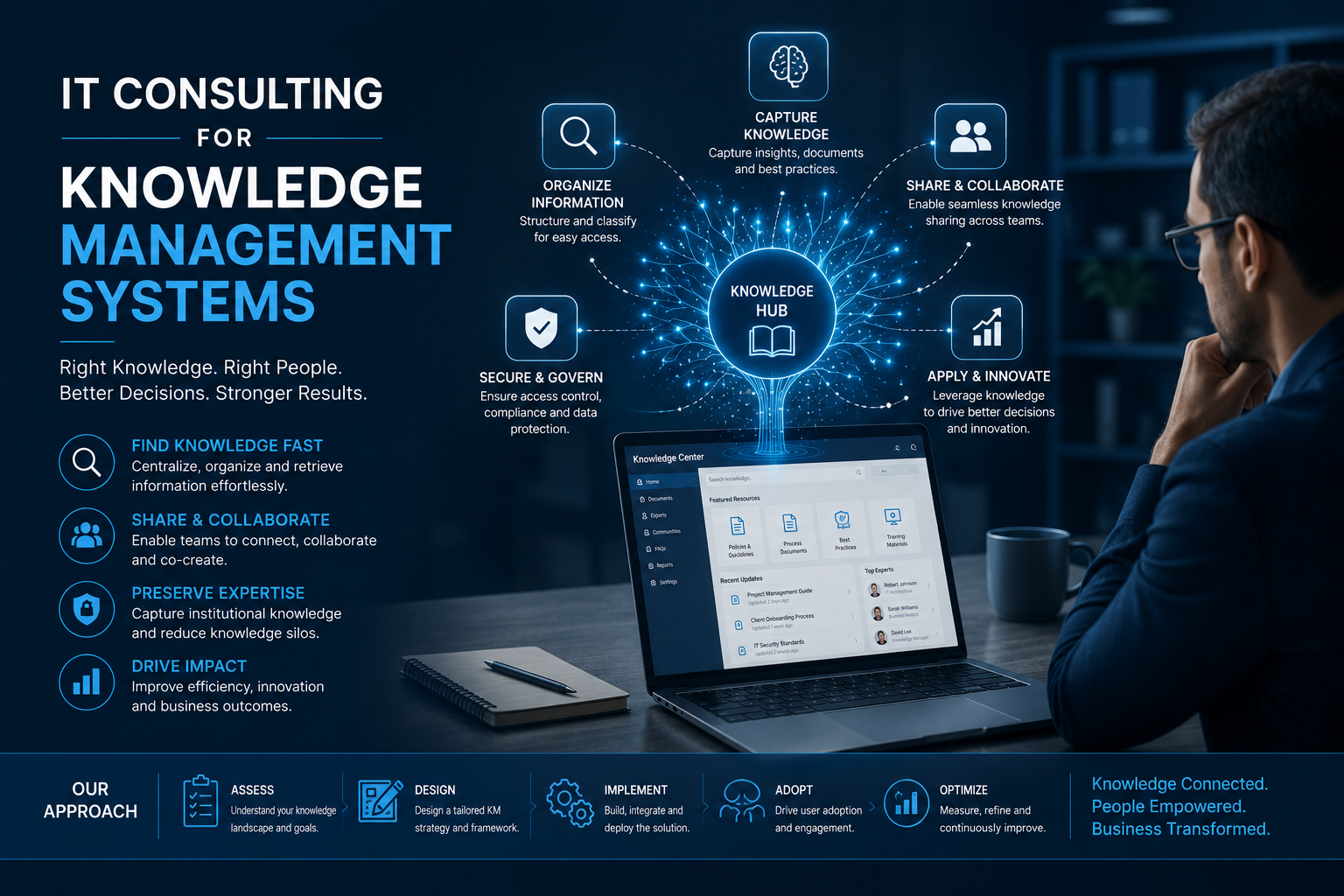
In today’s knowledge-driven economy, information is one of the most valuable assets an organization possesses. Every day, businesses generate vast amounts of data, insights, documents, best practices, customer interactions, and operational knowledge. However, many organizations struggle to capture, organize, and share this information effectively. As a result, valuable knowledge often remains trapped within departments, systems, or individual employees, limiting productivity and innovation. This is where Knowledge Management Systems (KMS) become essential, and where CVDARGON IT Consulting helps organizations transform information into a strategic business advantage.
Knowledge Management Systems are designed to collect, store, organize, and distribute information across an organization. These systems enable employees to access critical knowledge quickly, collaborate more effectively, and make informed decisions based on accurate and up-to-date information. However, implementing a successful knowledge management strategy requires more than deploying software. Organizations need a clear vision, proper technology selection, seamless integration, and user adoption strategies. IT consulting plays a vital role in ensuring these systems deliver measurable business value.
Understanding Knowledge Management Systems
A Knowledge Management System is a centralized platform that helps organizations create, manage, and share knowledge assets. These assets may include documents, policies, procedures, training materials, project reports, customer insights, research findings, and institutional expertise.
Modern knowledge management platforms go beyond simple document storage. They incorporate advanced search capabilities, collaboration tools, artificial intelligence, workflow automation, content categorization, and analytics. These features enable employees to find relevant information quickly and contribute to organizational learning.
As businesses continue to embrace digital transformation, effective knowledge management has become a critical factor in maintaining operational efficiency, preserving expertise, and supporting continuous innovation.
Why Knowledge Management Matters
Many organizations unknowingly lose valuable knowledge every time employees change roles, retire, or leave the company. Without a structured system for capturing institutional knowledge, businesses risk repeating mistakes, slowing productivity, and reducing overall efficiency.
Knowledge management systems help organizations retain expertise by creating centralized repositories of information that remain accessible regardless of personnel changes. Employees can leverage existing knowledge rather than spending time recreating solutions or searching for information.
Effective knowledge sharing also promotes collaboration across departments, reduces duplication of effort, and supports faster decision-making. In competitive industries, access to organizational knowledge can become a significant differentiator that drives innovation and business growth.
The Role of IT Consulting in Knowledge Management
Implementing a Knowledge Management System requires careful planning and strategic execution. Organizations must identify what knowledge should be captured, how it should be structured, and how employees will access and use it.
CVDARGON IT Consulting works closely with businesses to assess existing knowledge management practices, identify gaps, and develop customized solutions. Consultants analyze workflows, business objectives, user requirements, and technology infrastructure to design systems that support organizational goals.
By aligning technology with business processes, IT consultants ensure that knowledge management initiatives deliver practical value rather than becoming underutilized repositories of information.
Assessing Organizational Knowledge Needs
Every organization has unique knowledge assets and information-sharing requirements. A manufacturing company may prioritize process documentation and operational procedures, while a consulting firm may focus on project knowledge, client insights, and expertise management.
IT consultants begin by conducting comprehensive knowledge audits to understand how information is currently created, stored, and shared. These assessments help identify critical knowledge gaps, inefficiencies, and opportunities for improvement.
The findings guide the development of a knowledge management strategy tailored to the organization’s structure, culture, and operational needs.
Selecting the Right Knowledge Management Platform
The market offers a wide range of knowledge management solutions, from enterprise content management systems and intranet platforms to AI-powered knowledge hubs and collaborative workspaces.
Selecting the right platform requires evaluating factors such as scalability, usability, search capabilities, integration options, security features, and long-term maintenance requirements.
CVDARGON IT Consulting helps organizations navigate these decisions by comparing available technologies and recommending solutions that align with business objectives. This strategic approach reduces implementation risks and ensures technology investments support future growth.
Integrating Knowledge Systems with Enterprise Applications
Knowledge management systems deliver maximum value when integrated with existing business applications. Employees should be able to access knowledge resources within the tools they use daily, including customer relationship management platforms, enterprise resource planning systems, project management software, and collaboration tools.
Poor integration often leads to information silos, fragmented workflows, and reduced user adoption. Employees may struggle to locate information or rely on outdated sources.
IT consultants design integration frameworks that connect knowledge management systems with enterprise technologies. This creates a unified digital ecosystem where information flows seamlessly across departments and business functions.
Enhancing Productivity Through Centralized Knowledge
One of the primary benefits of a Knowledge Management System is improved employee productivity. When information is centralized and easily accessible, employees spend less time searching for documents, asking repetitive questions, or recreating existing work.
Knowledge repositories enable teams to access proven solutions, best practices, and expert insights whenever needed. This accelerates project execution, improves service delivery, and reduces operational delays.
Organizations that effectively leverage knowledge management often experience faster onboarding processes, improved customer support, and greater workforce efficiency.
Illustrative Benefits of Knowledge Management Systems
Leveraging Artificial Intelligence in Knowledge Management
Artificial intelligence is revolutionizing the way organizations manage and utilize knowledge. Modern knowledge management systems increasingly incorporate AI-powered features such as intelligent search, content recommendations, automated tagging, chatbot assistance, and predictive analytics.
AI helps employees find relevant information faster by understanding context and user intent rather than relying solely on keyword searches. Intelligent systems can automatically categorize content, identify knowledge gaps, and recommend relevant resources based on employee roles and activities.
CVDARGON IT Consulting assists organizations in integrating AI capabilities into their knowledge management strategies, enabling smarter and more efficient information access.
Strengthening Collaboration and Innovation
Innovation thrives when employees can easily access and share knowledge. Knowledge management systems encourage collaboration by creating centralized spaces where teams can contribute expertise, exchange ideas, and build upon existing knowledge.
Cross-functional collaboration becomes easier when information is accessible across departments. Employees gain visibility into projects, lessons learned, and best practices from different areas of the organization.
By breaking down information silos, businesses create a culture of continuous learning and innovation that supports long-term competitiveness.
Security and Governance in Knowledge Management
Knowledge repositories often contain sensitive business information, intellectual property, customer data, and confidential documents. Protecting these assets is essential for maintaining operational integrity and regulatory compliance.
IT consultants help organizations implement robust security frameworks that include role-based access controls, encryption, authentication protocols, audit trails, and compliance monitoring.
Strong governance policies ensure that information remains accurate, secure, and accessible only to authorized users. Effective governance also supports compliance with industry regulations and organizational standards.
Driving User Adoption and Cultural Change
Technology alone cannot guarantee the success of a knowledge management initiative. Employees must be willing to contribute, share, and utilize knowledge resources consistently.
CVDARGON IT Consulting supports organizations through change management programs that encourage user engagement and adoption. Training initiatives, communication strategies, leadership support, and performance incentives help create a knowledge-sharing culture.
When employees understand the value of knowledge management and feel empowered to contribute, organizations achieve significantly greater returns on their technology investments.
Future Trends in Knowledge Management Systems
The future of knowledge management will be shaped by advancements in artificial intelligence, machine learning, natural language processing, and intelligent automation. These technologies will enable more personalized knowledge experiences and proactive information delivery.
Future systems may automatically surface relevant knowledge based on employee activities, predict information needs, and facilitate real-time collaboration across global teams. AI-powered virtual assistants will further simplify information access and decision-making.
Organizations that invest in modern knowledge management capabilities today will be better positioned to adapt to future technological developments and maintain a competitive advantage.
Why Partner with CVDARGON IT Consulting
Successful knowledge management requires a combination of strategic planning, technical expertise, and organizational alignment. CVDARGON IT Consulting provides comprehensive services that help businesses design, implement, and optimize knowledge management systems tailored to their unique requirements.
From technology assessment and platform selection to integration, security, governance, and user adoption, CVDARGON supports every stage of the knowledge management journey. The company’s consulting approach ensures that information becomes a valuable strategic asset that drives productivity, innovation, and business growth.
Conclusion
Knowledge is one of the most powerful resources within any organization, but its value depends on how effectively it is captured, managed, and shared. Knowledge Management Systems provide the foundation for preserving institutional expertise, improving collaboration, accelerating decision-making, and enhancing employee productivity.
However, implementing a successful knowledge management strategy requires more than technology alone. Organizations need expert guidance to align systems with business objectives, integrate knowledge across operations, and foster a culture of continuous learning.
CVDARGON IT Consulting helps businesses unlock the full potential of their organizational knowledge through tailored solutions, strategic expertise, and innovative technologies. As the digital economy continues to evolve, organizations that effectively manage knowledge will be better equipped to drive innovation, improve efficiency, and achieve sustainable long-term success.