





IT Consulting for AI Ethics Implementation
 June 25, 2026
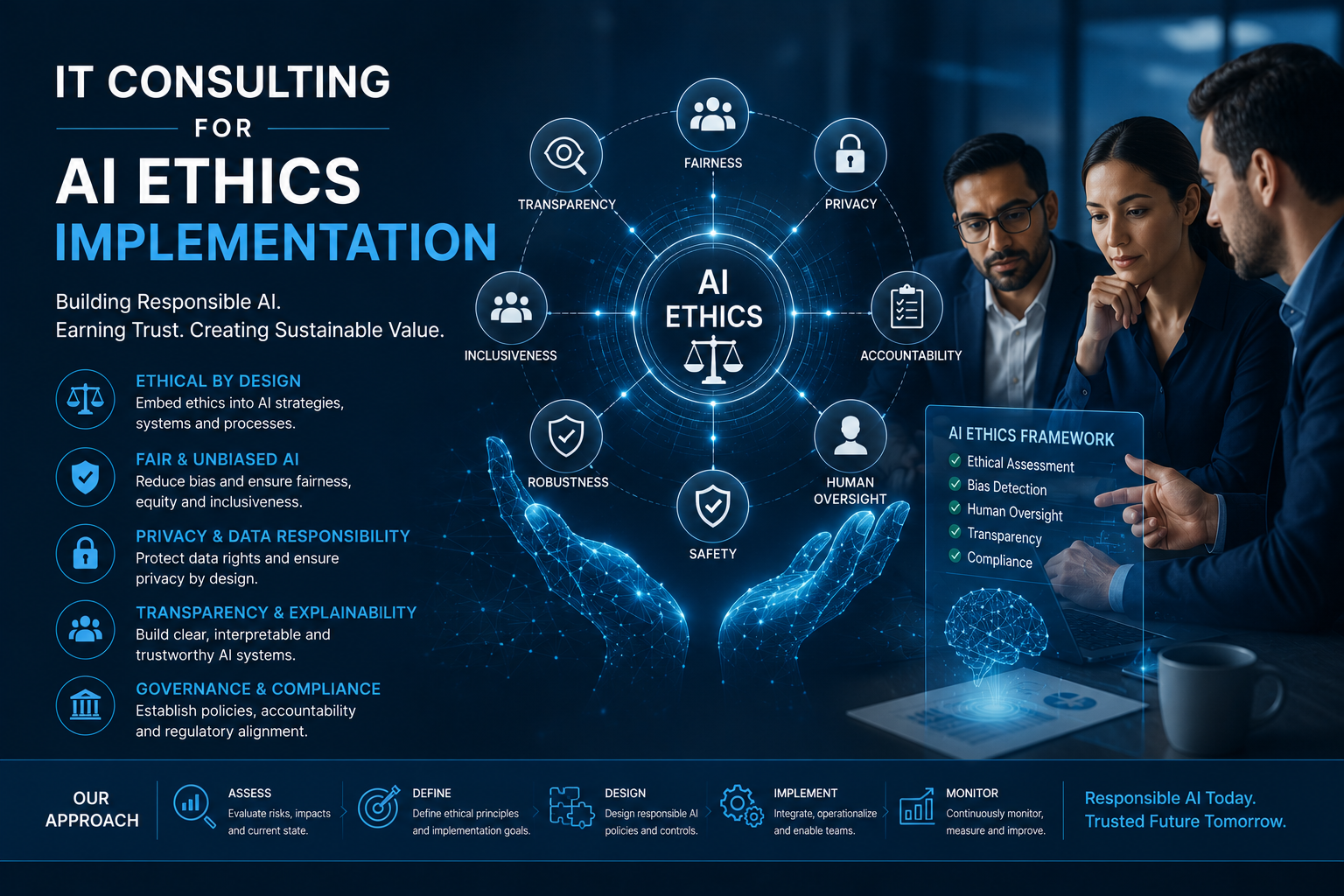
Artificial Intelligence (AI) is rapidly transforming the way businesses operate, make decisions, and serve customers. From predictive analytics and intelligent automation to customer support chatbots and machine learning-driven insights, AI has become a powerful tool for driving innovation and competitive advantage. However, as organizations increasingly integrate AI into critical business processes, concerns regarding fairness, transparency, accountability, privacy, and bias have become more prominent. This growing focus on responsible AI has made AI ethics implementation a strategic priority for organizations worldwide.
While many businesses recognize the importance of ethical AI, translating ethical principles into practical business processes and technology frameworks can be challenging. This is where CVDARGON IT Consulting helps organizations establish robust AI ethics programs that support innovation while ensuring compliance, transparency, and public trust. By combining technology expertise with governance strategies, businesses can deploy AI systems responsibly and confidently in an increasingly regulated digital environment.
Understanding AI Ethics in the Modern Business Landscape
AI ethics refers to the principles, policies, and practices that guide the responsible development, deployment, and use of artificial intelligence technologies. Ethical AI aims to ensure that automated systems make fair decisions, respect privacy, avoid discrimination, and operate transparently.
As AI systems become more influential in areas such as hiring, healthcare, finance, customer service, and risk management, organizations face increased scrutiny regarding how these technologies affect individuals and society. Poorly governed AI systems can lead to biased outcomes, regulatory penalties, reputational damage, and loss of customer trust.
Implementing AI ethics is no longer just a corporate responsibility initiative; it has become a critical component of business risk management and sustainable digital transformation.
Why AI Ethics Matters for Businesses
Artificial intelligence systems learn from data. If the underlying data contains inaccuracies, historical biases, or incomplete information, AI models can unintentionally produce unfair or discriminatory outcomes. Such issues can impact hiring decisions, loan approvals, insurance assessments, and customer interactions.
Ethical AI frameworks help organizations identify and mitigate these risks before they affect stakeholders. They establish standards for fairness, accountability, explainability, and data protection throughout the AI lifecycle.
Businesses that prioritize ethical AI gain several advantages, including stronger customer trust, improved regulatory compliance, reduced operational risks, and enhanced brand reputation. Ethical practices also support long-term innovation by ensuring AI technologies remain aligned with organizational values and societal expectations.
The Role of IT Consulting in AI Ethics Implementation
Many organizations understand the importance of responsible AI but struggle with implementation. Ethical principles often remain theoretical without practical governance structures, technical controls, and monitoring mechanisms.
CVDARGON IT Consulting helps businesses transform AI ethics from policy statements into actionable frameworks. Consultants assess existing AI initiatives, identify ethical risks, establish governance models, and develop implementation strategies that align with business objectives.
By integrating ethics into AI development and operational processes, organizations can proactively manage risks while maintaining innovation and agility.
Conducting AI Ethics Assessments
The first step toward responsible AI implementation is understanding existing risks and opportunities. Organizations often use multiple AI systems across departments without a centralized view of their ethical implications.
IT consultants conduct comprehensive AI ethics assessments to evaluate current technologies, data sources, decision-making processes, and governance practices. These assessments identify areas where bias, privacy concerns, transparency gaps, or compliance risks may exist.
The findings help organizations prioritize improvements and establish a roadmap for ethical AI adoption.
Developing AI Governance Frameworks
Effective AI ethics implementation requires clear governance structures that define responsibilities, policies, and oversight mechanisms. Without governance, organizations may struggle to maintain consistency and accountability across AI initiatives.
IT consultants help establish AI governance frameworks that include ethical guidelines, approval processes, risk management procedures, and performance monitoring standards.
These frameworks ensure that AI systems are developed and deployed according to defined ethical principles while supporting business objectives and regulatory requirements.
Addressing Bias and Fairness in AI Systems
One of the most significant challenges in AI ethics is mitigating bias. Bias can emerge from training data, algorithm design, or implementation practices, leading to unfair outcomes for certain groups or individuals.
CVDARGON IT Consulting assists organizations in implementing fairness assessments, bias detection tools, and validation processes throughout the AI lifecycle. Consultants help organizations evaluate datasets, review model outputs, and establish monitoring mechanisms that promote equitable decision-making.
By addressing bias proactively, businesses can reduce legal risks and strengthen stakeholder confidence in AI-powered systems.
Enhancing Transparency and Explainability
Many advanced AI models operate as “black boxes,” making it difficult for users and decision-makers to understand how conclusions are reached. Lack of transparency can undermine trust and create compliance challenges.
Explainable AI practices help organizations provide meaningful insights into how algorithms make decisions. IT consultants implement tools and methodologies that improve visibility into model behavior and decision-making processes.
Transparency enables organizations to communicate AI outcomes more effectively to customers, employees, regulators, and business leaders, fostering greater trust and accountability.
Key Focus Areas in AI Ethics Implementation
Protecting Data Privacy and Security
AI systems rely heavily on data, making privacy protection a critical ethical concern. Organizations must ensure that personal information is collected, processed, and stored responsibly.
IT consultants help businesses implement privacy-by-design principles, data governance policies, and security controls that align with applicable regulations and industry standards. Measures such as data anonymization, encryption, access controls, and consent management contribute to responsible AI practices.
Strong privacy safeguards not only reduce compliance risks but also strengthen customer trust and confidence.
Supporting Regulatory Compliance
Governments and regulatory bodies worldwide are introducing new frameworks to govern artificial intelligence. Businesses must stay informed about evolving requirements related to transparency, accountability, risk management, and consumer protection.
CVDARGON IT Consulting helps organizations navigate regulatory landscapes by developing compliance-ready AI governance structures. Consultants monitor emerging standards and assist businesses in adapting policies and processes to meet changing legal expectations.
Proactive compliance reduces the likelihood of penalties and positions organizations as responsible leaders in AI adoption.
Integrating Ethics into the AI Development Lifecycle
AI ethics should not be treated as a final review step. Instead, ethical considerations must be integrated throughout the entire development lifecycle, from planning and design to deployment and monitoring.
IT consultants help organizations establish responsible AI development methodologies that include ethical risk assessments, fairness testing, documentation standards, and continuous performance monitoring.
Embedding ethics into everyday development practices creates a culture of responsibility and ensures AI systems remain aligned with organizational values over time.
Employee Training and Organizational Awareness
Successful AI ethics implementation requires more than technical controls. Employees, managers, developers, and executives must understand their roles in promoting responsible AI practices.
CVDARGON IT Consulting provides training programs and awareness initiatives that help teams recognize ethical risks and make informed decisions. These programs foster a culture of accountability where ethical considerations become part of routine business operations.
An informed workforce is better equipped to identify challenges, address concerns, and support long-term AI governance objectives.
Future Trends in AI Ethics
As artificial intelligence continues to evolve, ethical considerations will become even more important. Emerging technologies such as generative AI, autonomous systems, advanced analytics, and intelligent agents introduce new opportunities and challenges.
Future AI ethics initiatives will increasingly focus on algorithmic transparency, human oversight, sustainability, responsible innovation, and global regulatory harmonization. Organizations will need adaptable governance frameworks capable of addressing rapidly changing technological landscapes.
Businesses that invest in ethical AI today will be better prepared to navigate future regulations, market expectations, and societal concerns.
Why Partner with CVDARGON IT Consulting
Implementing AI ethics requires a balance between innovation and responsibility. CVDARGON IT Consulting helps organizations achieve this balance through comprehensive consulting services that address governance, compliance, risk management, privacy, and technical implementation.
By combining strategic expertise with practical solutions, CVDARGON enables businesses to develop AI systems that are trustworthy, transparent, and aligned with stakeholder expectations. The company’s approach supports sustainable AI adoption while minimizing operational and reputational risks.
Conclusion
Artificial intelligence offers tremendous opportunities for innovation, efficiency, and growth. However, organizations must ensure that these technologies are deployed responsibly and ethically. AI ethics implementation provides the foundation for building trustworthy systems that promote fairness, transparency, accountability, and privacy.
Through expert guidance, governance frameworks, and technical best practices, CVDARGON IT Consulting helps businesses transform ethical principles into actionable strategies. By embedding ethics into every stage of the AI lifecycle, organizations can harness the power of artificial intelligence while maintaining public trust, regulatory compliance, and long-term business success.
As AI continues to shape the future of business, organizations that prioritize ethical implementation will be best positioned to lead with confidence, innovation, and integrity.