







How IT Consultants Manage Vendor Relationships
 By admin
November 29, 2025
By admin
November 29, 2025
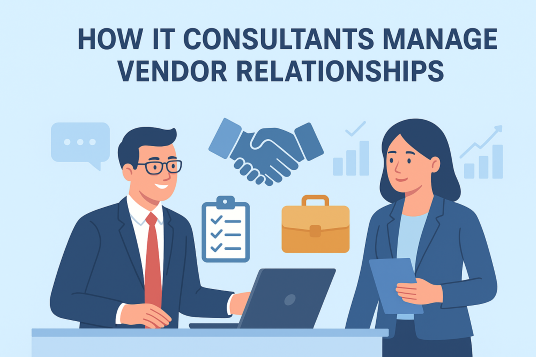
In today’s rapidly evolving technology landscape, businesses rely on a wide range of external vendors—cloud service providers, cybersecurity partners, software suppliers, hardware manufacturers, and more. While this network of vendors helps organizations stay competitive, managing these relationships effectively is often complex. That’s where skilled IT consultants step in.
At CVDragon IT Consulting, vendor relationship management is a core part of our strategic IT advisory. We ensure that every collaboration—big or small—drives value, reduces risks, and aligns with your business goals. Here’s how experienced IT consultants manage vendor relationships to deliver efficiency and long-term success.
1. Understanding Business Needs Before Choosing Vendors
Effective vendor management begins long before a contract is signed. Consultants start by understanding:
- Your business objectives
- Current technology infrastructure
- Future scalability needs
- Budget constraints
By having a clear picture of your organization’s goals, IT consultants ensure the vendors selected are the right technical and strategic fit—not just the most popular or the cheapest option.
2. Conducting Thorough Vendor Evaluations
Vendor selection is not a guessing game. Consultants use structured evaluation methods:
- Comparing service offerings
- Assessing product quality and technical capability
- Reviewing security standards and compliance
- Checking customer support responsiveness
- Digging into case studies and testimonials
This objective approach helps avoid costly mistakes and ensures the partnership is built on reliability and trust.
3. Negotiating Contracts That Protect Your Interests
A well-negotiated contract can prevent future conflicts and save both time and money. IT consultants help organizations secure favorable terms by:
- Defining clear service-level agreements (SLAs)
- Setting measurable performance metrics
- Clarifying pricing models
- Including data protection and cybersecurity clauses
- Ensuring flexibility for upgrades or termination
Our team at CVDragon IT Consulting always negotiates with the business’s long-term growth in mind.
4. Maintaining Transparent and Consistent Communication
Strong relationships require strong communication. Consultants act as the bridge between the business and the vendor, ensuring:
- Regular updates and technical reviews
- Quick resolution of issues
- Clear expectations around deliverables
- Open feedback loops
This transparency minimizes misunderstandings and keeps projects running smoothly.
5. Monitoring Vendor Performance Continuously
Vendor management doesn’t end after onboarding. Consultants use performance dashboards and review metrics such as:
- SLA adherence
- System uptime
- Support ticket turnaround time
- Cost-effectiveness
- Quality of deliverables
If performance dips, consultants intervene quickly—either to resolve issues or reevaluate the partnership.
6. Reducing Vendor-Related Risks
Every external partner brings some level of risk—data breaches, service outages, or compliance issues. IT consultants mitigate these risks by:
- Assessing cybersecurity measures
- Ensuring compliance with industry regulations
- Conducting periodic audits
- Preparing contingency and backup plans
This proactive approach safeguards the organization from unexpected disruptions.
7. Aligning Vendor Solutions With Business Growth
As your business grows, your technology needs evolve. Consultants help align vendor services with long-term plans by:
- Recommending scalable solutions
- Identifying opportunities to upgrade or optimize
- Retiring outdated or inefficient vendors
- Integrating new technologies smoothly
This ensures your IT ecosystem grows at the same pace as the organization.
Conclusion
Managing vendor relationships is both an art and a science. It requires deep technical understanding, negotiation skill, and consistent oversight. At CVDragon IT Consulting, we make this process seamless so that businesses can focus on what they do best—innovation and growth.
By combining strategic insight with hands-on management, IT consultants help organizations build strong, productive partnerships that fuel long-term success.